
Blog Search Results


214 results for cultural and society
found
within the Blog
6 displayed out of 214 (0.95seconds)Page 10 of 36

Lent Day 21: Athanasius: Life of Anthony: Chaps. 1-10
Posted by Luke J. Wilson on 24th March 2017 in Lent | Lent,great lent,fasting,early church fathers,devotional,daily reading,Athanasius,Bishop of Alexandria,Confessor,Doctor of the Church,Anthony the Great
Day Twenty-one: St. Athanasius: Life of Anthony: Chaps. 1-10
Who: Bishop of Alexandria; Confessor and Doctor of the Church; born c. 296; died 2 May, 373 AD. He was the main defender of orthodoxy in the 4th-century battle against the Arianism heresy. Certain writers received the title “Doctor” on account of the great advantage their doctrine had on the whole Church, Athanasius especially for his doctrine on the incarnation.
What: The biography of Anthony the Great’s life, which helped to spread the concept of Christian monasticism, particularly in Western Europe.
Why: From the letter’s own prologue: “The life and conversation of our holy Father, A...
Lent Day 23: Athanasius: Life of Anthony: Chaps. 21-30
Posted by Luke J. Wilson on 27th March 2017 in Lent | Lent,great lent,fasting,early church fathers,devotional,daily reading,Athanasius,Bishop of Alexandria,Confessor,Doctor of the Church,Anthony the Great,demons,demonology
Day Twenty-three: St. Athanasius: Life of Anthony: Chaps. 21-30
Who: Bishop of Alexandria; Confessor and Doctor of the Church; born c. 296; died 2 May, 373 AD. He was the main defender of orthodoxy in the 4th-century battle against the Arianism heresy. Certain writers received the title “Doctor” on account of the great advantage their doctrine had on the whole Church, Athanasius especially for his doctrine on the incarnation.
What: The biography of Anthony the Great’s life, which helped to spread the concept of Christian monasticism, particularly in Western Europe.
Why: From the letter’s own prologue: “The life and conversation of our holy Father...
Is The Rapture Biblical?
Posted by Luke J. Wilson on 21st September 2020 in Eschatology | rapture,the rapture in the bible,scriptures on the rapture,N.T. Wright,john chrysostom,church fathers,church history,signs of the rapture,Coming of Christ
Most people have some idea about what the rapture is – or do they? Generally there is an idea or concept of a form of escapism from the world when Jesus returns, which happens pre, mid or post tribulation and in some connection to the millenium. Now, if you understood any of those terms, you are most likely on, or aware of, the Dispensationalism side of things.
There’s a lot of doctrine all bundled together in “end times” beliefs, and a fair bit of speculation around “the rapture” with its timing and logistics etc. which makes the whole thing a but murky, but nonetheless, it’s pretty much taken for granted as a staple belief within the Evangelical...
The Historic Practice of Abortion and How Ancient Christians Responded
Posted by Luke J. Wilson on 1st July 2022 in Abortion | abortion,roe v wade,church history,current events,theology,politics,Why Are Christians Against Abortion?
It’s no secret that the majority of Christians are against abortion, no matter where you look in the world. But nowhere has the issue come to more of a head than in the US recently with the overturning of Roe v Wade, which had made abortion legal across the country. Now abortion is no longer a federal constitutional right, but individual states now have the authority to determine the legality and rulings around abortion.
Christian opposition to abortion in America has always been a heated topic, especially in recent decades, but this isn’t a novelty within the Church in America, or globally, and has been a position of the faithful for about 2000 years. Even...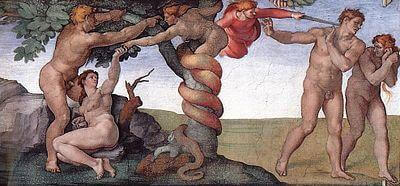
Was there death before the Fall?
Posted by Luke J. Wilson on 15th April 2014 in Death | Sheol,the Fall,Creation,Genesis,Adam and Eve,death,resurrection
It is often said and believed by many that our souls are immortal - that God gave us a spirit/soul that cannot die when he created us, and that death was not even a concept or reality before Adam and Eve sinned in the Garden of Eden. Despite this idea being a fairly "recent" concept (in terms of history and theology), and it stemming from Greek philosophy, it's also not supported by the Biblical text - especially in Genesis.
Lets look at the creation account in Gen 2:7—
then the Lord God formed man from the dust of the ground, and breathed into his nostrils the breath of life; and the man became a living being.
The word "being" in that verse, or "sou...
Is it the end of the world as we know it?
Posted by Luke J. Wilson on 27th September 2015 in Eschatology | blood moon,last days,end of the world,second coming,apocalypse,prophecy,false prophets,predictions
September 28th 2015 will be a supermoon and a red moon at that.
I last wrote about these four "blood moons" way back in April last year when certain self-styled prophets John Hagee and Mark Blitz's "End Times" teaching gained some popularity (and subsequent book promotions). One thing that I predicted in my previous article was that if nothing else comes from all of this "end is nigh" nonsense, is that these "prophets" would indeed profit from their books – as has been shown to be true in which the "Four Blood Moons" book has been in the top 20 on the New York Times Best-seller List, and has also recently been turned into a docu-drama!
Other than th...
Powered by WebBoss.io 3.7.1
Copyright © 2026 The Sacred Faith: Timeless Truths for Modern Minds. All Rights Reserved.
