
Blog Search Results


89 results for forty days
found
within the Blog
6 displayed out of 89 (0.27seconds)Page 11 of 15

Lent: Day 10 - Ignatius to the Smyrnaeans
Posted by Luke J. Wilson on 11th March 2017 in Lent | Lent,great lent,fasting,early church fathers,devotional,daily reading,Ignatius,Ignatius to the smyrnaeans
Day Ten: St. Ignatius of Antioch: Letter to the Smyrnaeans (full text)
Who: Ignatius converted at a young age and later became Bishop of Antioch. A friend of Polycarp and fellow disciple of John, there is a long standing tradition that Ignatius was the child that Jesus held in his arms and blessed in Mark 10:13-16
What: A defence against the heresy of Docetism and an intriguing insight into the possible origins of evil spirits!
Why: Ignatius wrote a series of letters to the churches in Asia Minor whilst en route to Rome to face martyrdom by wild beasts in the Colosseum around 108 AD.
When: Around 107-108 AD
The opening chapters of this letter pulls no punc...
Losing a Loved One: A Few Ways to Find Solace
Posted by Lucille Rosetti on 29th January 2020 in Death | death,loss,grieving,grief,bereaved
This is a guest post by Lucille Rosetti from thebereaved.org. The views are that of the author and don't necessarily reflect the views of That Ancient Faith.
This week I have a guest post by Lucille Rosetti from thebereaved.org looking at the hard topic of death. As Christians we shouldn't fear death, and ought to look on it with a paradoxical hope, since we know that through Christ death has lost its "sting" (1 Cor 15:55-57) and that we look forward to the Resurrection and life to come. But even with that in mind, the physical and earthly loss is still hard and something we need to process and deal with, and the following guest post aims to help with the...
The Historic Practice of Abortion and How Ancient Christians Responded
Posted by Luke J. Wilson on 1st July 2022 in Abortion | abortion,roe v wade,church history,current events,theology,politics,Why Are Christians Against Abortion?
It’s no secret that the majority of Christians are against abortion, no matter where you look in the world. But nowhere has the issue come to more of a head than in the US recently with the overturning of Roe v Wade, which had made abortion legal across the country. Now abortion is no longer a federal constitutional right, but individual states now have the authority to determine the legality and rulings around abortion.
Christian opposition to abortion in America has always been a heated topic, especially in recent decades, but this isn’t a novelty within the Church in America, or globally, and has been a position of the faithful for about 2000 years. Even...
Has Brexit just spoiled “End Times” prophecy?
Posted by Luke J. Wilson on 25th June 2016 in Eschatology | end times,Brexit,EU referendum,european union,antichrist,NWO,second coming
Has "Brexit" just spoiled “End Times” prophecy?
In a word, no.
Unless of course you are of a Dispensationalist view, then this sudden exit from the European Union by Britain will have caused you some theological holes you may feel the need to patch up.
There’s already been some satire articles posted in light of this, highlighting the errors of Dispensationalism and its main adherents tendency to interpret Biblical prophecy by the current news headlines. One such article, by The Babylon Bee, poked fun at the current events by writing that “premillenial dispensationalists around the world held emergency meetings Friday morning, frantically adj...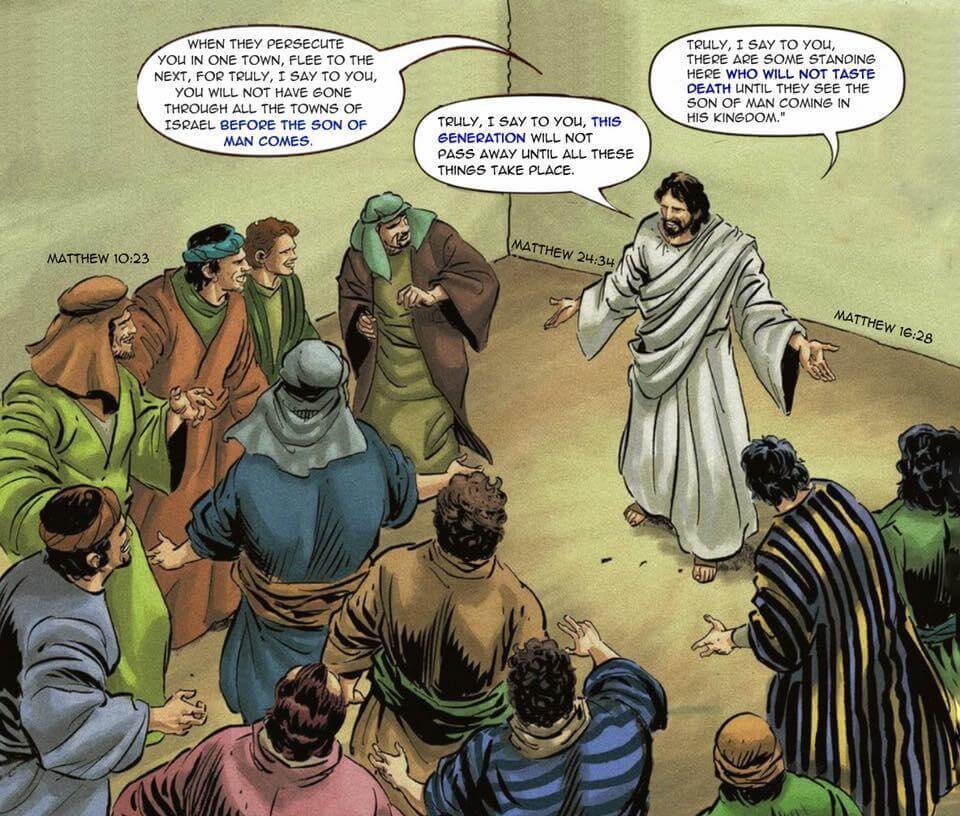
The Coming Kingdom of the Son of Man
Posted by Luke J. Wilson on 20th July 2016 in Eschatology | second coming,preterism,Kingdom of God,Coming kingdom,olivet discourse,Gospels,end times,end of the world,end of the age
The importance of context of what's being said, and to whom, in Scripture.
I came across this image the other day (in the header above; see larger here) that links together three parts of Matthew’s Gospel to highlight the connection which many often miss, or read as separate events. I like the image because it shows that when Jesus spoke these things, he would have been saying them directly to the disciples and others who were listening to his teaching, and not in some cryptic, ambiguous dictation to a prophetic scribe, devoid of all context and meaning to those around him at the time.
Update Feb 2017: I am adding some additional information to this to dis...
What does the word "Catholic" mean?
Posted by Luke J. Wilson on 8th March 2021 in Etymology | catholic,church fathers,church history,etymology,roman catholic,eastern orthodox,Great Schism,Muratorian Fragment
For many people today, non-Christians and (low church) Christians alike, when they hear the word “Catholic”, certain images spring to mind: the Pope, the rosery, Catholic school, big old churches buildings, choirboys, maybe monks or statues of Mary even; and sadly more recently, sex abuse scandals.
But, generally speaking, all of these are actually aspects of Roman Catholicism — a particular branch of Christianity, and not what the word “catholic” truly means as we’ll see when examining how the early church used the word and what the original Greek word means.
καθολικός (katholikos)
The Greek word where we get the English word “c...
Powered by WebBoss.io 3.7.1
Copyright © 2026 The Sacred Faith: Timeless Truths for Modern Minds. All Rights Reserved.
