
Blog Search Results


126 results for old testament
found
within the Blog
6 displayed out of 126 (0.46seconds)Page 11 of 21

Is The Rapture Biblical?
Posted by Luke J. Wilson on 21st September 2020 in Eschatology | rapture,the rapture in the bible,scriptures on the rapture,N.T. Wright,john chrysostom,church fathers,church history,signs of the rapture,Coming of Christ
Most people have some idea about what the rapture is – or do they? Generally there is an idea or concept of a form of escapism from the world when Jesus returns, which happens pre, mid or post tribulation and in some connection to the millenium. Now, if you understood any of those terms, you are most likely on, or aware of, the Dispensationalism side of things.
There’s a lot of doctrine all bundled together in “end times” beliefs, and a fair bit of speculation around “the rapture” with its timing and logistics etc. which makes the whole thing a but murky, but nonetheless, it’s pretty much taken for granted as a staple belief within the Evangelical...
The Early Concept of the Trinity: Tracing the Roots
Posted by Luke J. Wilson on 16th November 2023 in Trinity | trinity,early church,early church fathers,tri-unity,triune God,godhead
The doctrine of the Trinity, which asserts the co-equality of the Father, Son, and Holy Spirit, has deep roots in the early Christian writings of the first three centuries. While the full articulation of the Trinity developed over time, culminating at the Council of Nicaea in the fourth century, references to the equality of these three persons can be traced back to influential documents and the teachings of early Church Fathers in the centuries leading up to this pivotal moment in Church History.
Early Church Beliefs and Teachings
One of the earliest Christian documents, the Didache, believed to have been written in the late first or early second century, pro...
Lent Day 37: Leo the Great: Letter XXVIII (called the "Tome")
Posted by Luke J. Wilson on 12th April 2017 in Lent | Lent,great lent,fasting,early church fathers,devotional,daily reading,Doctor of the Church,lectures,Tome,Leo the Great,St Leo,hypostatic union,deity of christ,heresy,Pope Leo I
Day Thirty-seven: St. Leo the Great: Letter XXVIII (called the "Tome")
Who: Leo the Great, also known as Pope St. Leo I (the Great), was Pope from 440-61 AD. Place and date of birth unknown; died 10 November, 461. Leo's pontificate, next to that of St. Gregory I, is the most significant and important in Christian antiquity, as he tried to combat the heresies which seriously threatened church unity even in the West, such as Pelagianism.
What: A defence of the twofold nativity and nature of Christ against the false teaching of a priest called Eutyches. It is a doctrinal letter sent by Pope Leo I in the year 449 to Flavian, Patriarch of Constantinople, on the...
The Deity of Christ in the Gospel of Matthew - Part 1
Posted by KingsServant on 22nd December 2022 in Apologetics | islam,islam vs christianity,debate,gospels,apologetics,deity of christ
The titles “Jehovah” and “God” given to Jesus in Matthew 1
This is a guest post by “KingsServant”, see Part 2 here.
In this series of articles, I want to present the case that Matthew teaches Jesus is God, from the arguments I made in 2 moderated debates with a Muslim apologist, Mohammed Abd al Razack, commonly known as Al Yemeni. Although I will be going into far more detail, not having to deal with the tight time controls of a debate format.
The moderated debate on YouTube with me (KingsServant)
Matthew’s teaching of the Trinity and in particular that Jesus is God is by no means limited to the baptismal formula given by Christ after h...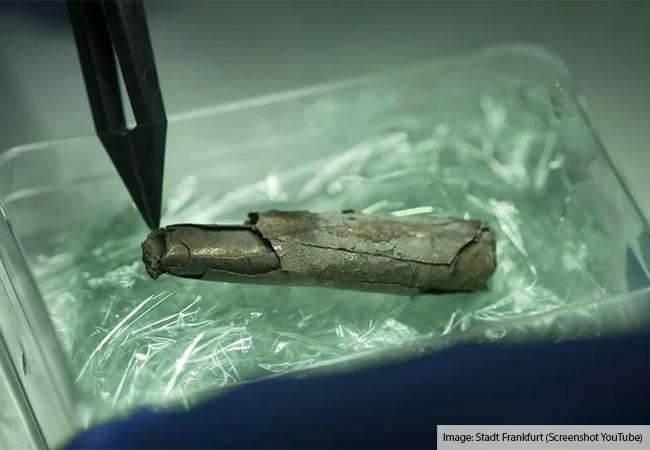
Implications Of The Frankfurt Silver Amulet: Insights Into Early Christian Practice And Belief
Posted by Luke J. Wilson on 6th January 2025 in Archaeology | amulet,liturgy,history,current events,early church
The discovery of an 1,800-year-old silver amulet in Frankfurt, Germany, has captured the attention of archaeologists and theologians alike. Known as the “Frankfurt Silver Inscription,” this artefact is the earliest known evidence of Christianity north of the Alps and serves as a great insight to early Christian theology and liturgical practice.
Its early date (230–270 AD) sets it apart from previously known artefacts, which are at least 50 years younger. While there are historical references to Christian communities in Gaul and Upper Germania during the late 2nd century, reliable material evidence of Christian life in the northern Alpine regions generally...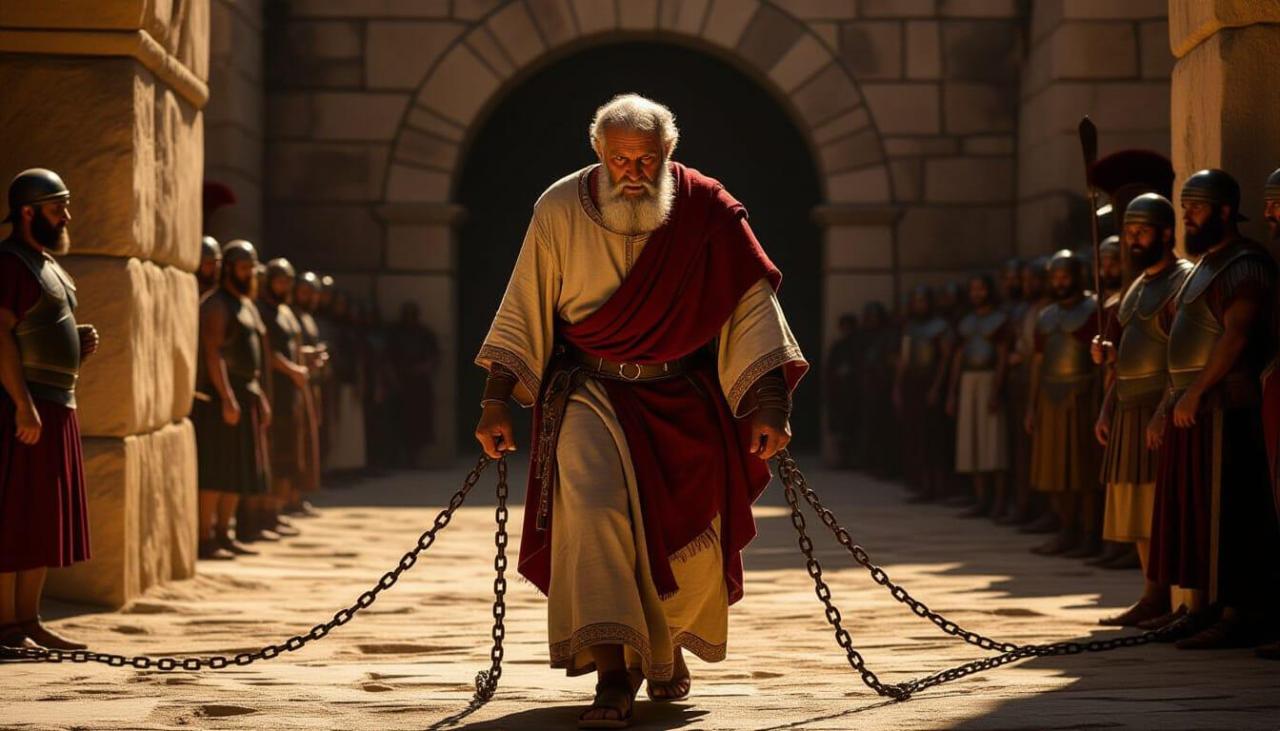
Before The Pumpkins: The Road To The Lions
Posted by Luke J. Wilson on 20th October 2025 in Halloween | ignatius,Ignatius of antioch,martyrdom,martyr,religion,halloween
The sound of chains echoed through the streets as Ignatius of Antioch was led from Syria to Rome. The old bishop’s body was frail, but his heart burned with the strength of Christ. Each clinking step brought him closer to the arena — and to the wild beasts that would tear him apart — yet his letters brimmed with joy and passion, and a sense of urgency inspiring others to unity, obedience, and unwavering faith. For Ignatius, death was not defeat; it was the completion of discipleship, crossing the finish line of faith… the moment when imitation of Christ became complete.
Ignatius of Antioch is one of my favourite Early Church Fathers mainly for h...
Powered by WebBoss.io 3.7.1
Copyright © 2026 The Sacred Faith: Timeless Truths for Modern Minds. All Rights Reserved.
