
Blog Search Results


173 results for coming of christ
found
within the Blog
6 displayed out of 173 (0.60seconds)Page 12 of 29
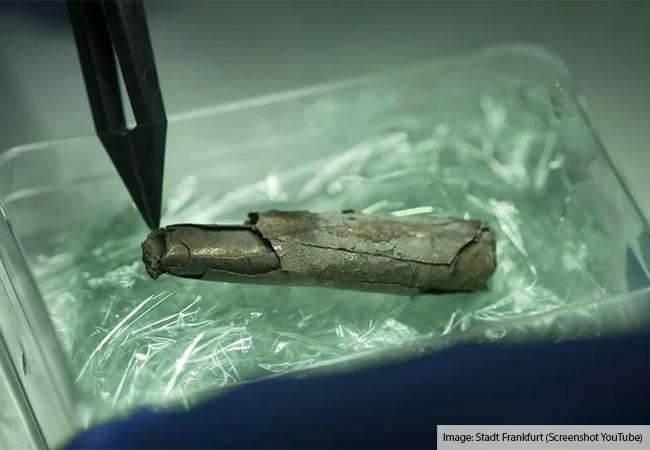
Implications of The Frankfurt Silver Amulet: Insights Into Early christian Practice And Belief
Posted by Luke J. Wilson on 6th January 2025 in Archaeology | amulet,liturgy,history,current events,early church
The discovery of an 1,800-year-old silver amulet in Frankfurt, Germany, has captured the attention of archaeologists and theologians alike. Known as the “Frankfurt Silver Inscription,” this artefact is the earliest known evidence of christianity north of the Alps and serves as a great insight to early christian theology and liturgical practice.
Its early date (230–270 AD) sets it apart from previously known artefacts, which are at least 50 years younger. While there are historical references to christian communities in Gaul and Upper Germania during the late 2nd century, reliable material evidence of christian life in the northern Alpine regions generally...
Lent: Day 9 - Ignatius to the Philadelphians
Posted by Luke J. Wilson on 10th March 2017 in Lent | Lent,great lent,fasting,early church fathers,devotional,daily reading,Ignatius,Ignatius of Antioch: Letter to the Philadelphians,Law,Judaizers,judaism
Day Nine: St. Ignatius of Antioch: Letter to the Philadelphians (full text)
Who: Ignatius converted at a young age and later became Bishop of Antioch. A friend of Polycarp and fellow disciple of John, there is a long standing tradition that Ignatius was the child that Jesus held in his arms and blessed in Mark 10:13-16
What: As usual, a general call to remain in unity and heed their bishop. Also to avoid listening to Judaizers who would have them follow the Law.
Why: Ignatius wrote a series of letters to the churches in Asia Minor whilst en route to Rome to face martyrdom by wild beasts in the Colosseum around 108 AD.
When: Around 107-108 AD
As with the re...
Lent Day 24: Athanasius: Life of Anthony: Chaps. 31-40
Posted by Luke J. Wilson on 28th March 2017 in Lent | Lent,great lent,fasting,early church fathers,devotional,daily reading,Athanasius,Bishop of Alexandria,Confessor,Doctor of the Church,Anthony the Great,demons,demonology
Day Twenty-four: St. Athanasius: Life of Anthony: Chaps. 31-40
Who: Bishop of Alexandria; Confessor and Doctor of the Church; born c. 296; died 2 May, 373 AD. He was the main defender of orthodoxy in the 4th-century battle against the Arianism heresy. Certain writers received the title “Doctor” on account of the great advantage their doctrine had on the whole Church, Athanasius especially for his doctrine on the incarnation.
What: The biography of Anthony the Great’s life, which helped to spread the concept of christian monasticism, particularly in Western Europe.
Why: From the letter’s own prologue: “The life and conversation of our holy Father,...
Lent Day 29: Athanasius: Life of Anthony: Chaps. 81-94
Posted by Luke J. Wilson on 3rd April 2017 in Lent | Lent,great lent,fasting,early church fathers,devotional,daily reading,Athanasius,Bishop of Alexandria,Confessor,Doctor of the Church,Anthony the Great,miracles,death,persecution,arianism
Day Twenty-nine: St. Athanasius: Life of Anthony: Chaps. 81-94
Who: Bishop of Alexandria; Confessor and Doctor of the Church; born c. 296; died 2 May, 373 AD. He was the main defender of orthodoxy in the 4th-century battle against the Arianism heresy. Certain writers received the title “Doctor” on account of the great advantage their doctrine had on the whole Church, Athanasius especially for his doctrine on the incarnation.
What: The biography of Anthony the Great’s life, which helped to spread the concept of christian monasticism, particularly in Western Europe.
Why: From the letter’s own prologue: “The life and conversation of our holy Father,...
The coming of Jesus: The Olivet Discourse – Part 1
Posted by Luke J. Wilson on 19th October 2014 in Second coming Series | Second coming,Return of christ,Return of Jesus,Preterism,Prophecy,Last Days,Left Behind,Eschatology,Matthew 24,Olivet Discourse,birth pangs,Josephus,history
Hello again, it's been a while since I've wrote anything, and longer since getting back to this series on the Second coming of Jesus. This isn't for lack of motivation, but rather because this is such a huge topic that I've been reading and thinking about this next part for a very long time to make sure I know what I'm saying, and am well read enough to do the topic justice. Having said that, there will always be far more to say on this than I can give time for here, but I hope to give enough of an overview to expound this prophecy faithfully without being too technical as to cause confusion! You can also catch up on the previous parts...
Lent: Day 14 - Justin Martyr: First Apology, Chaps. 24-35
Posted by Luke J. Wilson on 16th March 2017 in Lent | Lent,great lent,fasting,early church fathers,devotional,daily reading,Justin Martyr,apologetics
Day Fourteen: St. Justin Martyr: First Apology, Chaps. 24-35
Who: Justin Martyr was a Philosopher who converted to christianity and became a tireless evangelist and apologist. Justin wrote more christianity than any other person prior to his time. He is classified herein as Eastern, since he a native of Samaria and his thought patterns were Eastern. However, he spent the last years of his life in Rome, where he was executed as a martyr (c. 165).
What: An apologetic (defence) essay to explain what christians believe and do.
Why: Justin is demanding the Emperor to investigate accusations and unjust persecution against christians so that they at least may face...
Powered by WebBoss.io 3.7.1
Copyright © 2026 The Sacred Faith: Timeless Truths for Modern Minds. All Rights Reserved.
