
Blog Search Results


Did you mean:
deity of christ
?
168 results for deity of Christ
found
within the Blog
6 displayed out of 168 (2.37seconds)Page 12 of 28

The deity of Christ in the Gospel of Matthew - Part 2
Posted by KingsServant on 1st February 2023 in Apologetics |
Matthew's theme - The divine presence of Jesus
This is a guest post by “KingsServant”, see Part 1 here.
Having covered Matthew’s introduction to his gospel in his nativity account, we will now consider the way Matthew “bookends” the gospel by beginning his work with the promise of God dwelling with his people (fulfilled in the incarnation) and ending it in the same way with Jesus’ comforting promise never to leave his followers.
This theme of Matthew begins with his quotation of Isaiah 7:14, which we have already analysed in the previous article with regard to how it reveals Matthew’s teaching that Jesus is God.
As noted before, in Matthew...
Lent Day 27: Athanasius: Life of Anthony: Chaps. 61-70
Posted by Luke J. Wilson on 31st March 2017 in Lent | Lent,great lent,fasting,early church fathers,devotional,daily reading,Athanasius,Bishop of Alexandria,Confessor,Doctor of the Church,Anthony the Great,demons,healing,miracles,heresy,heretics,Arianism,deity of Christ
Day Twenty-seven: St. Athanasius: Life of Anthony: Chaps. 61-70
Who: Bishop of Alexandria; Confessor and Doctor of the Church; born c. 296; died 2 May, 373 AD. He was the main defender of orthodoxy in the 4th-century battle against the Arianism heresy. Certain writers received the title “Doctor” on account of the great advantage their doctrine had on the whole Church, Athanasius especially for his doctrine on the incarnation.
What: The biography of Anthony the Great’s life, which helped to spread the concept of Christian monasticism, particularly in Western Europe.
Why: From the letter’s own prologue: “The life and conversation of our holy Father...
What is Monarchical Trinitarianism?
Posted by Luke J. Wilson on 21st July 2024 in Trinity | trinity,monarchy of the Father,Monarchical Trinitarianism,church fathers,church history
Monarchical Trinitarianism, also referred to as the “Monarchy of the Father,” is a theological perspective that asserts the Father as the sole source (or monarch) within the Trinity. This view maintains a clear distinction of roles among the Father, the Son, and the Holy Spirit while upholding their unity in essence. It is essential to distinguish this from Monarchianism, a heretical belief condemned in the 4th century, which posited that God is a single person rather than three distinct persons.
The Eternal Begottenness of the Son
The term “created” used by the early pre-Nicene Fathers does not align with the Arian view, which posits that the Son was...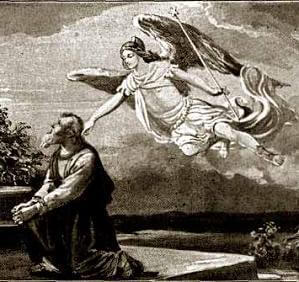
The Coming of Jesus: Daniel's 70 Weeks
Posted by Luke J. Wilson on 16th June 2014 in Second Coming Series | Second Coming,Return of Christ,Return of Jesus,Preterism,Prophecy,Last Days,Left Behind,Part 1,Part one,Daniel,70 weeks
Daniel's 70 Weeks
To fully understand Jesus's first, and indeed what is commonly called his "Second Coming," we need to understand the book of Daniel. This prophetic books give many details and glimpses into the future about coming kingdoms, rulers and above all, the Messiah. I'm going to be focussing on just one part of the book, chapter nine, often referred to as "Daniel's 70 Weeks". But just what is "Daniel's 70 Weeks" you might be asking as you read this. For those unfamiliar with Old Testament prophecy, it is a prophetic vision that Daniel was given from God, and interpreted by the angel Gabriel. You can read the prophecy in fu...
Lent Day 20: Cyprian: On the Unity of the Church: 19-27
Posted by Luke J. Wilson on 23rd March 2017 in Lent | Lent,great lent,fasting,early church fathers,devotional,daily reading,Cyprian,Bishop of Carthage,unity
Day Twenty: St. Cyprian: On the Unity of the Church: 19-27
Who: Third century bishop of Carthage (in modern Tunisia), and martyr from Africa
What: A letter to encourage the unity of the church against schisms and heresy during massive Roman persecution
Why: A disturbance had happened in the church because of a priest called Novatian — a schismatic of the third century, and founder of the sect of the Novatians. Cyprian wrote to counter this and argues that there can only be one united Church, and the Novatian breakaway was a false church and that Novatian was an antipope.When: Around 249 AD
You can find today’s reading on page 102 here: lentfatherscomple...
Lent Day 21: Athanasius: Life of Anthony: Chaps. 1-10
Posted by Luke J. Wilson on 24th March 2017 in Lent | Lent,great lent,fasting,early church fathers,devotional,daily reading,Athanasius,Bishop of Alexandria,Confessor,Doctor of the Church,Anthony the Great
Day Twenty-one: St. Athanasius: Life of Anthony: Chaps. 1-10
Who: Bishop of Alexandria; Confessor and Doctor of the Church; born c. 296; died 2 May, 373 AD. He was the main defender of orthodoxy in the 4th-century battle against the Arianism heresy. Certain writers received the title “Doctor” on account of the great advantage their doctrine had on the whole Church, Athanasius especially for his doctrine on the incarnation.
What: The biography of Anthony the Great’s life, which helped to spread the concept of Christian monasticism, particularly in Western Europe.
Why: From the letter’s own prologue: “The life and conversation of our holy Father, A...
Powered by WebBoss.io 3.7.1
Copyright © 2026 The Sacred Faith: Timeless Truths for Modern Minds. All Rights Reserved.
