
Blog Search Results


103 results for end of the age
found
within the Blog
6 displayed out of 103 (0.41seconds)Page 13 of 18

the Deity of Christ in the Gospel of Matthew - Part 1
Posted by KingsServant on 22nd December 2022 in Apologetics | islam,islam vs christianity,debate,gospels,apologetics,deity of christ
the titles “Jehovah” and “God” given to Jesus in Matthew 1
This is a guest post by “KingsServant”, see Part 2 here.
In this series of articles, I want to present the case that Matthew teaches Jesus is God, from the arguments I made in 2 moderated debates with a Muslim apologist, Mohammed Abd al Razack, commonly known as Al Yemeni. Although I will be going into far more detail, not having to deal with the tight time controls of a debate format.
the moderated debate on YouTube with me (KingsServant)
Matthew’s teaching of the Trinity and in particular that Jesus is God is by no means limited to the baptismal formula given by Christ after h...
Great is the Mystery of Faith!
Posted by Luke J. Wilson on 17th September 2022 in Early Church | Melito of Sardis,Faith,mysteries,church fathers,early church fathers,Quotes,fragment
A little while ago, I came across a quote on Facebook by a guy called Melito of Sardis.
St. Melito of Sardis
Melito was bishop of the church in Sardis (modern-day Sart), a city of Asia Minor near Smyrna (modern-day Izmir, Turkey), and lived between 160-170/177 AD until he was martyred, possibly under the reign of Marcus Aurelius. Due to the close proximity of locations, he may also have known Ignatius who was also from Asia Minor, and potentially was also an acquaintance of Polycarp and his disciple, Irenaeus. there’s also the thought that he may have been the successor to the leader of the church in Sardis, which is mentioned by the Apostle John in Re...
Why Read the Early Church Fathers?
Posted by Luke J. Wilson on 8th December 2017 in Early Church | church history,daily devotional,daily reading,early church,early church fathers,new book,amazon
Why read the Early Church Fathers?
Maybe for some of you reading this, the question might better be phrased as: who are the Church Fathers?
No doubt you will be familiar with some of their names: Augustine, Jerome, Clement, Ignatius, Polycarp, Justin Martyr et al. You may have even read portions or quotes by some of these men. But that still doesn't really explain to you who they are and why you should care, much less actually read any of their works.
My new book deals with a selection of some of the most influential Early Church Fathers, sometimes also referred to as the Apostolic Fathers (if they lived between AD 70-150), or collectively as the Ante Nicene...
Support Israel? OK, which Israel?
Posted by Luke J. Wilson on 9th August 2014 in Israel | Israel,war,politics,current events,Hamas,terrorism,promised land,Church Fathers,pacifism,nonviolence,New Covenant
"We interrupt your regularly scheduled programme to bring you this..." Sorry if you were waiting for part 3 of the Coming of Jesus series, but what with all that's going on in the news lately, I felt that this needed to be written first.
"Support Israel's right to defend itself from terror."
Images like this really don't help anything.
If you've been on Facebook, or any other social media no doubt, I'm sure you will have seen (or even said) words to this effect in status' or memes. I keep seeing memes and images posted by people, often from Christians, about "supporting Israel" and each time it makes me stop and question that statement and/or sentiment....
Does Jesus mean Hail Zeus?
Posted by Luke J. Wilson on 13th June 2016 in Etymology | apologetics,refuting nonsense,hail zeus,does Jesus mean Zeus,earth pig latin,etymology,linguistics
A meme doing the rounds on the internet
You may not have come across the image above before, or the similar variants of it, but it pops up on social media groups every so often. the underlying argument is quite ridiculous, but there does seem to be a sub-culture with Christianity which promotes this as fact quite vigorously. Having seen this get shared at least three times on Facebook in the last month, I decided to add a new category to the blog: Apologetics.
In here will be articles for defence of the faith, though sadly this particular one needs to be against those who are already meant to be a part of the same faith! But many people seem to accept...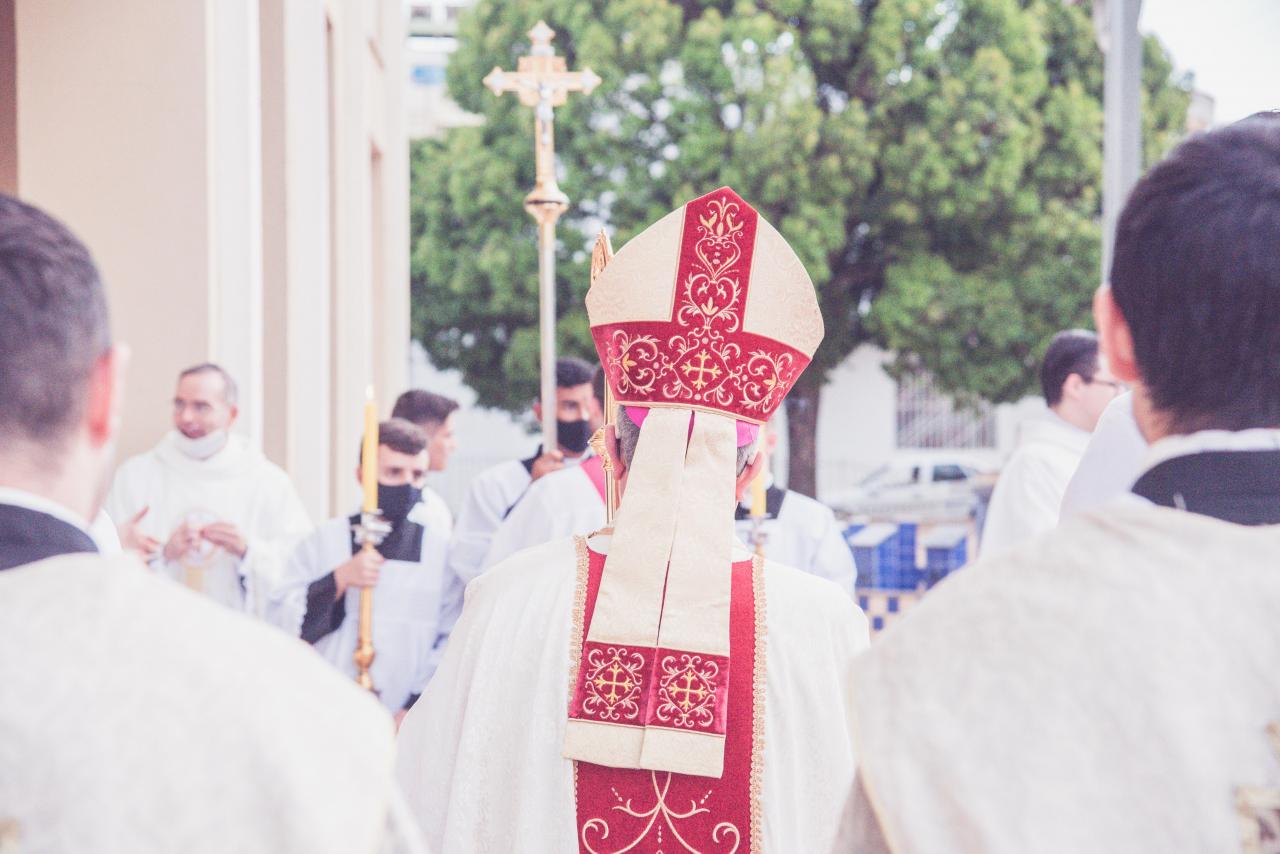
What does the word "Catholic" mean?
Posted by Luke J. Wilson on 8th March 2021 in Etymology | catholic,church fathers,church history,etymology,roman catholic,eastern orthodox,Great Schism,Muratorian Fragment
For many people today, non-Christians and (low church) Christians alike, when they hear the word “Catholic”, certain images spring to mind: the Pope, the rosery, Catholic school, big old churches buildings, choirboys, maybe monks or statues of Mary even; and sadly more recently, sex abuse scandals.
But, generally speaking, all of these are actually aspects of Roman Catholicism — a particular branch of Christianity, and not what the word “catholic” truly means as we’ll see when examining how the early church used the word and what the original Greek word means.
καθολικός (katholikos)
the Greek word where we get the English word “c...
Powered by WebBoss.io 3.7.1
Copyright © 2026 The Sacred Faith: Timeless Truths for Modern Minds. All Rights Reserved.
