
Blog Search Results


146 results for eternal life
found
within the Blog
6 displayed out of 146 (0.37seconds)Page 13 of 25

Lent: Day 5 - Ignatius to the Ephesians
Posted by Luke J. Wilson on 6th March 2017 in Lent | Lent,great lent,fasting,early church fathers,devotional,daily reading,Ignatius of Antioch: Letter to the Ephesians,Ignatius
...enewal of eternal life.
Considering the date of this letter, this in itself is a good apologetic against more recent false claims that Jesus was only “made” divine at the Council of Nicea, when the gathered bishops and Emperor Constantine decided to alter centuries of Church doctrine and make Jesus into more than he supposedly was. This is, of course, total nonsense and even a cursory reading of Church History would dispel this notion, but the internet being what it is makes these heresies survive.
Towards the end of the letter, Ignatius also gives us an overview of the gospel, and from what I understand, one of the earliest extra-biblical accounts for the...
Biblical Inspiration and the Canon: How We Got the Bible
Posted by Luke J. Wilson on 28th February 2025 in Early Church | canon,nicea council,nicene council,myths,church history,church fathers
...The Bible is often described as “God-breathed,” a phrase taken from 2 Timothy 3:16: “All scripture is inspired by God and is useful for teaching, for reproof, for correction, and for training in righteousness.” But what does it mean for Scripture to be “inspired,” and how did the books of the Bible come to be recognised as part of the canon — the authoritative collection of writings that make up the Bible? Were they really “decided” at the Council of Nicaea, as some popular myths claim?
Table of Contents
Understanding Biblical Inspiration
What is the Canon?
The Septuagint and the Deuterocanonical Books
How Were the Books of the Bi...
From Dust to Redemption: The Meaning of Ash Wednesday
Posted by Luke J. Wilson on 5th March 2025 in Lent |
...Ash Wednesday marks the beginning of Lent, a season of repentance, fasting, and preparation for Easter in the Christian calendar. It is observed by many Western Christian traditions, including the Roman Catholic Church, Anglican Communion, Lutheran churches, and some Methodist and Reformed communities. The day falls 46 days before Easter Sunday and is always on a Wednesday.
Origins and Historical Development
The practice of Ash Wednesday can be traced back to the early centuries of Christianity, though its formal observance developed over time. The use of ashes as a sign of repentance has deep biblical roots, appearing frequently in the Old Testament. People w...
David, Saul, And How We Respond To Broken Leadership
Posted by Luke J. Wilson on 5th May 2025 in Politics | politics,protest,nonviolence,old testament,SWYM
...When we think about David and Saul, we often focus on David’s rise to kingship or his battle with Goliath. But hidden within that story is a deep lesson for today’s generation about leadership, resistance, and the power of revolutionary love.
At a recent youth training event (thanks to South West Youth Ministries), I was asked how I would present the story of David and Saul to a Christian teenage youth group. My mind turned to the politics of their relationship, and how David accepted Saul’s leadership, even when Saul had gone badly astray. David recognised that Saul was still God’s anointed king — placed there by God Himself — and that it w...
A Prayer You Can Hold: A Maker’s Reflection on Beads, Scripture and Attention
Posted by Guest Author on 31st July 2026 in Prayer | guest post,prayer,faith,devotional
...Guest Post By Fiach OBroin-Molloy
My own roots lie in the Catholic tradition, but my workbench has brought me into contact with Christians whose devotional lives differ from mine. I make Catholic rosaries, Anglican prayer beads and other forms of devotional beads by hand. That work has not taught me that distinctions between traditions do not matter. It has taught me that, beneath those distinctions, many of us know the same difficulty: we want to pray, but our attention is restless.
I have travelled, lived and worked in a number of countries, from parts of Africa to countries further east. Again and again, I encountered beads or knotted cords held, counted or...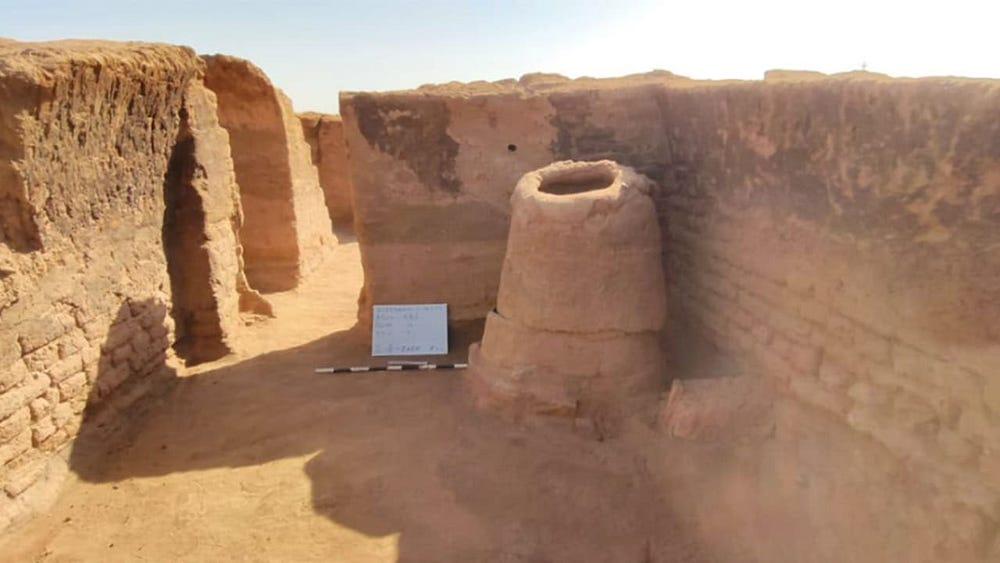
A City In The Sand: What A Fourth-Century Discovery In Egypt’s Western Desert Tells Us About The Early Church
Posted by Luke J. Wilson on 27th July 2026 in Archaeology | archaeology,early church,history
...In early July 2026, Egypt’s Ministry of Tourism and Antiquities announced something pretty amazing: an entire Byzantine-era city, buried beneath the sands of the Dakhla Oasis, had been uncovered almost intact! Streets, homes, bread ovens, a fortress, and at its heart, a fourth-century basilica church.
That might not seem very exciting on first glance. But this find deserves a closer look, because it puts flesh on something we usually only encounter in the abstract: what it actually looked like when Christianity took root, house by house, in an ordinary town far from the centres of imperial power.
What Was Found
The excavation, carried out by an Egy...
Powered by WebBoss.io 3.7.1
Copyright © 2026 The Sacred Faith: Timeless Truths for Modern Minds. All Rights Reserved.
