
Blog Search Results


Did you mean:
part two
?
212 results for Part two
found
within the Blog
6 displayed out of 212 (0.49seconds)Page 14 of 36
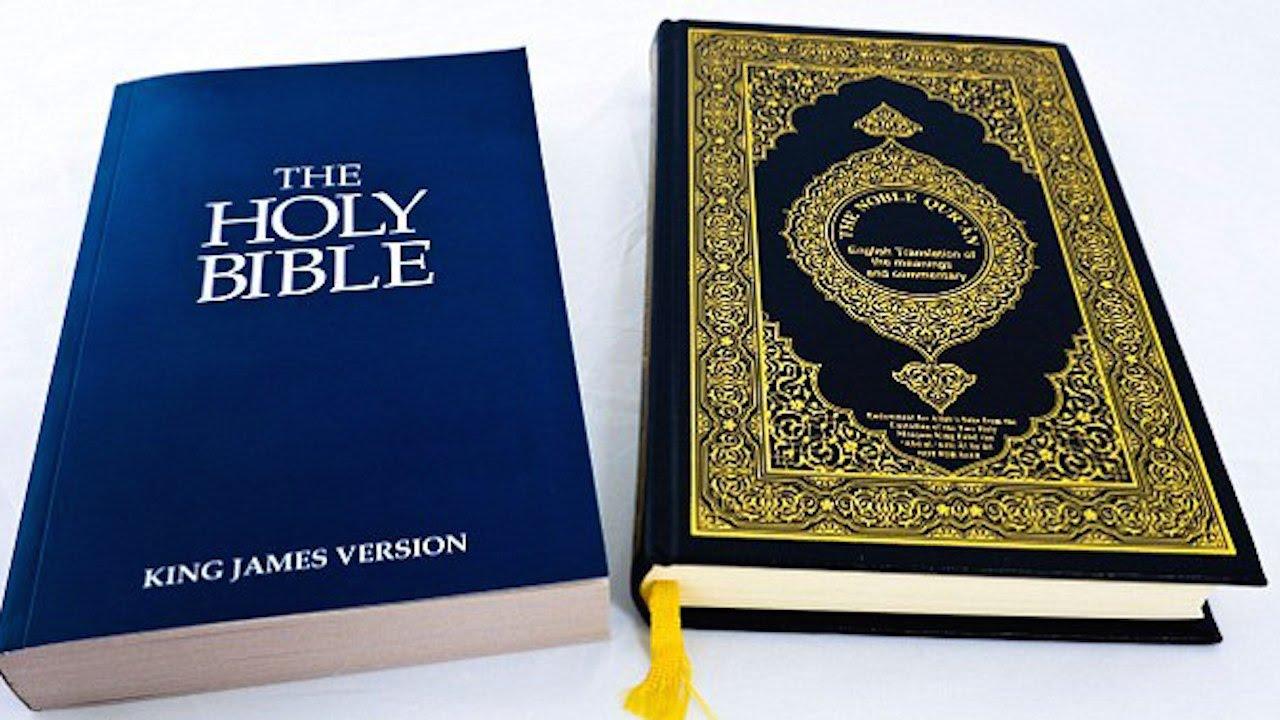
26 Differences Between Muhammad and Jesus
Posted by Luke J. Wilson on 17th October 2022 in Islam | Islam,Christianity,Jesus vs Muhammad,Islam vs Christianity,John of Damascus,church fathers,church history,religion
If you’ve ever spent any time online, either in random Facebook comment threads or reading the news, I’m sure you’ve come across the claim that Islam and Christianity are basically the same and that “we all worship the same God”, getting lumped together as an “Abrahamic religion” along with Judaism.
Muslims claim Islam “is the completed final version of the previous messages originally revealed to Moses and Jesus” which came to “correct the deviations of Christianity”, which had apparently become corrupt by the seventh century when Muhammad came along.
But for something which is meant to come from the same God at its core, it would sugges...
Who is the New Jerusalem?
Posted by Luke J. Wilson on 6th January 2016 in Second Coming Series | Revelation,New Jerusalem,The Church,Holy City,Early Church,Early Church Fathers,Eusebius,Origen,Barnabas,millennium,millennial reign,1000 years,New Heaven and Earth
This is a sort of ‘addendum’ to the Revelation Fulfilled? article
Yes you read the title correct: WHO (not what) is the New Jerusalem?
To answer this, you must ask yourself: who is the Bride of Christ?
If you answered “the Church” (as in, the body of believers, not buildings) then you’d be correct as they are both one and the same!
Roughly 1500 miles square.
Maybe you’ve always wondered why the Church is called the “bride”? Well, let’s examine some Scriptures and see!
2 Corinthians 11:2I feel a divine jealousy for you, for I promised you in marriage to one husband, to present you as a chaste virgin to Chris...
Lent: Day 2 - Mathetes to Diognetus, pt. 1
Posted by Luke J. Wilson on 3rd March 2017 in Lent | Lent,great lent,fasting,early church fathers,devotional,daily reading,epistle of mathetes to diognetus
Day two: Epistle of Mathetes to Diognetus: Chaps. 1-6
Who: Anonymous author, “mathetes” is not a name, but is the Greek word for “a disciple”
What: possibly one of the earliest examples of a Christian apologetic defending the faith from its accusers, written to someone interested in learning more about the faith and its customs
Why: The Christian faith was under attack and ridicule in the early centuries, many things about the Church were misunderstood and so various Christians took to writing apologetic's (defences) to clarify doctrines and beliefs from being maligned.
When: Estimated between AD 130 and late 2nd century
I've only ever come acros...Hello
Posted by Luke J. Wilson on 5th April 2014 in Blogging | welcome, hell, homosexuality, gay, second coming, return of christ, apologetics, canon
Hello, this is a blog that I've been intending to create for too long now. So today I finally decided to sit down and do it. I've been compiling notes and thoughts, and have been writing on topics I'm exploring and grappling with for well over a year now - maybe even two. And then I stuff them in a digital folder to gather dust, so to speak.
A lot of the discussion and ideas from these notes have come from being active in an Apologetics group on Facebook, which has helped to wrestle out some points and subjects by having about 20+ different opinions thrown into the mix!
I'm planning to cover some big topics in small Parts over a period of time and post...
The Early Concept of the Trinity: Tracing the Roots
Posted by Luke J. Wilson on 16th November 2023 in Trinity | trinity,early church,early church fathers,tri-unity,triune God,godhead
The doctrine of the Trinity, which asserts the co-equality of the Father, Son, and Holy Spirit, has deep roots in the early Christian writings of the first three centuries. While the full articulation of the Trinity developed over time, culminating at the Council of Nicaea in the fourth century, references to the equality of these three persons can be traced back to influential documents and the teachings of early Church Fathers in the centuries leading up to this pivotal moment in Church History.
Early Church Beliefs and Teachings
One of the earliest Christian documents, the Didache, believed to have been written in the late first or early second century, pro...
What is Advent?
Posted by Luke J. Wilson on 1st December 2023 in Christmas | Advent,christmas,second coming,parousia
It’s that time of year when Christmas lights and decorations go up, things start to look a little more sparkly, and kids are getting ready to open their Advent Calendars.
But what exactly is “Advent”? You may be from a Church tradition which recognises this each year so are more familiar, but if not, you may be curious to know more about this ancient Christian tradition.
Advent, derived from the Latin “adventus,” signifying “coming” or “arrival,” stands as a sacred season deeply entrenched in the hearts of many Christians globally. This period of expectant waiting and preparation marks the initiation of the liturgical year in Western Christia...
Powered by WebBoss.io 3.7.1
Copyright © 2026 The Sacred Faith: Timeless Truths for Modern Minds. All Rights Reserved.
