
Blog Search Results


157 results for daily reading
found
within the Blog
6 displayed out of 157 (0.45seconds)Page 14 of 27

What did Jesus actually sacrifice?
Posted by Luke J. Wilson on 18th March 2018 in Lent | Jesus,Jesus death,sacrifice,Jesus sacrifice,atheist,meme,flogging,crucifixion,Godhead,eternal consequences
Sometimes the question, or accusation/criticism maybe, is posed by atheists and critics of Christianity that Jesus didn’t really sacrifice anything because he is God and also because he got his life back three days later. So where’s the sacrifice if you know that what you give up will be given back, and given back even better than you previously had it?
It’s an interesting question, and one that should cause us to stop and think about what we, as Christians, say to non-believers in case the question is ever given to us. Most people will say Jesus gave up his life for us – but is that such a big deal if he knew he’d have it back in three days; and th...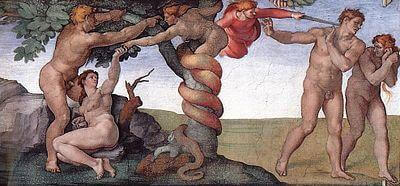
Was there death before the Fall?
Posted by Luke J. Wilson on 15th April 2014 in Death | Sheol,the Fall,Creation,Genesis,Adam and Eve,death,resurrection
It is often said and believed by many that our souls are immortal - that God gave us a spirit/soul that cannot die when he created us, and that death was not even a concept or reality before Adam and Eve sinned in the Garden of Eden. Despite this idea being a fairly "recent" concept (in terms of history and theology), and it stemming from Greek philosophy, it's also not supported by the Biblical text - especially in Genesis.
Lets look at the creation account in Gen 2:7—
then the Lord God formed man from the dust of the ground, and breathed into his nostrils the breath of life; and the man became a living being.
The word "being" in that verse, or "sou...
The Author of Life Knew Death For Our Sake!
Posted by Luke J. Wilson on 25th March 2016 in Easter | Easter,Good Friday,Holy Week,crucifixion,resurrection,reconcilliation
A week or so ago, I stayed the night at a local monastery with a friend. We got to see, and be partially involved in the day to day life of the Monks there, especially during mealtimes. We sat and ate in silence together while someone read to us, which was actually more enjoyable than I expected it to be. I can't remember what the book was called now, but it was to do with the Passion and what the crucifixion meant, and the point they were reading about was when the Roman soldier stabbed Jesus in the side.
This is where it got interesting and gave me something to think about that I'd never heard taught before. Normally most preachers and sermons talk about the...
American Gun Violence and the Early Church on War and Violence
Posted by Luke J. Wilson on 3rd October 2017 in Early Church | early church,early church fathers,gun violence,America,mass shooting
In light of the sad, recent events in the Las Vegas shooting — and similar events in America— I often see Christians across social media jumping to the defence of gun ownership whenever there is even a slight hint at gun control in America.
But how has gun culture become so ingrained in American Christianity when we can observe a clear theme and pattern of thought in the first few centuries of the Church, which goes completely against this?
Update 7th Nov 2017: It's so sad to have to update this post on the same subject so soon, almost a month to the day. Yet another shooting, this time in Texas where 26 people have been shot dead in a church of all pl...
Creedal Christians: Introduction
Posted by Luke J. Wilson on 29th September 2018 in Early Church | creeds,creedal Christians,creedal,early church,church history
I’m starting a new four part series over the coming weeks which will be looking at the different historical creeds of the Church which have been recited, used and handed down for two millennia, beginning with the very first formal creed: the Apostles Creed. This series will be a mixture of historical background plus a commentary on the creed itself to see where each statement is based in Scripture, and why we can trust them to accurately portray the Faith.
What are creeds and why should we accept them?
The word “creed” comes from the Old English crēda, and from Latin crēdo meaning “I believe”. A creed is basically a set of beliefs which you profess...Are There Levels of Sin?
Posted by Luke J. Wilson on 5th April 2014 in Sin | sin, judgement, punishment, hell, last judgement
"All sins are equal." "Sin is sin." "All sin is the same in God's eyes."
You may have heard these phrases said before (you may even have said them before!). But is all sin really equal? I do, and don't, think so.
Let me clarify: All sin is equal in the sense that all illegal activities are crimes; but even crimes have degrees of severity and punishment, and it would seem to me that the New Testament also supports this concept in regards to sin.
Lets look at a few examples:
If you can blaspheme the Holy Spirit and never be forgiven (Matt 12:31), then it's a sin definitely not on par with others.
If being sexually immoral is seen as something to shun more...
Powered by WebBoss.io 3.7.1
Copyright © 2026 The Sacred Faith: Timeless Truths for Modern Minds. All Rights Reserved.
