
Blog Search Results


210 results for the church
found
within the Blog
6 displayed out of 210 (0.27seconds)Page 14 of 35
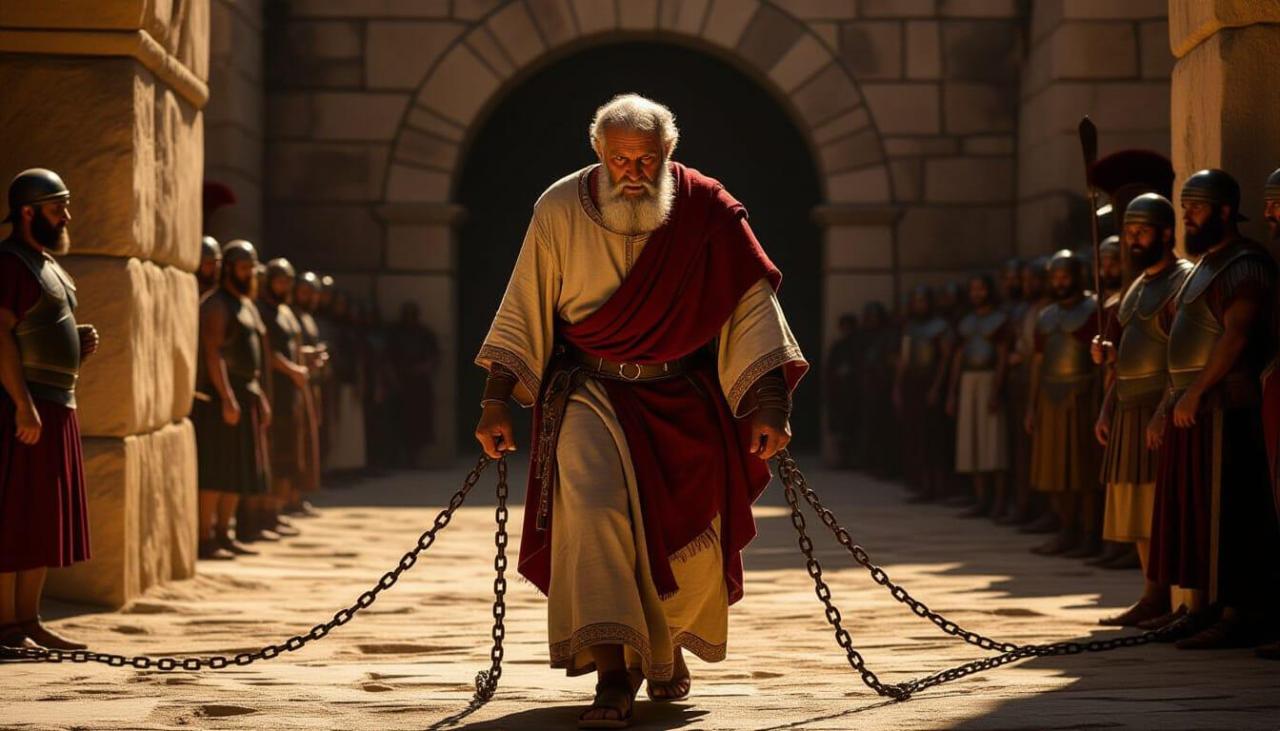
Before the Pumpkins: the Road To the Lions
Posted by Luke J. Wilson on 20th October 2025 in Halloween | ignatius,Ignatius of antioch,martyrdom,martyr,religion,halloween
...letter to the church in Rome, especially, as you could really sense his passion and dedication to his faith and conviction to see through his impending martyrdom head on, fearless in the face of death! And as one of the earliest martyrs outside of the New Testament, his story is the perfect place to begin this series.
A Disciple of the Apostles
Ignatius lived in the generation just after the apostles, serving as bishop of Antioch in Syria. Tradition says that Ignatius was the small child whom Jesus held in his arms in Matt. 18:2, though this cannot be verified as Ignatius himself never states it. A more trustworthy tradition 4tells us that he was a disciple o...
Lent: Day 1 - the Didache
Posted by Luke J. Wilson on 2nd March 2017 in Lent | Lent,great lent,fasting,early church fathers,devotional,daily reading,Didache
...Day One: the Didache (in full)
Who: Written by an anonymous author, possibly multiple sources compiled into one book at a later date. the title translates as “the teaching”, or in its full tithe: Teaching of the Twelve Apostles.
What: the Didache is basically a church handbook with a summarised collection of the basic teachings of the church and Gospel, aimed at local church leaders and new converts.
Why: Tradition has it as being a collection of the apostles teachings, so it was probably written to preserve this information as they grew older or died, or moved away from the communities they planted.
When: Between 70-100 AD
the Didache is one of my...
What was so good about Good Friday?
Posted by Luke J. Wilson on 18th April 2014 in Easter | Good Friday,Jesus,crucifixion,forgiveness,sin,Easter,Holy Week,Christmas
...I remember when I was growing up, this was a question I would often wonder about and ask. People would say "because Jesus died on the cross!", which was of little help to me as I would then think, why was Jesus dying a good thing?
But this is a question I'm sure many people will have asked themselves when they consider the name of their Bank Holiday, and probably a question they got an unsatisfactory answer to - if they got one at all!
Really though, this holiday time should be more well-known and recognised than Christmas. While the birth of Jesus is important, it isn't actually central to the Faith, nor is it really emphasised much in the New Testament...
Lent Day 22: Athanasius: Life of Anthony: Chaps. 11-20
Posted by Luke J. Wilson on 25th March 2017 in Lent | Lent,great lent,fasting,early church fathers,devotional,daily reading,Athanasius,Bishop of Alexandria,Confessor,Doctor of the church,Anthony the Great
...Day Twenty-two: St. Athanasius: Life of Anthony: Chaps. 11-20
Who: Bishop of Alexandria; Confessor and Doctor of the church; born c. 296; died 2 May, 373 AD. He was the main defender of orthodoxy in the 4th-century battle against the Arianism heresy. Certain writers received the title “Doctor” on account of the great advantage their doctrine had on the whole church, Athanasius especially for his doctrine on the incarnation.
What: the biography of Anthony the Great’s life, which helped to spread the concept of Christian monasticism, particularly in Western Europe.
Why: From the letter’s own prologue: “the life and conversation of our holy Father,...
Lent Day 24: Athanasius: Life of Anthony: Chaps. 31-40
Posted by Luke J. Wilson on 28th March 2017 in Lent | Lent,great lent,fasting,early church fathers,devotional,daily reading,Athanasius,Bishop of Alexandria,Confessor,Doctor of the church,Anthony the Great,demons,demonology
...t, not in the church circles I've been a part of in the last few years, and not in so much depth as you can read here.
But even from my own various experiences with this, I can attest to what Anthony is teaching and explaining here, and it really goes to show the level of deception that demons bring. Athanasius is writing this biography nearly 1700 years or so ago, and yet the demonic trickery explained here is really no different than what I've seen myself in my own short lifetime— which really goes to show the weakness of the enemy and the lack of weapons he has to work with if nothing has changed all that much in all this time! Our Lord really is greater...
Lent Day 25: Athanasius: Life of Anthony: Chaps. 41-50
Posted by Luke J. Wilson on 29th March 2017 in Lent | Lent,great lent,fasting,early church fathers,devotional,daily reading,Athanasius,Bishop of Alexandria,Confessor,Doctor of the church,Anthony the Great,demons,demonology,satan,devil
...Day Twenty-five: St. Athanasius: Life of Anthony: Chaps. 41-50
Who: Bishop of Alexandria; Confessor and Doctor of the church; born c. 296; died 2 May, 373 AD. He was the main defender of orthodoxy in the 4th-century battle against the Arianism heresy. Certain writers received the title “Doctor” on account of the great advantage their doctrine had on the whole church, Athanasius especially for his doctrine on the incarnation.
What: the biography of Anthony the Great’s life, which helped to spread the concept of Christian monasticism, particularly in Western Europe.
Why: From the letter’s own prologue: “the life and conversation of our holy Father,...
Powered by WebBoss.io 3.7.1
Copyright © 2026 The Sacred Faith: Timeless Truths for Modern Minds. All Rights Reserved.
