
Blog Search Results


135 results for jewsforjesus.org
found
within the Blog
6 displayed out of 135 (0.59seconds)Page 15 of 23

Before the Pumpkins: The Barbecued Deacon
Posted by Luke J. Wilson on 31st October 2025 in Halloween | halloween,martyrdom,martyr,Lawrence
In our last post, we walked with Perpetua and Felicity through the sands of the amphitheatre, their faith outshining Rome’s cruelty. Now for the final part in this series, we turn to another of the Church’s earliest heroes — one whose courage was matched by an unexpected wit. His name was Lawrence, a deacon of Rome, remembered across centuries as the man who kept his humour even while lying on the griddle.
The Setting: Rome, AD 258
Under Emperor Valerian, a fresh persecution of Christians swept through the Empire. Bishops, priests, and deacons were hunted down, their property seized, and their churches closed. The bishop of Rome at that time was Six...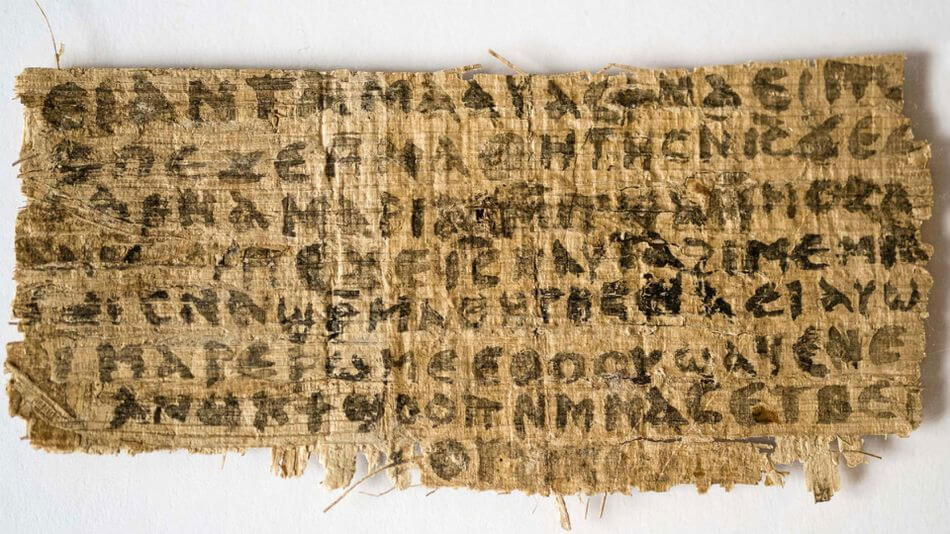
An ancient fragment mentions Jesus' wife!?
Posted by Luke J. Wilson on 10th April 2014 in General Interest | Jesus,wife,papyrus,fragment,Archaeology,Jesus wife,Gnosticism,early church
UPDATE (3rd May 2014): It is now believed to have been confirmed as a hoax/fake; read the full story on The Wall Street Journal.
Ancient and not a fake according to scientists
IMAGE: HARVARD UNIVERSITY, KAREN L. KING/ASSOCIATED PRESS
A little while ago, there was some hoopla in the news about a newly discovered fragment of papyrus from ancient times which contained the phrase "Jesus said to them, 'my wife...,'". Obviously, and not surprisingly, the media made a big deal out of this. Atheists and the like, saw it as a blow to Christianity and conspiracy theorists everywhere thought it confirmed their views that the Vatican and the Catholic Church wer...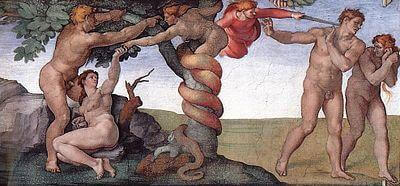
Was there death before the Fall?
Posted by Luke J. Wilson on 15th April 2014 in Death | Sheol,the Fall,Creation,Genesis,Adam and Eve,death,resurrection
It is often said and believed by many that our souls are immortal - that God gave us a spirit/soul that cannot die when he created us, and that death was not even a concept or reality before Adam and Eve sinned in the Garden of Eden. Despite this idea being a fairly "recent" concept (in terms of history and theology), and it stemming from Greek philosophy, it's also not supported by the Biblical text - especially in Genesis.
Lets look at the creation account in Gen 2:7—
then the Lord God formed man from the dust of the ground, and breathed into his nostrils the breath of life; and the man became a living being.
The word "being" in that verse, or "sou...
Lent: Day 17 - Justin Martyr: First Apology: Chaps. 60-68
Posted by Luke J. Wilson on 20th March 2017 in Lent | Lent,great lent,fasting,early church fathers,devotional,daily reading,Justin Martyr,apologetics,Plato,trinity,baptism,sunday worship
Day Seventeen: St. Justin Martyr: First Apology, Chaps. 60-68
Who: Justin Martyr was a Philosopher who converted to Christianity and became a tireless evangelist and apologist. Justin wrote more Christianity than any other person prior to his time. He is classified herein as Eastern, since he a native of Samaria and his thought patterns were Eastern. However, he spent the last years of his life in Rome, where he was executed as a martyr (c. 165).
What: An apologetic (defence) essay to explain what Christians believe and do.
Why: Justin is demanding the Emperor to investigate accusations and unjust persecution against Christians so that they at least may fac...
Lent Day 21: Athanasius: Life of Anthony: Chaps. 1-10
Posted by Luke J. Wilson on 24th March 2017 in Lent | Lent,great lent,fasting,early church fathers,devotional,daily reading,Athanasius,Bishop of Alexandria,Confessor,Doctor of the Church,Anthony the Great
Day Twenty-one: St. Athanasius: Life of Anthony: Chaps. 1-10
Who: Bishop of Alexandria; Confessor and Doctor of the Church; born c. 296; died 2 May, 373 AD. He was the main defender of orthodoxy in the 4th-century battle against the Arianism heresy. Certain writers received the title “Doctor” on account of the great advantage their doctrine had on the whole Church, Athanasius especially for his doctrine on the incarnation.
What: The biography of Anthony the Great’s life, which helped to spread the concept of Christian monasticism, particularly in Western Europe.
Why: From the letter’s own prologue: “The life and conversation of our holy Father, A...
Lent Day 22: Athanasius: Life of Anthony: Chaps. 11-20
Posted by Luke J. Wilson on 25th March 2017 in Lent | Lent,great lent,fasting,early church fathers,devotional,daily reading,Athanasius,Bishop of Alexandria,Confessor,Doctor of the Church,Anthony the Great
Day Twenty-two: St. Athanasius: Life of Anthony: Chaps. 11-20
Who: Bishop of Alexandria; Confessor and Doctor of the Church; born c. 296; died 2 May, 373 AD. He was the main defender of orthodoxy in the 4th-century battle against the Arianism heresy. Certain writers received the title “Doctor” on account of the great advantage their doctrine had on the whole Church, Athanasius especially for his doctrine on the incarnation.
What: The biography of Anthony the Great’s life, which helped to spread the concept of Christian monasticism, particularly in Western Europe.
Why: From the letter’s own prologue: “The life and conversation of our holy Father,...
Powered by WebBoss.io 3.7.1
Copyright © 2026 The Sacred Faith: Timeless Truths for Modern Minds. All Rights Reserved.
