
Blog Search Results


Did you mean:
holiday
?
170 results for holy day
found
within the Blog
6 displayed out of 170 (0.51seconds)Page 16 of 29

Lent day 22: Athanasius: Life of Anthony: Chaps. 11-20
Posted by Luke J. Wilson on 25th March 2017 in Lent | Lent,great lent,fasting,early church fathers,devotional,daily reading,Athanasius,Bishop of Alexandria,Confessor,Doctor of the Church,Anthony the Great
day Twenty-two: St. Athanasius: Life of Anthony: Chaps. 11-20
Who: Bishop of Alexandria; Confessor and Doctor of the Church; born c. 296; died 2 May, 373 AD. He was the main defender of orthodoxy in the 4th-century battle against the Arianism heresy. Certain writers received the title “Doctor” on account of the great advantage their doctrine had on the whole Church, Athanasius especially for his doctrine on the incarnation.
What: The biography of Anthony the Great’s life, which helped to spread the concept of Christian monasticism, particularly in Western Europe.
Why: From the letter’s own prologue: “The life and conversation of our holy Father,...
Lent day 24: Athanasius: Life of Anthony: Chaps. 31-40
Posted by Luke J. Wilson on 28th March 2017 in Lent | Lent,great lent,fasting,early church fathers,devotional,daily reading,Athanasius,Bishop of Alexandria,Confessor,Doctor of the Church,Anthony the Great,demons,demonology
day Twenty-four: St. Athanasius: Life of Anthony: Chaps. 31-40
Who: Bishop of Alexandria; Confessor and Doctor of the Church; born c. 296; died 2 May, 373 AD. He was the main defender of orthodoxy in the 4th-century battle against the Arianism heresy. Certain writers received the title “Doctor” on account of the great advantage their doctrine had on the whole Church, Athanasius especially for his doctrine on the incarnation.
What: The biography of Anthony the Great’s life, which helped to spread the concept of Christian monasticism, particularly in Western Europe.
Why: From the letter’s own prologue: “The life and conversation of our holy Father,...
Lent day 28: Athanasius: Life of Anthony: Chaps. 71-80
Posted by Luke J. Wilson on 1st April 2017 in Lent | Lent,great lent,fasting,early church fathers,devotional,daily reading,Athanasius,Bishop of Alexandria,Confessor,Doctor of the Church,Anthony the Great,miracles,Greek Philosophy,demons,healing,deliverance,the cross,foolishness of the cross
day Twenty-eight: St. Athanasius: Life of Anthony: Chaps. 71-80
Who: Bishop of Alexandria; Confessor and Doctor of the Church; born c. 296; died 2 May, 373 AD. He was the main defender of orthodoxy in the 4th-century battle against the Arianism heresy. Certain writers received the title “Doctor” on account of the great advantage their doctrine had on the whole Church, Athanasius especially for his doctrine on the incarnation.
What: The biography of Anthony the Great’s life, which helped to spread the concept of Christian monasticism, particularly in Western Europe.
Why: From the letter’s own prologue: “The life and conversation of our holy Father...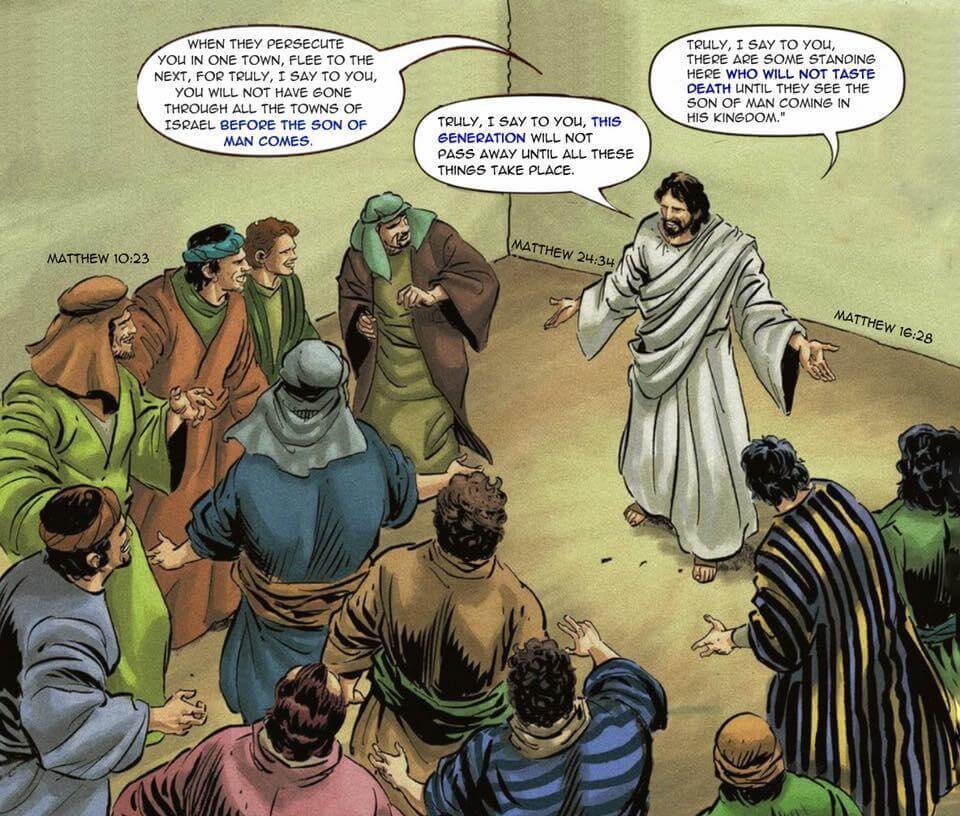
The Coming Kingdom of the Son of Man
Posted by Luke J. Wilson on 20th July 2016 in Eschatology | second coming,preterism,Kingdom of God,Coming kingdom,olivet discourse,Gospels,end times,end of the world,end of the age
The importance of context of what's being said, and to whom, in Scripture.
I came across this image the other day (in the header above; see larger here) that links together three parts of Matthew’s Gospel to highlight the connection which many often miss, or read as separate events. I like the image because it shows that when Jesus spoke these things, he would have been saying them directly to the disciples and others who were listening to his teaching, and not in some cryptic, ambiguous dictation to a prophetic scribe, devoid of all context and meaning to those around him at the time.
Update Feb 2017: I am adding some additional information to this to dis...
Jesus, Mithras and Ancient Roman Cults: Separating Fact from Fiction
Posted by Luke J. Wilson on 25th April 2023 in Mythology | Jesus,mithras,apologetics,roman gods,atheist
Welcome to the next instalment of my series looking at the ancient mythological gods and how they compare to the life, death and resurrection of Jesus. Mithras is yet another popular ancient god that people like to compare with Jesus and make wild claims about, proposing that they are the same deities with different names. But is this even remotely true?
This article has ended up being a bit longer than anticipated as it’s one of the few ancient religions that was contemporary to the birth of Christianity which was seen as somewhat of a rival belief system, so there’s a lot of interesting things to cover!
The Origins
Mithras has his roots in ancient Persi...
Armageddon Is Not A Battle Plan: What Revelation Actually Says — And Why It Matters Right Now
Posted by Luke J. Wilson on 12th March 2026 in Eschatology | politics,Trump,Donald Trump,evangelicalism,end times,armageddon,eschatology
Something bizarre happened in the White House Oval Office this week. Photographs circulated on social media showing President Donald Trump seated at his desk, surrounded by approximately twenty Christian pastors from across the country, their hands extended towards him in prayer. The image provoked sharply divided reactions: some saw it as a moving expression of faith; others found it deeply unsettling. Whatever one makes of the optics, it arrived at a charged moment.
Trump held a prayer meeting in the Oval Office after his administration admitted the war with Iran will likely last weeks longer than promised | Credit: Dan Scavino's X account
days earlier,...
Powered by WebBoss.io 3.7.1
Copyright © 2026 The Sacred Faith: Timeless Truths for Modern Minds. All Rights Reserved.
