
Blog Search Results


Did you mean:
part two
?
212 results for Part two
found
within the Blog
6 displayed out of 212 (0.46seconds)Page 17 of 36

Has Brexit just spoiled “End Times” prophecy?
Posted by Luke J. Wilson on 25th June 2016 in Eschatology | end times,Brexit,EU referendum,european union,antichrist,NWO,second coming
Has "Brexit" just spoiled “End Times” prophecy?
In a word, no.
Unless of course you are of a Dispensationalist view, then this sudden exit from the European Union by Britain will have caused you some theological holes you may feel the need to patch up.
There’s already been some satire articles posted in light of this, highlighting the errors of Dispensationalism and its main adherents tendency to interpret Biblical prophecy by the current news headlines. One such article, by The Babylon Bee, poked fun at the current events by writing that “premillenial dispensationalists around the world held emergency meetings Friday morning, frantically adj...
Exodus: Gods and Kings Review - Action epic loosely based on the Bible
Posted by Luke J. Wilson on 16th April 2015 in TV & Film | Exodus,God's and Kings,film review,biblical film
I know the film has been out for a while now, but I missed seeing it in the cinema and so have only just seen it. I'm sure there's others out there who still haven't watched this and are wondering whether it's worth the time and effort, so here goes: my review of Exodus.
The film begins with Moses later in life living in the Pharaoh's palace as his adopted son along side his half brother. Now I'm not sure if this Part was based on any Jewish Midrash or if it was purely artistic license, but either way I thought it was well done to show how Moses' life could well have gone being brought up Egyptian. APart from some pretty epic looking battle scenes, t...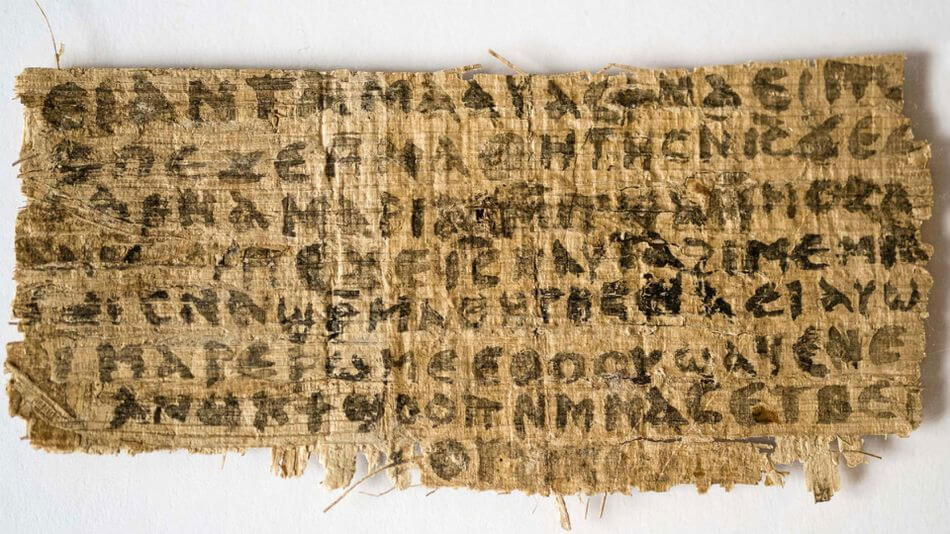
An ancient fragment mentions Jesus' wife!?
Posted by Luke J. Wilson on 10th April 2014 in General Interest | Jesus,wife,papyrus,fragment,Archaeology,Jesus wife,Gnosticism,early church
UPDATE (3rd May 2014): It is now believed to have been confirmed as a hoax/fake; read the full story on The Wall Street Journal.
Ancient and not a fake according to scientists
IMAGE: HARVARD UNIVERSITY, KAREN L. KING/ASSOCIATED PRESS
A little while ago, there was some hoopla in the news about a newly discovered fragment of papyrus from ancient times which contained the phrase "Jesus said to them, 'my wife...,'". Obviously, and not surprisingly, the media made a big deal out of this. Atheists and the like, saw it as a blow to Christianity and conspiracy theorists everywhere thought it confirmed their views that the Vatican and the Catholic Church wer...
Lent Day 36: Ambrose of Milan: Concerning the Mysteries: 5-9
Posted by Luke J. Wilson on 11th April 2017 in Lent | Lent,great lent,fasting,early church fathers,devotional,daily reading,Doctor of the Church,lectures,liturgy,catechism,Eucharist,Bishop of Milan,St Ambrose,mysteries,treatise,baptism,transubstantiation,real presence
Day Thirty-six: St. Ambrose of Milan: Concerning the Mysteries: 5-9
Who: Bishop of Milan from 374 to 397; born probably 340, at Trier, Arles, or Lyons; died 4 April, 397. He was one of the most illustrious Fathers and Doctors of the Church.
What: The treatise was composed for use during the latter Part of Lent, for the benefit of those about to be baptised, the rites and meaning of that Sacrament, as well as of Confirmation and the Holy Eucharist. For all these matters were treated with the greatest reserve in the Early Church, for fear of being misused by unbelievers.
Why: Ambrose states that after the explanations he has already given of holy living (in pre...
The Temptations of Jesus: Testing God
Posted by Luke J. Wilson on 4th March 2018 in Lent | temptation,testing God,pinnacle,Temple,Jesus,Satan,wilderness,Lent,desert,Armour of God
Here we are at the final temptation that the devil directly attacks Jesus with (I say directly, because next week I’m going to look at the more subtle attacks and temptations we can face).
Let’s begin with the text:
Matthew 4:5-7
Then the devil took him to the holy city and placed him on the pinnacle of the temple, saying to him, “If you are the Son of God, throw yourself down; for it is written,
‘He will command his angels concerning you,’
and ‘On their hands they will bear you up,
so that you will not dash your foot against a stone.’”
Jesus said to him, “Again it is written, ‘Do not put the Lord your God to the test.’” (...
The Eighth Day
Posted by Luke J. Wilson on 26th October 2016 in Eschatology | eighth day,early church,new creation,baptism,resurrection,eschatology,sabbath,Lord's Day,Festival of Booths
What is the “eighth day” you may ask; surely we know there are only seven days in a week!
But in ancient times, Sunday – which was also known as the first day of the week, was also referred to as the eighth day by Christians.
This day was considered a holy day from the earliest of times by Christians (despite some weak arguments that Constantine, or the Pope, “changed the Sabbath” some 400 years later), and this was because it was the day on which Christ rose from the dead!
I will make a beginning of the eighth day, that is, a beginning of another world. For that reason, also, we keep the eighth day with joyfulness, the day on which Jesus rose aga...
Powered by WebBoss.io 3.7.1
Copyright © 2026 The Sacred Faith: Timeless Truths for Modern Minds. All Rights Reserved.
