
Blog Search Results


210 results for church calendar
found
within the Blog
6 displayed out of 210 (0.52seconds)Page 18 of 35

Is it the end of the world as we know it?
Posted by Luke J. Wilson on 27th September 2015 in Eschatology | blood moon,last days,end of the world,second coming,apocalypse,prophecy,false prophets,predictions
September 28th 2015 will be a supermoon and a red moon at that.
I last wrote about these four "blood moons" way back in April last year when certain self-styled prophets John Hagee and Mark Blitz's "End Times" teaching gained some popularity (and subsequent book promotions). One thing that I predicted in my previous article was that if nothing else comes from all of this "end is nigh" nonsense, is that these "prophets" would indeed profit from their books – as has been shown to be true in which the "Four Blood Moons" book has been in the top 20 on the New York Times Best-seller List, and has also recently been turned into a docu-drama!
Other than th...
Lent: Day 17 - Justin Martyr: First Apology: Chaps. 60-68
Posted by Luke J. Wilson on 20th March 2017 in Lent | Lent,great lent,fasting,early church fathers,devotional,daily reading,Justin Martyr,apologetics,Plato,trinity,baptism,sunday worship
Day Seventeen: St. Justin Martyr: First Apology, Chaps. 60-68
Who: Justin Martyr was a Philosopher who converted to Christianity and became a tireless evangelist and apologist. Justin wrote more Christianity than any other person prior to his time. He is classified herein as Eastern, since he a native of Samaria and his thought patterns were Eastern. However, he spent the last years of his life in Rome, where he was executed as a martyr (c. 165).
What: An apologetic (defence) essay to explain what Christians believe and do.
Why: Justin is demanding the Emperor to investigate accusations and unjust persecution against Christians so that they at least may fac...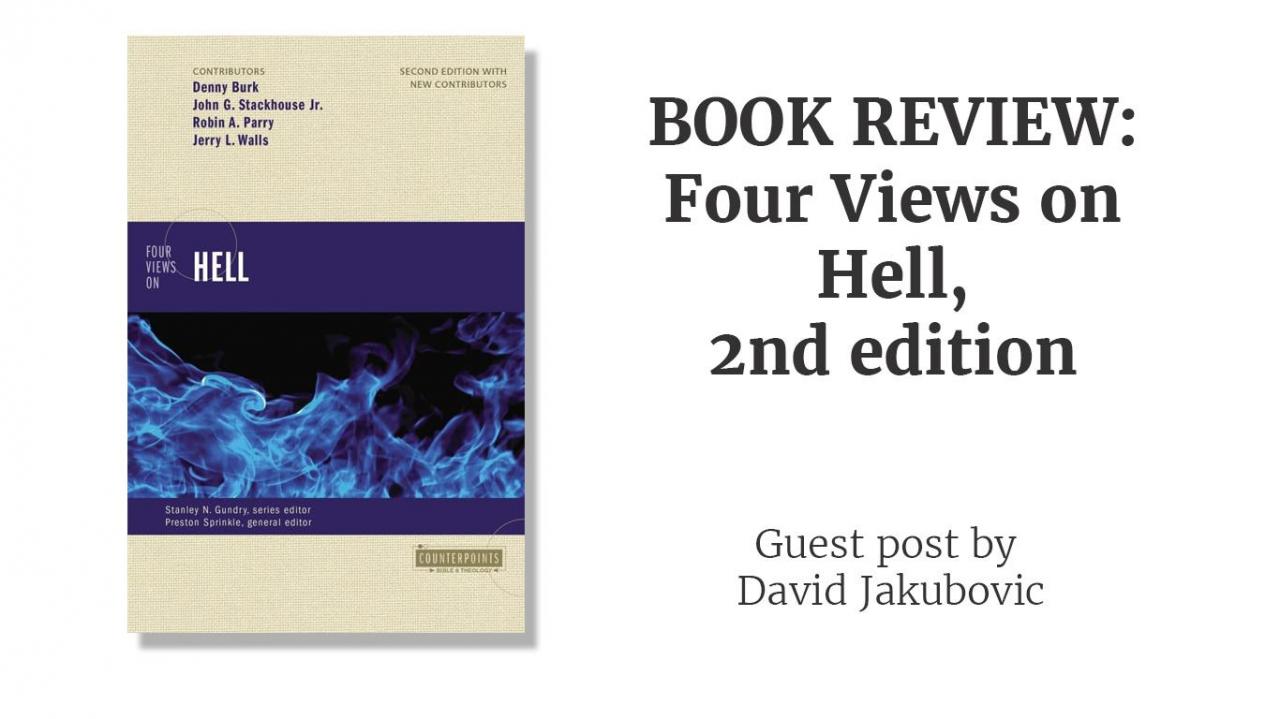
BOOK REVIEW: Four Views on Hell 2nd edition
Posted by David Jakubovic on 17th March 2021 in Book Review |
This is a guest post by David Jakubovic. The views are that of the author and don't necessarily reflect the views of That Ancient Faith.
A 20 year update of the 1996 book by the same name, this slim volume (211 pages) is a helpful cross-section of current evangelical thought on Final Punishment, sampling Denny Burk on Eternal Conscious Torment (ECT hereafter), John Stackhouse Jr on Conditional immortality (CI hereafter), Robin Parry on Christian Universalism (CU hereafter) and Jerry Walls on (a Protestant) Purgatory. Preston Sprinkle pens both Introduction and Conclusion, plus there are Scripture, Author and Subject indices.
The Introduction sets the scene,...
Has Brexit just spoiled “End Times” prophecy?
Posted by Luke J. Wilson on 25th June 2016 in Eschatology | end times,Brexit,EU referendum,european union,antichrist,NWO,second coming
Has "Brexit" just spoiled “End Times” prophecy?
In a word, no.
Unless of course you are of a Dispensationalist view, then this sudden exit from the European Union by Britain will have caused you some theological holes you may feel the need to patch up.
There’s already been some satire articles posted in light of this, highlighting the errors of Dispensationalism and its main adherents tendency to interpret Biblical prophecy by the current news headlines. One such article, by The Babylon Bee, poked fun at the current events by writing that “premillenial dispensationalists around the world held emergency meetings Friday morning, frantically adj...
Lent: Day 2 - Mathetes to Diognetus, pt. 1
Posted by Luke J. Wilson on 3rd March 2017 in Lent | Lent,great lent,fasting,early church fathers,devotional,daily reading,epistle of mathetes to diognetus
Day two: Epistle of Mathetes to Diognetus: Chaps. 1-6
Who: Anonymous author, “mathetes” is not a name, but is the Greek word for “a disciple”
What: possibly one of the earliest examples of a Christian apologetic defending the faith from its accusers, written to someone interested in learning more about the faith and its customs
Why: The Christian faith was under attack and ridicule in the early centuries, many things about the church were misunderstood and so various Christians took to writing apologetic's (defences) to clarify doctrines and beliefs from being maligned.
When: Estimated between AD 130 and late 2nd century
I've only ever come acros...
Jesus Like You've Never Seen Before - Discoveries from Early Christian Art
Posted by Luke J. Wilson on 13th May 2023 in Archaeology | archaeology,icons,Jesus,history,historical
I recently made a video on TikTok about what Jesus looks like in religious art and icons across various cultures, showing that people see Jesus as relatable to them and their people groups, and thus often depict Jesus looking the same as their own race. There was a comment made claiming that the Christ Pantocrator icon is exactly what Jesus looked like, and thus all others are wrong. If you’re wondering about the icon name, Pantocrator (Greek: Παντοκράτωρ) literally means “ruler of all”, but usually gets translated as “Almighty” or “all-powerful”.
The oldest known icon of Christ Pantocrator,6th-century encaustic icon fromSaint Catheri...
Powered by WebBoss.io 3.7.1
Copyright © 2026 The Sacred Faith: Timeless Truths for Modern Minds. All Rights Reserved.
