
Blog Search Results


212 results for two powers in heaven
found
within the Blog
6 displayed out of 212 (0.85seconds)Page 19 of 36
Lent: Day 15 - Justin Martyr: First Apology, Chaps. 36-47
Posted by Luke J. Wilson on 17th March 2017 in Lent | Lent,great lent,fasting,early church fathers,devotional,daily reading,Justin Martyr,apologetics
Day Fifteen: St. Justin Martyr: First Apology, Chaps. 36-47
Who: Justin Martyr was a Philosopher who converted to Christianity and became a tireless evangelist and apologist. Justin wrote more Christianity than any other person prior to his time. He is classified herein as Eastern, since he a native of Samaria and his thought patterns were Eastern. However, he spent the last years of his life in Rome, where he was executed as a martyr (c. 165).
What: An apologetic (defence) essay to explain what Christians believe and do.
Why: Justin is demanding the Emperor to investigate accusations and unjust persecution against Christians so that they at least may face...
Lent Day 36: Ambrose of Milan: Concerning the Mysteries: 5-9
Posted by Luke J. Wilson on 11th April 2017 in Lent | Lent,great lent,fasting,early church fathers,devotional,daily reading,Doctor of the Church,lectures,liturgy,catechism,Eucharist,Bishop of Milan,St Ambrose,mysteries,treatise,baptism,transubstantiation,real presence
Day Thirty-six: St. Ambrose of Milan: Concerning the Mysteries: 5-9
Who: Bishop of Milan from 374 to 397; born probably 340, at Trier, Arles, or Lyons; died 4 April, 397. He was one of the most illustrious Fathers and Doctors of the Church.
What: The treatise was composed for use during the latter part of Lent, for the benefit of those about to be baptised, the rites and meaning of that Sacrament, as well as of Confirmation and the Holy Eucharist. For all these matters were treated with the greatest reserve in the Early Church, for fear of being misused by unbelievers.
Why: Ambrose states that after the explanations he has already given of holy living (in pre...
Lent Day 40: Leo the Great: Sermon LXXII: ON THE LORD'S RESURRECTION, II
Posted by Luke J. Wilson on 15th April 2017 in Lent | Lent,great lent,fasting,early church fathers,devotional,daily reading,Doctor of the Church,lectures,Leo the Great,St Leo,Pope Leo I,sermon,resurrection,easter,easter sunday
Day Forty: St. Leo the Great: Sermon LXXII: ON THE LORD'S RESURRECTION, II
Who: Leo the Great, also known as Pope St. Leo I (the Great), was Pope from 440-61 AD. Place and date of birth unknown; died 10 November, 461. Leo's pontificate, next to that of St. Gregory I, is the most significant and important in Christian antiquity, as he tried to combat the heresies which seriously threatened church unity even in the West, such as Pelagianism.
What: A sermon on the Gospel, incarnation and resurrection of our Lord.
Why: To encourage the Church in the power of the incarnation and the true faith and the nature of Christ and to give a new meaning to Passover in lig...
The Problem of Suffering and How We Approach it
Posted by Luke J. Wilson on 6th January 2018 in Christianity | evil,suffering,the problem of evil,human suffering,reconcilliation,pain,true religion,pure worship
The topic of human suffering is a subject many Christians struggle with, and is an issue many theologians have written about over the centuries — so it's definitely not something I can fully address in a single blog post!
But there are some general principles we can find in Scripture that many Christians can/do accept, which should act as a starting point to addressing this subject, such as:
We live in a fallen world due to sin (Gen 3), and so things aren’t perfect and neither are people, therefore suffering can happen from illness, nature, and human action (or inaction).
Not all suffering is necessarily “bad”, from a Christian perspective. For exam...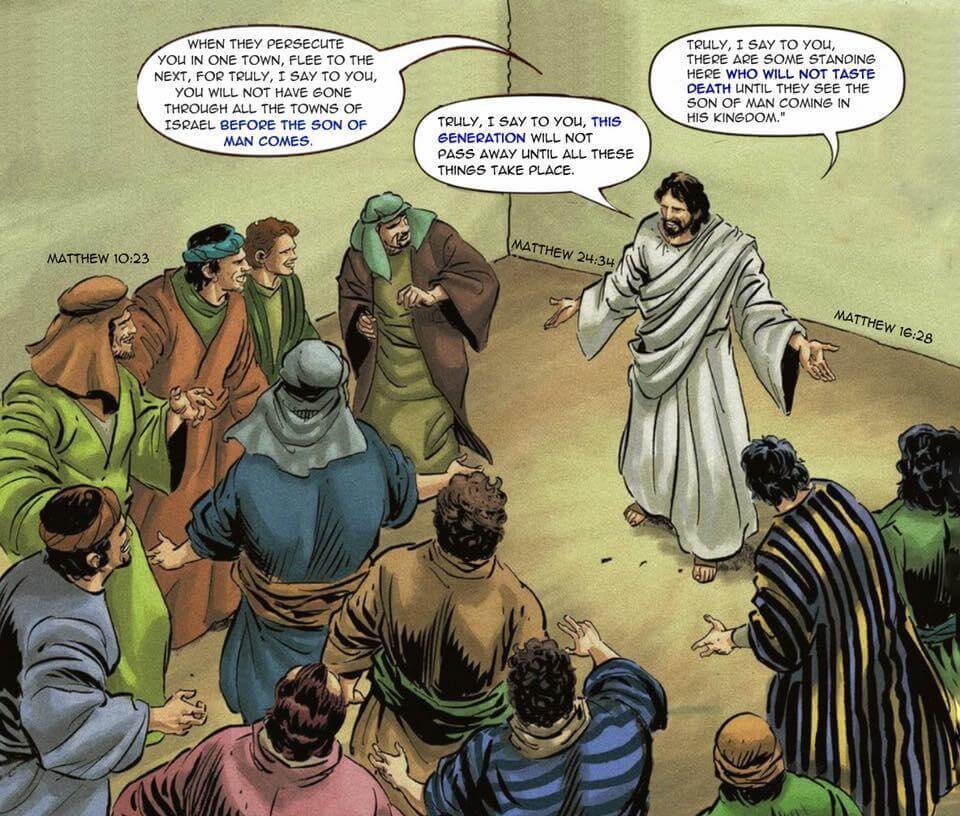
The Coming Kingdom of the Son of Man
Posted by Luke J. Wilson on 20th July 2016 in Eschatology | second coming,preterism,Kingdom of God,Coming kingdom,olivet discourse,Gospels,end times,end of the world,end of the age
The importance of context of what's being said, and to whom, in Scripture.
I came across this image the other day (in the header above; see larger here) that links together three parts of Matthew’s Gospel to highlight the connection which many often miss, or read as separate events. I like the image because it shows that when Jesus spoke these things, he would have been saying them directly to the disciples and others who were listening to his teaching, and not in some cryptic, ambiguous dictation to a prophetic scribe, devoid of all context and meaning to those around him at the time.
Update Feb 2017: I am adding some additional information to this to dis...
God before ages becomes an infant!
Posted by Luke J. Wilson on 25th December 2015 in Christmas | Christmas,Nativity,Birth of Jesus,A capella,John Chrysostom
I saw a beautifully sung a capella song the other day of Facebook. It was about the Nativity, the incarnation of Christ. One of the lines in the song really struck me, the profound nature of what God did summed up in a single sentence:
Glorify, with the angels and the shepherds, Him who by His own will has become a newborn child, yet is our God before all ages.
Let that sink in for a moment before reading this excerpt from one of John Chrysostom's sermons on Christmas (something else I saw shared on Facebook which I think sums up this day in better words than I could muster):
"What shall I say! And how shall I describe this Birth to you? For this wo...
Powered by WebBoss.io 3.7.1
Copyright © 2026 The Sacred Faith: Timeless Truths for Modern Minds. All Rights Reserved.
