
Blog Search Results


43 results for tradition
found
within the Blog
6 displayed out of 43 (0.03seconds)Page 2 of 8
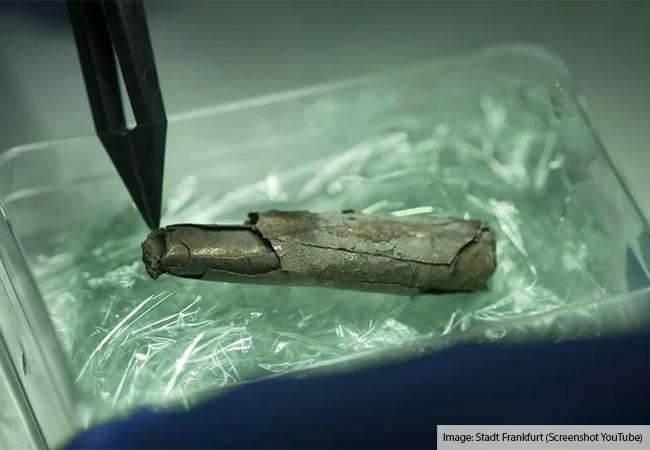
Implications Of The Frankfurt Silver Amulet: Insights Into Early Christian Practice And Belief
Posted by Luke J. Wilson on 6th January 2025 in Archaeology | amulet,liturgy,history,current events,early church
...existing traditions.
1. Invoking St. Titus: A Connection to Apostolic Roots
One of the most remarkable features of the inscription is its invocation of St. Titus, a disciple and confidant of the Apostle Paul. This early reference highlights the theological importance of Apostolic authority and continuity. Titus, known for his leadership within the early church, symbolises the rootedness of Christian faith in the teachings and mission of the Apostles.
In this context, the invocation of a saint also invites a deeper exploration of the “cult of saints,” a term scholars use to describe the veneration of saints within Christian tradition. The cult of saints b...
Armageddon Is Not A Battle Plan: What Revelation Actually Says — And Why It Matters Right Now
Posted by Luke J. Wilson on 12th March 2026 in Eschatology | politics,Trump,Donald Trump,evangelicalism,end times,armageddon,eschatology
...ame broad tradition in more accessible modern form. The Church, in other words, is that stone: spreading through the empire not by force of arms but by the quiet, unstoppable advance of the Gospel, dismantling Rome’s claims to ultimate authority by proclaiming the truth about the True God. All three layers are real. All three are present in the text. And none of them require a future literal battle at Megiddo to complete the picture.
When military commanders invoke Revelation to tell service members that a president has been “anointed by Jesus” to trigger Armageddon, they are not giving voice to the theology of Revelation. They are, ironically, recapitula...
Spiritual Disciplines of the Early Church: Ancient Practices for the 21st Century
Posted by Luke J. Wilson on 17th June 2019 in Early Church |
...in later tradition.
“But let not your fasts be with the hypocrites; … but fast on the fourth day (Wednesday) and the Preparation (Friday). … [But pray] as the Lord commanded in His Gospel (the Lord’s Prayer) … Thrice in the day thus pray.”
Didache (c. 50 – 70)
Alongside fasting, praying the Lord’s Prayer three times a day (morning, noon, evening) was a common discipline. From around the third century, liturgy and prayers in a church service would start to face East as that was seen where God’s glory arose, and in baptism ritual turning East was a sign of turning away from the devil towards Christ (Jews similarly prayed facing Jerusalem)...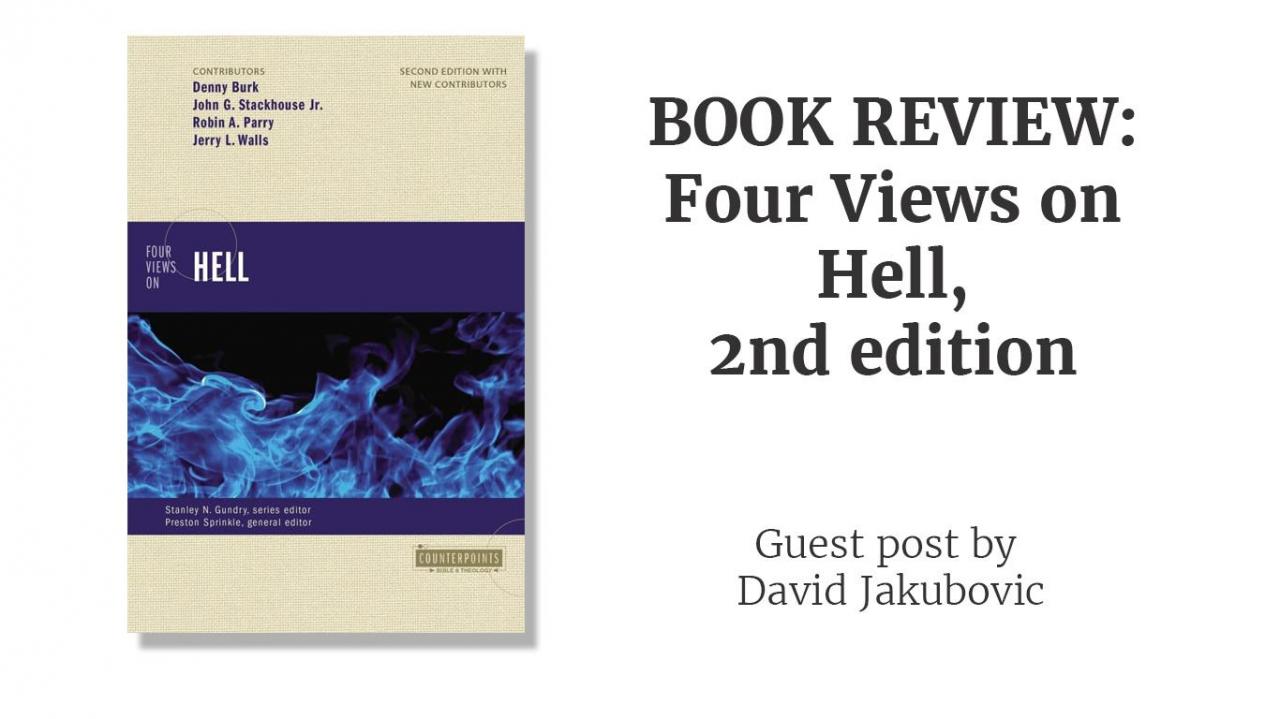
BOOK REVIEW: Four Views on Hell 2nd edition
Posted by David Jakubovic on 17th March 2021 in Book Review |
...pport the traditional view.”23
The ‘blackest darkness’ (which Burk links back to Jesus’ parables in Mt 8, 22 & 25 that indicate, not ECT, but being ousted into the dark Judean night-time away from the protective illumination of the torch-lit wedding feast) again perfectly fits lifeless obliteration, not least because no endless ‘hellish’ suffering is even hinted at by Jude.
Ending on Rev 14 & Rev 20, Burk picks up on the terms ‘tormented’ (basanizo) in 14:10 plus the noun ‘torment’ (basanismos) in 14:11 to insist that “John says that the pain and distress do not end but go on everlastingly” (40). Equally, from Rev 20, he arg...
Is fasting an expectation for Christians?
Posted by Luke J. Wilson on 29th February 2020 in Fasting | fasting,Lent,Ash Wednesday,self control,self denial
...The season of Lent is here once again which of course brings up the topic of fasting, since the tradition of Lent comes from following Jesus’ example of his time in the wilderness (Luke 4:1–2). I wasn’t planning on writing anything specific this year like I have previous in previous years, but I felt inspired today at church from one of Gospel readings:
Matthew 9:14–15
Then the disciples of John came to him, saying, “Why do we and the Pharisees fast often, but your disciples do not fast?” And Jesus said to them, “The wedding guests cannot mourn as long as the bridegroom is with them, can they? The days will come when the bridegroom is t...
Who was the real Santa Claus?
Posted by Luke J. Wilson on 17th December 2018 in Christmas | christmas,xmas,St Nicholas,early church,Nicea council,father Christmas,santa claus
...where the tradition then came to England and merged with other ancient traditions of “Father Christmas”, a 15-17th century personification of Christmas in Britain.
Did Coca-Cola invent the red-suited Santa?
Although this is a popular urban legend about the colour of Santa’s suit being changed to match Coca-Cola’s famous red branding, it is just a persistent myth (I’ve heard it repeated since I was a child!).
In 2008, Phil Mooney, the then director of Coca-Cola Company’s Archives Department, clarified in an interview by saying, “Actually, we do not claim the color of Santa’s coat, though it has worked out well for us since red is so closely rel...
Powered by WebBoss.io 3.7.1
Copyright © 2026 The Sacred Faith: Timeless Truths for Modern Minds. All Rights Reserved.
