
Blog Search Results


9 results for treatise
found
within the Blog
3 displayed out of 9 (0.02seconds)Page 2 of 2

The Early Concept of the Trinity: Tracing the Roots
Posted by Luke J. Wilson on 16th November 2023 in Trinity | trinity,early church,early church fathers,tri-unity,triune God,godhead
.... In this treatise, Tertullian defends the distinction between the Father, Son, and Holy Spirit while maintaining the unity of the Godhead. Here is an excerpt from Tertullian's "Against Praxeas":
We define that there are two, the Father and the Son, and three with the Holy Spirit, and this number is made by the pattern of salvation… They are three not in dignity, but in degree, not in substance but in form, not in power but in kind. They are of one substance and power because there is one God from whom these degrees, forms, and kinds devolve in the name of Father, Son, and Holy Spirit.
Ignatius and the Trinity
Jesuit priest, theologian, and scholar Fr....
Does Easter Have Pagan Origins?
Posted by Luke J. Wilson on 22nd March 2021 in Easter | Easter,easter sunday,early church,church history,paganism,pagan roots,Ishtar,Eostre,fertility goddess
...Much like any major Christian holiday, there are the usual arguments and accusations about how it’s all just pagan festivities with a “Christian mask”. Easter is no different, and usually gets hit the hardest over its so-called “pagan roots”, or in the month or so preceding it, Lent being some “invention of the Catholic Church”.
Table of Contents
The Lenten Fast
The Easter controversy and why we celebrate it when we do
Is the Name “Easter” really the Anglo-Saxon goddess Eostre?
Chocolate eggs and bunnies?
Concluding Thoughts
Further Reading and Sources
I like to try and observe Lent, as it is one of the most ancient custom...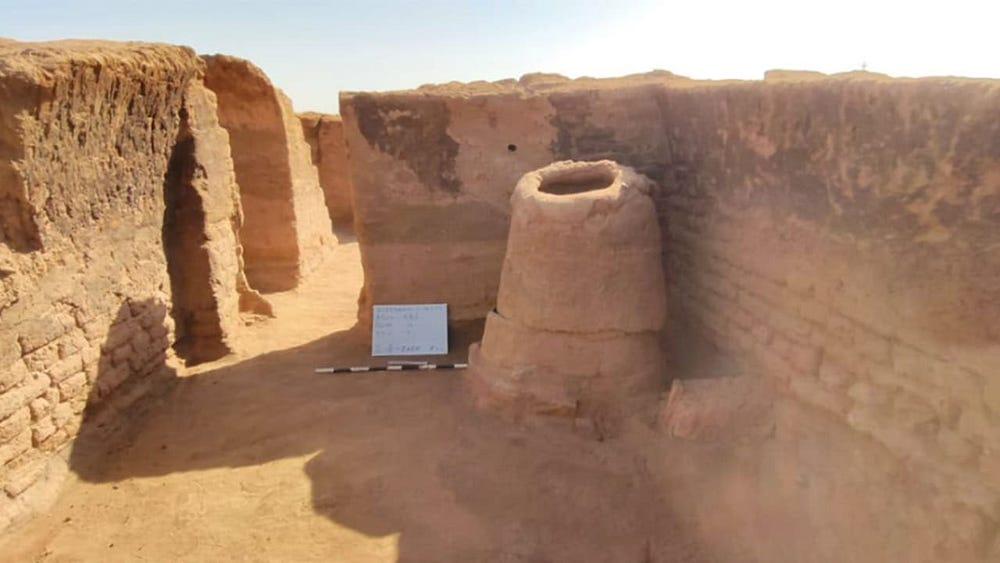
A City In The Sand: What A Fourth-Century Discovery In Egypt’s Western Desert Tells Us About The Early Church
Posted by Luke J. Wilson on 27th July 2026 in Archaeology | archaeology,early church,history
...eological treatises. We know them only through an oven, a coin hoard, and a handful of broken pottery shards recording who owed what to whom. And yet they were the Church, every bit as much as Athanasius was. The ordinary, unrecorded faithfulness of people whose names survive only as labels on excavated houses is itself a kind of witness — a rare one archaeology occasionally lets us glimpse, however briefly, before the sand closes back over it.
Things like this often remind me of the instructions Paul gave to the Thessalonians “to aspire to live quietly, to mind your own affairs, and to work with your hands” (1 Thess. 4:11). These people met in this t...
Powered by WebBoss.io 3.7.1
Copyright © 2026 The Sacred Faith: Timeless Truths for Modern Minds. All Rights Reserved.
