
Blog Search Results


211 results for theology
found
within the Blog
6 displayed out of 211 (0.05seconds)Page 20 of 36

Lent Day 32: Cyril of Jerusalem: Catechetical Lectures: Lecture XXI
Posted by Luke J. Wilson on 6th April 2017 in Lent | Lent,great lent,fasting,early church fathers,devotional,daily reading,Doctor of the Church,lectures,liturgy,catechism,Bishop of Jerusalem,anointing,Holy Spirit,chrism
Day Thirty-two: St. Cyril of Jerusalem: Catechetical Lectures: Lecture XXI
Who: Bishop of Jerusalem and Doctor of the Church, born about 315; died probably 18 March, 386. Little is known of his life, except from his younger contemporaries, Epiphanius, Jerome, and Rufinus, as well as from the fifth-century historians, Socrates, Sozomen and Theodoret.
What: Each of the lectures deal with a different topic to teach converts the mysteries of the Church, particularly: rites of the renunciation of Satan and his works, of anointing with oil, of baptism, of anointing with the holy chrism, and of partaking of the body and blood of Christ.
Why: Cyril delivered to new c...
Lent Day 35: Ambrose of Milan: Concerning the Mysteries: 1-4
Posted by Luke J. Wilson on 10th April 2017 in Lent | Lent,great lent,fasting,early church fathers,devotional,daily reading,Doctor of the Church,lectures,liturgy,catechism,Eucharist,Bishop of Milan,St Ambrose,mysteries,treatise
Day Thirty-five: St. Ambrose of Milan: Concerning the Mysteries: 1-4
Who: Bishop of Milan from 374 to 397; born probably 340, at Trier, Arles, or Lyons; died 4 April, 397. He was one of the most illustrious Fathers and Doctors of the Church.
What: The treatise was composed for use during the latter part of Lent, for the benefit of those about to be baptised, the rites and meaning of that Sacrament, as well as of Confirmation and the Holy Eucharist. For all these matters were treated with the greatest reserve in the Early Church, for fear of being misused by unbelievers.
Why: Ambrose states that after the explanations he has already given of holy living (in pr...
Lent Day 40: Leo the Great: Sermon LXXII: ON THE LORD'S RESURRECTION, II
Posted by Luke J. Wilson on 15th April 2017 in Lent | Lent,great lent,fasting,early church fathers,devotional,daily reading,Doctor of the Church,lectures,Leo the Great,St Leo,Pope Leo I,sermon,resurrection,easter,easter sunday
Day Forty: St. Leo the Great: Sermon LXXII: ON THE LORD'S RESURRECTION, II
Who: Leo the Great, also known as Pope St. Leo I (the Great), was Pope from 440-61 AD. Place and date of birth unknown; died 10 November, 461. Leo's pontificate, next to that of St. Gregory I, is the most significant and important in Christian antiquity, as he tried to combat the heresies which seriously threatened church unity even in the West, such as Pelagianism.
What: A sermon on the Gospel, incarnation and resurrection of our Lord.
Why: To encourage the Church in the power of the incarnation and the true faith and the nature of Christ and to give a new meaning to Passover in lig...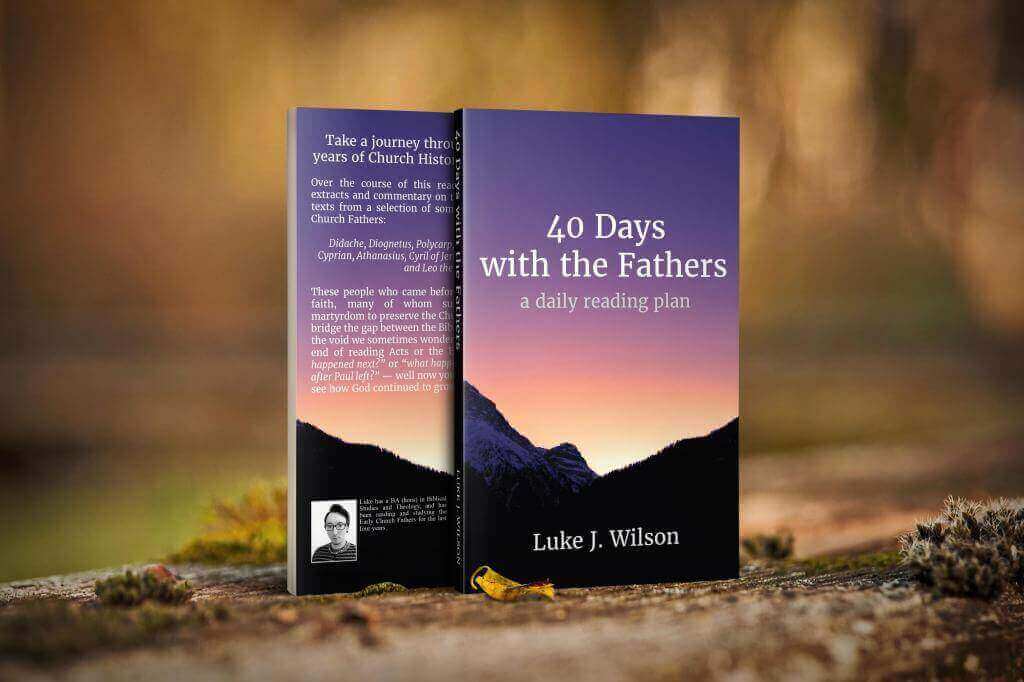
My Upcoming Book -- OUT NOW
Posted by Luke J. Wilson on 9th August 2017 in My Books | church fathers,church history,ante nicene fathers,apostolic fathers,daily reading,lent
40 Days with the Fathers:
Available to order now!
40 Days with the Father: a daily reading plan
by Luke J. Wilson
The time has finally arrived: my new book is now available to order!I'm so excited to share this with you after many months of work, research and editing. I hope that you enjoy reading the book as much as I did writing it! Order your copy now from my new website: fortydays.co.uk to get it at a reduced rate. If you order today then it should arrive just in time for Christmas!If you do enjoy it, don't forget to leave a review on Good Reads or on Amazon.Keep in touch and re...
American Gun Violence and the Early Church on War and Violence
Posted by Luke J. Wilson on 3rd October 2017 in Early Church | early church,early church fathers,gun violence,America,mass shooting
In light of the sad, recent events in the Las Vegas shooting — and similar events in America— I often see Christians across social media jumping to the defence of gun ownership whenever there is even a slight hint at gun control in America.
But how has gun culture become so ingrained in American Christianity when we can observe a clear theme and pattern of thought in the first few centuries of the Church, which goes completely against this?
Update 7th Nov 2017: It's so sad to have to update this post on the same subject so soon, almost a month to the day. Yet another shooting, this time in Texas where 26 people have been shot dead in a church of all pl...
Lent Day 38: Leo the Great: Sermon XXI (On the Nativity Feast I)
Posted by Luke J. Wilson on 13th April 2017 in Lent | Lent,great lent,fasting,early church fathers,devotional,daily reading,Doctor of the Church,lectures,Leo the Great,St Leo,hypostatic union,deity of christ,Pope Leo I,christology,sermon
Day Thirty-eight: St. Leo the Great: Sermon XXI (On the Nativity Feast I)
Who: Leo the Great, also known as Pope St. Leo I (the Great), was Pope from 440-61 AD. Place and date of birth unknown; died 10 November, 461. Leo's pontificate, next to that of St. Gregory I, is the most significant and important in Christian antiquity, as he tried to combat the heresies which seriously threatened church unity even in the West, such as Pelagianism.
What: A sermon on the Nativity at Christmas time, about the incarnation of the Word of God.
Why: To explain the incarnation and preach the Good News of our Lord and Saviour becoming man for our sake so that we may be sav...
Powered by WebBoss.io 3.7.1
Copyright © 2026 The Sacred Faith: Timeless Truths for Modern Minds. All Rights Reserved.
