
Blog Search Results


156 results for reading plan
found
within the Blog
6 displayed out of 156 (0.34seconds)Page 21 of 26
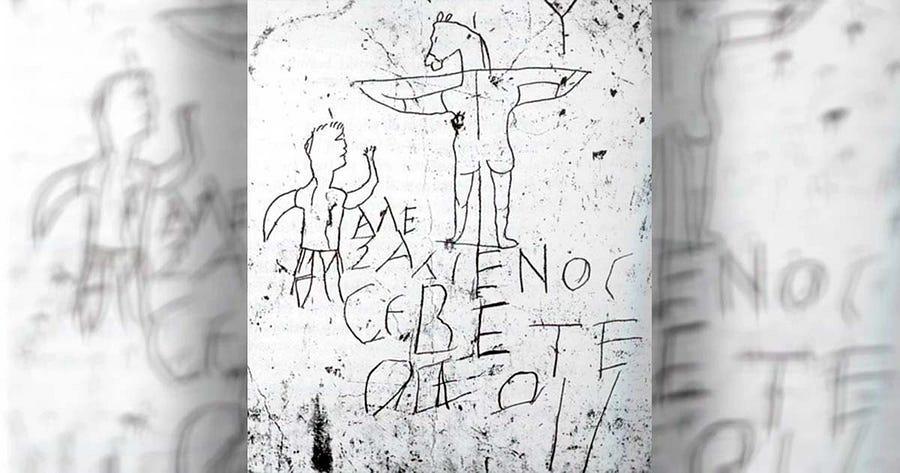
The World's Oldest Anti-Christian Meme
Posted by Luke J. Wilson on 9th March 2026 in Archaeology | Alexamenos graffito,archaeology,history
I first came across the Alexamenos graffito back in Bible college in the early 2000s. It was one of those “fun facts” that gets dropped into a church history lecture and sticks with you — the ancient Roman equivalent of someone spray-painting an insult on a wall. I filed it away, thought it was fascinating, and largely forgot about it for two decades.
Then, recently, I discovered something about it I had never known. There’s a response to it. Scratched in a different room, in a different hand.
So I started digging into this more to verify the information and discovered more historical curiosities surrounding the graffiti than I ever knew existed wh...
Lent: Day 10 - Ignatius to the Smyrnaeans
Posted by Luke J. Wilson on 11th March 2017 in Lent | Lent,great lent,fasting,early church fathers,devotional,daily reading,Ignatius,Ignatius to the smyrnaeans
Day Ten: St. Ignatius of Antioch: Letter to the Smyrnaeans (full text)
Who: Ignatius converted at a young age and later became Bishop of Antioch. A friend of Polycarp and fellow disciple of John, there is a long standing tradition that Ignatius was the child that Jesus held in his arms and blessed in Mark 10:13-16
What: A defence against the heresy of Docetism and an intriguing insight into the possible origins of evil spirits!
Why: Ignatius wrote a series of letters to the churches in Asia Minor whilst en route to Rome to face martyrdom by wild beasts in the Colosseum around 108 AD.
When: Around 107-108 AD
The opening chapters of this letter pulls no punc...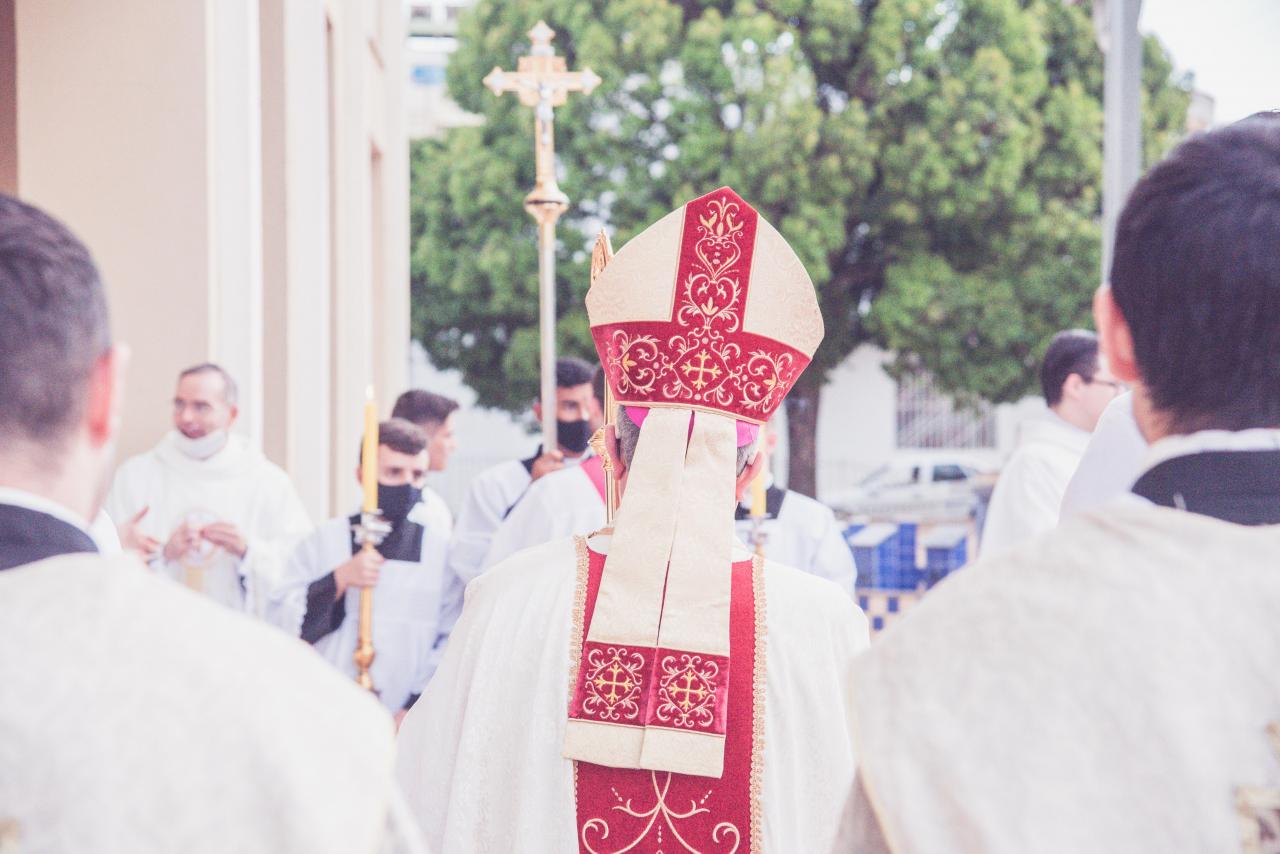
What does the word "Catholic" mean?
Posted by Luke J. Wilson on 8th March 2021 in Etymology | catholic,church fathers,church history,etymology,roman catholic,eastern orthodox,Great Schism,Muratorian Fragment
For many people today, non-Christians and (low church) Christians alike, when they hear the word “Catholic”, certain images spring to mind: the Pope, the rosery, Catholic school, big old churches buildings, choirboys, maybe monks or statues of Mary even; and sadly more recently, sex abuse scandals.
But, generally speaking, all of these are actually aspects of Roman Catholicism — a particular branch of Christianity, and not what the word “catholic” truly means as we’ll see when examining how the early church used the word and what the original Greek word means.
καθολικός (katholikos)
The Greek word where we get the English word “c...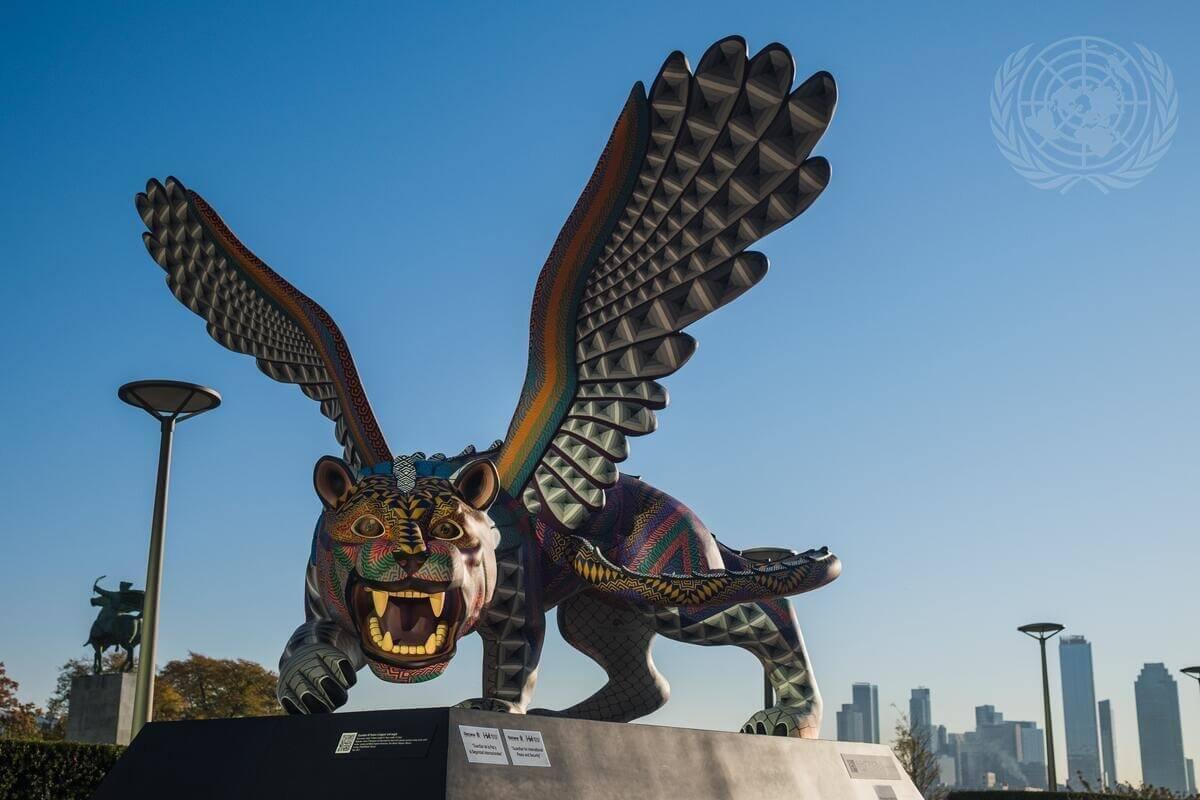
Does The UN Statue Resemble The End Times Beast From Daniel And Revelation?
Posted by Luke J. Wilson on 15th December 2021 in Eschatology |
There’s been a lot of fuss on the internet lately about this new statue that the UN has erected outside their headquarters on the Visitor’s Plaza.
I’ve seen screenshots of the original tweet shared on Facebook and other social media platforms, as well as copious articles flooding my newsfeed, all suggesting the same thing: this is the beast from Daniel 7. This of course carries with it the implication that it is also a fulfilment of that prophecy and therefore we should expect something more to happen soon, like “the antichrist” to rise up and consume the world. Or something along those lines. I don’t follow the Dispensational “end times” view a...
Did the Early Church invent the Trinity?
Posted by Luke J. Wilson on 4th January 2022 in Trinity | early church,trinity,church fathers,theology,council of nicaea,nicea council
The doctrine and concept of the Trinity is encapsulated in Matthew 28:19, where Jesus instructs the apostles: “Go therefore and make disciples of all nations, baptizing them in the name of the Father and of the Son and of the Holy Spirit”. John, who was very close to Jesus and obviously knew him well, alludes to this teaching frequently in his Gospel, too. For example: John 1:1; John 8:58; John 10:30; and John 10:38.
Yet, despite this, and numerous other examples throughout the New Testament which point towards the threefold nature of God, plenty of myths and legends abound online and in books which state that the divinity of Jesus (and therefore the Trinit...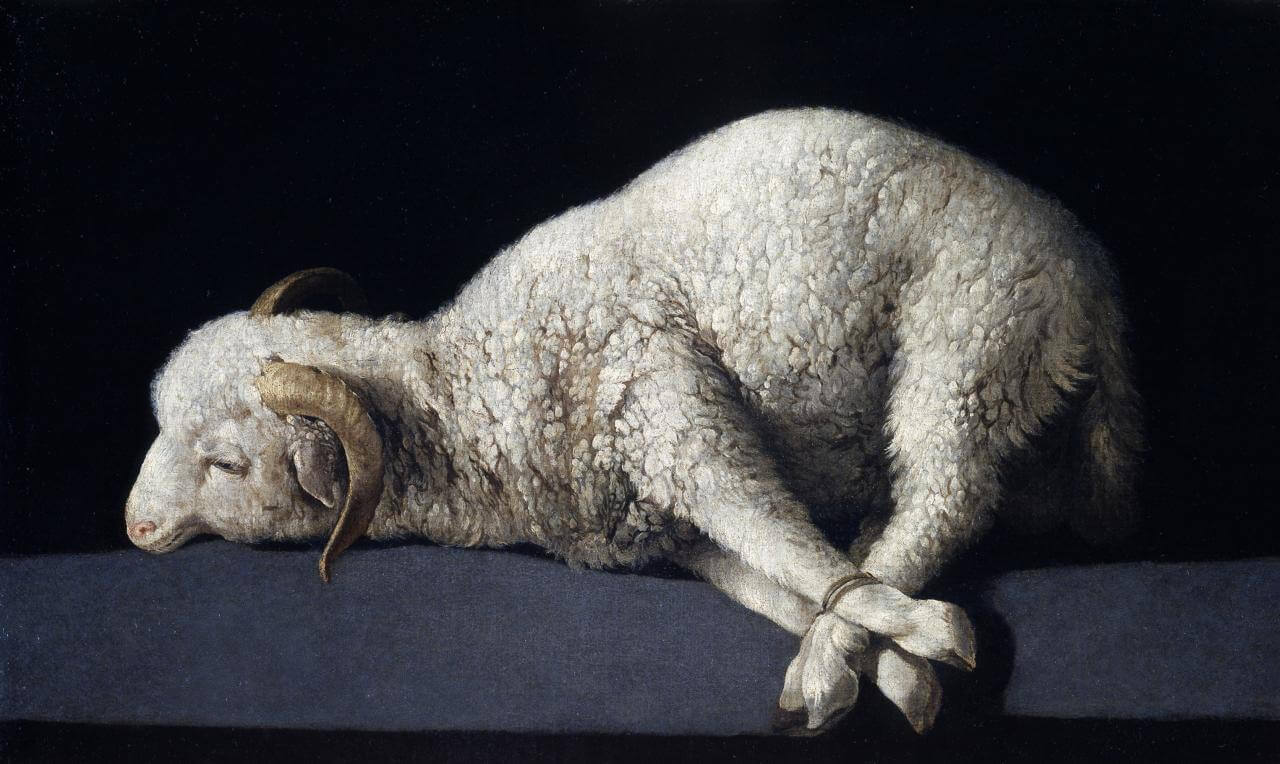
How was Jesus a sacrifice?
Posted by Luke J. Wilson on 25th March 2018 in Lent | sacrifice,sabbath,crucifixion,passover lamb,paschal lamb,sin,death,Palm Sunday
So often we hear this phrase said about Jesus, that he was “the lamb of God” and that he “takes away the sins of the world” — but what do those things mean and how did he take away sin?
John 1:29The next day [John] saw Jesus coming toward him and declared, “Here is the Lamb of God who takes away the sin of the world! (cf. Jn 1:36)
The New Testament writers repeatedly refer to Jesus as a lamb; but not only that — as a ransom too. Jesus even introduces himself that way at one point:
Mark 10:45
For the Son of Man came not to be served but to serve, and to give his life a ransom for many. (cf. Matthew 20:28)
To better understand the termi...
Powered by WebBoss.io 3.7.1
Copyright © 2026 The Sacred Faith: Timeless Truths for Modern Minds. All Rights Reserved.
