
Blog Search Results


210 results for the church
found
within the Blog
6 displayed out of 210 (0.26seconds)Page 21 of 35

Lent: Day 3 - Mathetes to Diognetus, pt. 2
Posted by Luke J. Wilson on 3rd March 2017 in Lent | Lent,great lent,fasting,early church fathers,devotional,daily reading,epistle of mathetes to diognetus
Day three: Epistle of Mathetes to Diognetus: Chaps. 7-12
Who: Anonymous author, “mathetes” is not a name, but is the Greek word for “a disciple”
What: possibly one of the earliest examples of a Christian apologetic defending the faith from its accusers, written to someone interested in learning more about the faith and its customs
Why: the Christian faith was under attack and ridicule in the early centuries, many things about the church were misunderstood and so various Christians took to writing apologetic's (defences) to clarify doctrines and beliefs from being maligned.
When: Estimated between AD 130 and late 2nd century
Today's reading is the...
On the Feast of the Nativity, a sermon by Leo the Great
Posted by Luke J. Wilson on 22nd December 2018 in Christmas | nativity,christmas,xmas,leo the great,sermon
In the days leading up to Christmas, I wanted to share a sermon from a man known as Leo the Great (aka Pope Leo I), who was a Pope from 440-61 AD. He was one of the most significant and important men in Christian antiquity, as he tried to combat the heresies which seriously threatened church unity in the West, such as Pelagianism. This sermon of his about the incarnation of Christ and what it means for us has always stuck with me since I first read it last April when writing my own book on the Early church Fathers.
It's not that long, so take the time to read it through and let the words sink in as we prepare for Christmas to remember and celebrate the birth...
Lent, Lament and Lockdown
Posted by Luke J. Wilson on 3rd April 2020 in Coronavirus | lent,coronavirus,covid-19,lamentations,lament,lockdown
Lent is a time of self denial and of giving things up, and also a period of lament in the lead up to Easter where we remember the Passion and death of Christ before we celebrated the glorious resurrection.
Often this is a personal affair on the discipline side of things, even if it's a practice shared within your church community, but this year has been so very different. With the outbreak of the coronavirus, or COVID-19, the whole world has slowly gone into lockdown country by country, creating a strange sort of global “Lent” where everyone is having to practice self control and self denial. This has been underpinned with a sense of lament at the way thi...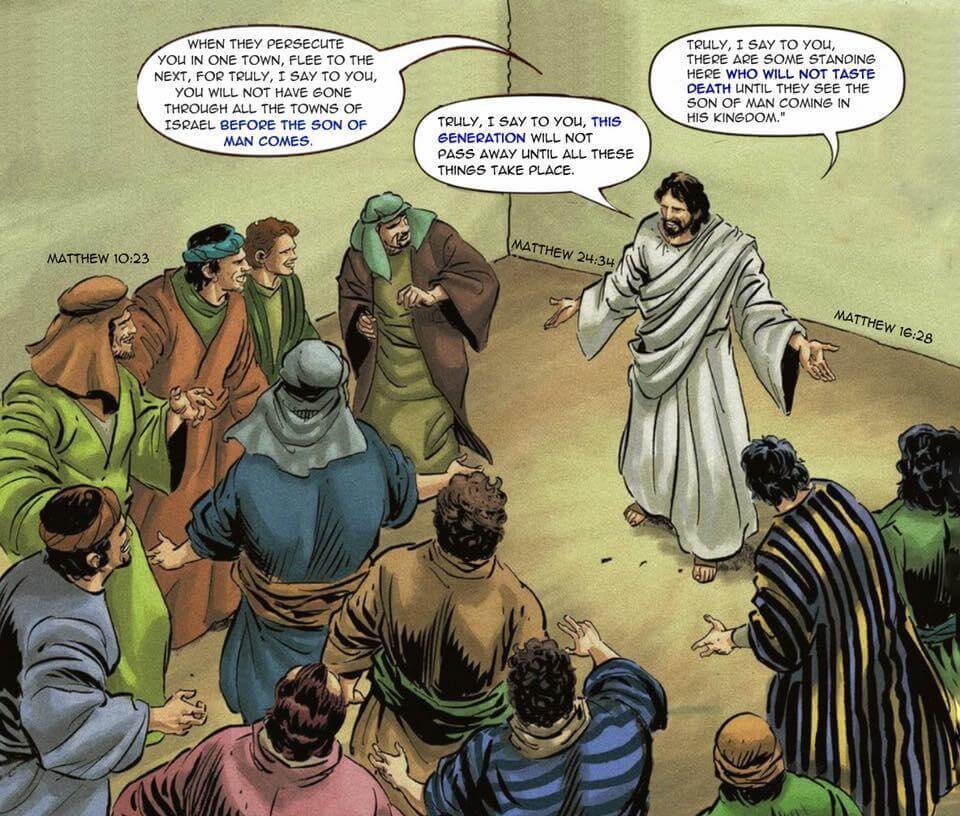
the Coming Kingdom of the Son of Man
Posted by Luke J. Wilson on 20th July 2016 in Eschatology | second coming,preterism,Kingdom of God,Coming kingdom,olivet discourse,Gospels,end times,end of the world,end of the age
the importance of context of what's being said, and to whom, in Scripture.
I came across this image the other day (in the header above; see larger here) that links together three parts of Matthew’s Gospel to highlight the connection which many often miss, or read as separate events. I like the image because it shows that when Jesus spoke these things, he would have been saying them directly to the disciples and others who were listening to his teaching, and not in some cryptic, ambiguous dictation to a prophetic scribe, devoid of all context and meaning to those around him at the time.
Update Feb 2017: I am adding some additional information to this to dis...
Palm Sunday and the End Times
Posted by Luke J. Wilson on 2nd April 2023 in Eschatology | eschatology,end times,palm sunday
It’s not often we read the text of the triumphant entry into Jerusalem as an eschatological text thinking about the return of Christ. Especially as at this point the in the Gospel narratives, Jesus is on earth in his first coming, and still a week away from his crucifixion!
While the texts usually read across the world on Palm Sunday may be familiar to us (Luke 19:28–40), we might miss the connection with the preceding parables if we don’t read the whole of Luke 19 together.
I won’t quote everything here, as you can read the whole text for yourself, but the pertinent verses come from the Parable of the Ten Minas in verses 11–27:
Luke 19:11, 27As the...
Debunking the Myth: the Council of Nicaea and the Formation of the Biblical Canon
Posted by Luke J. Wilson on 20th November 2023 in Early church | church history,council of nicaea,myths,debunked,canon,biblical canon
A myth that never seems to fade away: the idea that the Council of Nicaea, convened in 325 AD under the authority of Roman Emperor Constantine, played a pivotal role in establishing the Biblical canon. This notion suggests a conspiracy and power play orchestrated by a select group of elite bishops; a narrative popularised by works like Dan Brown’s Da Vinci Code. However, a closer examination reveals a lack of historical basis for this claim.
the Council of Nicaea and the Canon
Contrary to popular belief, there is no evidence that the Council of Nicaea discussed or established the Canon of Scripture, leading to the creation of the Bible. Early Christian cano...
Powered by WebBoss.io 3.7.1
Copyright © 2026 The Sacred Faith: Timeless Truths for Modern Minds. All Rights Reserved.
