
Blog Search Results


140 results for faith
found
within the Blog
6 displayed out of 140 (0.04seconds)Page 3 of 24

Creedal Christians: Introduction
Posted by Luke J. Wilson on 29th September 2018 in Early Church | creeds,creedal Christians,creedal,early church,church history
...tement of faith. Many non-creedal (or non-denominational) churches have a ‘statement of faith’ on their websites to highlight and specify where they stand on certain doctrines – which is essentially just stating their own type of creed instead of listing an ancient and historically accepted one. Even those who declare “no creed but Christ”, or “I just believe the Bible”, are ironically making a creed, albeit a short one with no solid definition.
The Church has been declaring creeds for as long as it has existed, despite the sometimes common accusation that creeds are “unbiblical” or “non-biblical”; statements which couldn’t be further f...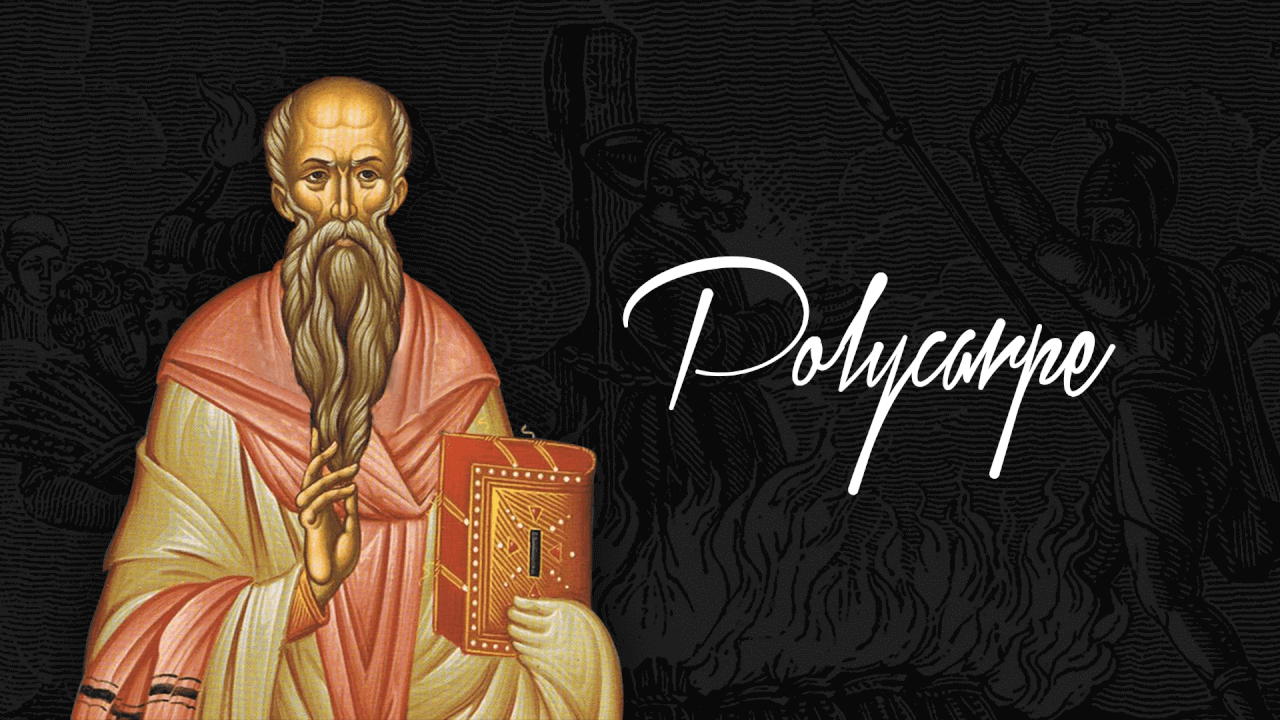
How Polycarp (And Others) Show The Early Use Of The New Testament
Posted by Luke J. Wilson on 21st November 2021 in Early Church | early church,early church fathers,polycarp,new testament,canon,biblical canon
...deny his faith when facing the man who could (and would) have him burned at the stake to die a martyr’s death! Polycarp was, and is, an great example of standing strong in our faith no matter what.
While that is also a good topic, what I want to focus on today is what Polycarp wrote. From what we have in existence still, there’s only one letter that bears his name, which he sent to the church in Philippi — yes, the same one Paul founded. We know from Irenaeus that Polycarp wrote more than this single letter, but sadly they no longer are with us, but there’s still two other letters that concern Polycarp in existence: one from Ignatius sent to Polyca...When did Christians become so whiny?
Posted by Luke J. Wilson on 25th April 2014 in Christianity | persecution, news, Christians, whiny, Google, homosexuality, Early Church, Love, Church Fathers
...ing their faith to others and explaining how and why they do things:
The Epistle to Diognetes, c. AD 130
[The Christians] dwell in their own countries, but simply as sojourners ... They have a common table, but not a common bed. They are in the flesh, but they do not live after the flesh. They pass their days on earth, but they are citizens of heaven. They obey the prescribed laws, and at the same time surpass the laws by their lives. They love all men and are persecuted by all. They are unknown and condemned; they are put to death and restored to life. They are poor yet make many rich; they are in lack of all things and yet abound in all; they are dishonore...
Support Israel? OK, which Israel?
Posted by Luke J. Wilson on 9th August 2014 in Israel | Israel,war,politics,current events,Hamas,terrorism,promised land,Church Fathers,pacifism,nonviolence,New Covenant
...ne of the faithful becomes a soldier, he must be rejected by the Church, for he has scorned God.
— Clement of Alexandria
For even if soldiers came to John and received advice on how to act, and even if a centurion became a believer, the Lord, in subsequently disarming Peter, disarmed every soldier.
— Tertullian
War is war.
From what I can see online, and in the various conversations I've had, is that people are also confusing what "we" should do as a country, with what "we" should do as Christians. Obviously we as a country are going to respond in some form, often with violence as is the way of the world. My main question though, is is th...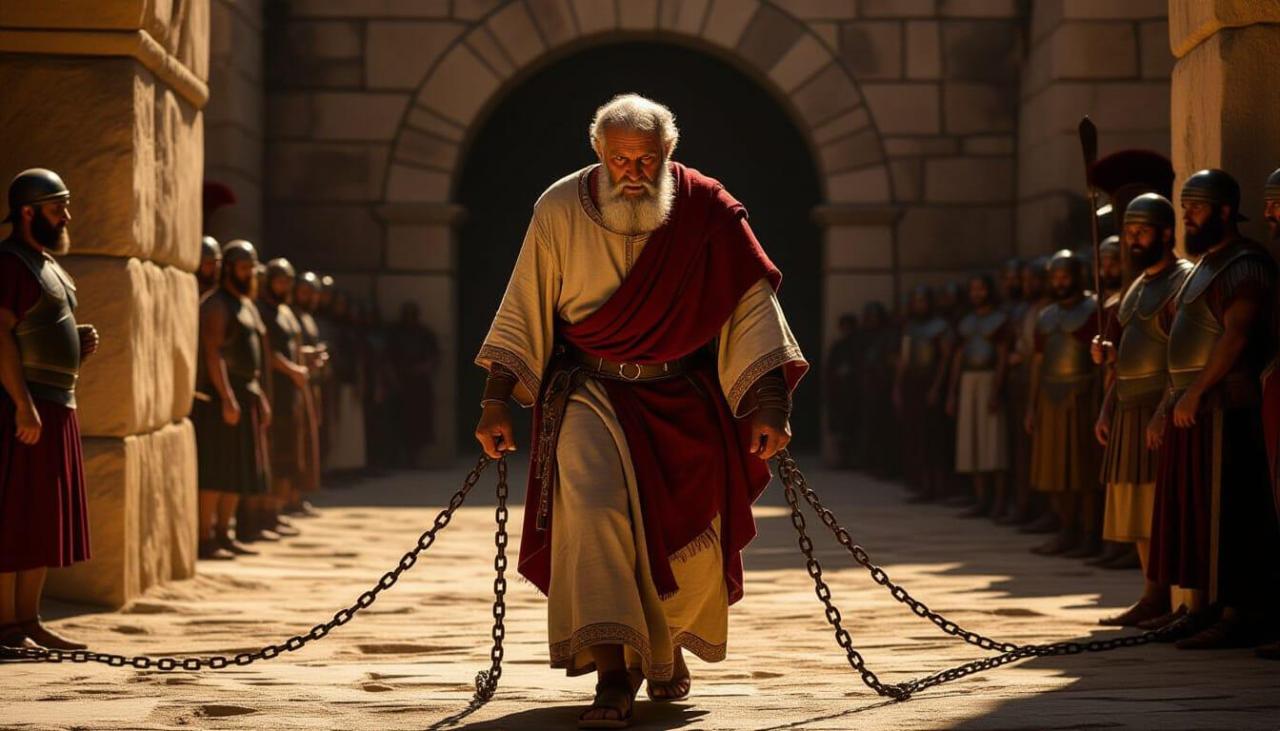
Before The Pumpkins: The Road To The Lions
Posted by Luke J. Wilson on 20th October 2025 in Halloween | ignatius,Ignatius of antioch,martyrdom,martyr,religion,halloween
...The sound of chains echoed through the streets as Ignatius of Antioch was led from Syria to Rome. The old bishop’s body was frail, but his heart burned with the strength of Christ. Each clinking step brought him closer to the arena — and to the wild beasts that would tear him apart — yet his letters brimmed with joy and passion, and a sense of urgency inspiring others to unity, obedience, and unwavering faith. For Ignatius, death was not defeat; it was the completion of discipleship, crossing the finish line of faith… the moment when imitation of Christ became complete.
Ignatius of Antioch is one of my favourite Early Church Fathers mainly for h...
Before The Pumpkins: Reclaiming All Hallows’ Eve
Posted by Luke J. Wilson on 12th October 2025 in Halloween | halloween,pagan roots,pagan,history,series
...s and the faithful who stood firm when the world turned against them.
The very first commemorations of this kind go back far earlier than medieval Europe. Around 135 AD, Christians were already gathering at the tombs of martyrs like Polycarp of Smyrna, treating their remains as “more precious than the most exquisite jewels”. By the third century, Cyprian of Carthage was writing that the Church should record the dates when martyrs were killed so that their witness could be remembered each year. The faithful didn’t gather to mourn their loss, they gathered to celebrate their victory over death by attaining the reward of eternal life.
Over time, as persecut...
Powered by WebBoss.io 3.7.1
Copyright © 2026 The Sacred Faith: Timeless Truths for Modern Minds. All Rights Reserved.
