
Blog Search Results


51 results for jewish
found
within the Blog
6 displayed out of 51 (0.03seconds)Page 3 of 9

The Coming of Jesus: The Olivet Discourse – Part 1
Posted by Luke J. Wilson on 19th October 2014 in Second Coming Series | Second Coming,Return of Christ,Return of Jesus,Preterism,Prophecy,Last Days,Left Behind,Eschatology,Matthew 24,Olivet Discourse,birth pangs,Josephus,history
...ttp://www.jewishencyclopedia.com/articles/12416-pseudo-messiahs#anchor2
http://en.wikipedia.org/wiki/Pax_Romana
http://en.wikipedia.org/wiki/Josephus
http://www.biblehistory.net/newsletter/acts11_famine.htm
http://www.amazon.co.uk/Josephus-Complete-Edition-published-Thomas/dp/B00E27XLCG/
http://www.josephus.org/ntparallels2.htm#Famine
http://www.earlyjewishwritings.com/text/josephus/war4.html
http://www.strangehistory.net/2011/02/28/josephus-armies-in-the-sky/
http://www.agudatbris.com/writtings2010/JudgingtheKingdom.pdf
http://www.josephus.org/ntparallels2.htm#Egyptian
http://www.ccel.org/ccel/josephus/complete.iii.vii.v.html
http://www.biblestudytoo...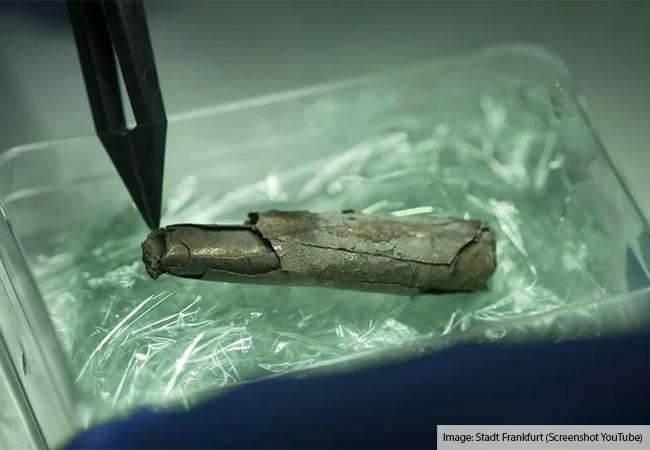
Implications Of The Frankfurt Silver Amulet: Insights Into Early Christian Practice And Belief
Posted by Luke J. Wilson on 6th January 2025 in Archaeology | amulet,liturgy,history,current events,early church
...The discovery of an 1,800-year-old silver amulet in Frankfurt, Germany, has captured the attention of archaeologists and theologians alike. Known as the “Frankfurt Silver Inscription,” this artefact is the earliest known evidence of Christianity north of the Alps and serves as a great insight to early Christian theology and liturgical practice.
Its early date (230–270 AD) sets it apart from previously known artefacts, which are at least 50 years younger. While there are historical references to Christian communities in Gaul and Upper Germania during the late 2nd century, reliable material evidence of Christian life in the northern Alpine regions generally...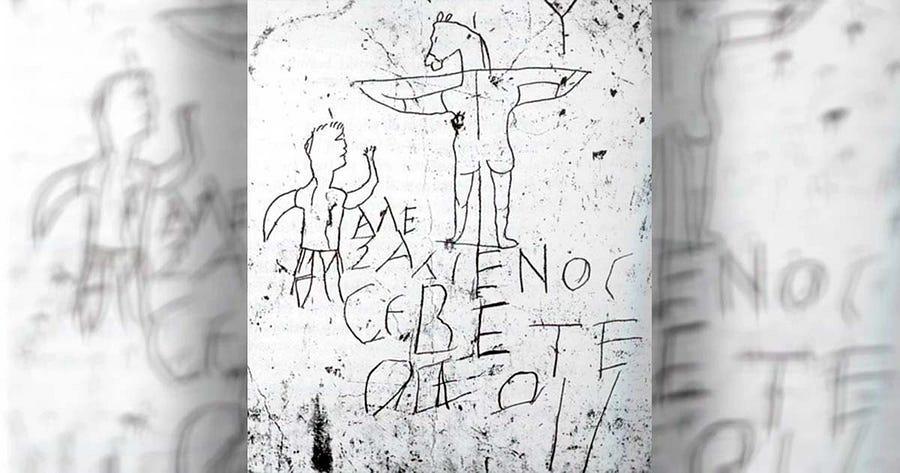
The World's Oldest Anti-Christian Meme
Posted by Luke J. Wilson on 9th March 2026 in Archaeology | Alexamenos graffito,archaeology,history
...I first came across the Alexamenos graffito back in Bible college in the early 2000s. It was one of those “fun facts” that gets dropped into a church history lecture and sticks with you — the ancient Roman equivalent of someone spray-painting an insult on a wall. I filed it away, thought it was fascinating, and largely forgot about it for two decades.
Then, recently, I discovered something about it I had never known. There’s a response to it. Scratched in a different room, in a different hand.
So I started digging into this more to verify the information and discovered more historical curiosities surrounding the graffiti than I ever knew existed wh...
Lent: Day 2 - Mathetes to Diognetus, pt. 1
Posted by Luke J. Wilson on 3rd March 2017 in Lent | Lent,great lent,fasting,early church fathers,devotional,daily reading,epistle of mathetes to diognetus
...Day two: Epistle of Mathetes to Diognetus: Chaps. 1-6
Who: Anonymous author, “mathetes” is not a name, but is the Greek word for “a disciple”
What: possibly one of the earliest examples of a Christian apologetic defending the faith from its accusers, written to someone interested in learning more about the faith and its customs
Why: The Christian faith was under attack and ridicule in the early centuries, many things about the Church were misunderstood and so various Christians took to writing apologetic's (defences) to clarify doctrines and beliefs from being maligned.
When: Estimated between AD 130 and late 2nd century
I've only ever come acros...
The Resurrection as a historical event
Posted by Luke J. Wilson on 29th April 2017 in Easter | resurrection,easter,apologetics,history,historical
...Table of Contents
Jesus was raised bodily – and historically
The resurrection is what makes Christianity unique!
Evidence from Paul
The mystery of the resurrection
The nature of the resurrection
The resurrection is more than physical
What with Easter still ringing in our ears, I thought it would be a good time to revisit the topic of resurrection, but from a historical standpoint and why we can trust it as a real, world-changing event. So, what really is the resurrection? How will we be resurrected, and what does it mean for us that Jesus rose again? Let’s explore what this means for us as Christians, and see what the Scriptures say.
Jesus wa...
Is fasting an expectation for Christians?
Posted by Luke J. Wilson on 29th February 2020 in Fasting | fasting,Lent,Ash Wednesday,self control,self denial
...The season of Lent is here once again which of course brings up the topic of fasting, since the tradition of Lent comes from following Jesus’ example of his time in the wilderness (Luke 4:1–2). I wasn’t planning on writing anything specific this year like I have previous in previous years, but I felt inspired today at church from one of Gospel readings:
Matthew 9:14–15
Then the disciples of John came to him, saying, “Why do we and the Pharisees fast often, but your disciples do not fast?” And Jesus said to them, “The wedding guests cannot mourn as long as the bridegroom is with them, can they? The days will come when the bridegroom is t...
Powered by WebBoss.io 3.7.1
Copyright © 2026 The Sacred Faith: Timeless Truths for Modern Minds. All Rights Reserved.
