
Blog Search Results


16 results for liturgy
found
within the Blog
4 displayed out of 16 (0.14seconds)Page 3 of 3

Lent Day 36: Ambrose of Milan: Concerning the Mysteries: 5-9
Posted by Luke J. Wilson on 11th April 2017 in Lent | Lent,great lent,fasting,early church fathers,devotional,daily reading,Doctor of the Church,lectures,liturgy,catechism,Eucharist,Bishop of Milan,St Ambrose,mysteries,treatise,baptism,transubstantiation,real presence
Day Thirty-six: St. Ambrose of Milan: Concerning the Mysteries: 5-9
Who: Bishop of Milan from 374 to 397; born probably 340, at Trier, Arles, or Lyons; died 4 April, 397. He was one of the most illustrious Fathers and Doctors of the Church.
What: The treatise was composed for use during the latter part of Lent, for the benefit of those about to be baptised, the rites and meaning of that Sacrament, as well as of Confirmation and the Holy Eucharist. For all these matters were treated with the greatest reserve in the Early Church, for fear of being misused by unbelievers.
Why: Ambrose states that after the explanations he has already given of holy living (in pre...
Spiritual Disciplines of the Early Church: Ancient Practices for the 21st Century
Posted by Luke J. Wilson on 17th June 2019 in Early Church |
...century, liturgy and prayers in a church service would start to face East as that was seen where God’s glory arose, and in baptism ritual turning East was a sign of turning away from the devil towards Christ (Jews similarly prayed facing Jerusalem). This is also why many old church buildings are cross-shaped and have the alter end pointing Eastward.
For it is required that you pray toward the east, as knowing that which is written: ‘Give ye glory to God, who rideth upon the heaven of heavens toward the east’ (Ps 67.34 LXX [Ps. 68:33 – 34]).
Didascalia, Ch. XII (c.250)
The various spiritual benefits to fasting are marked throughout the Church Fath...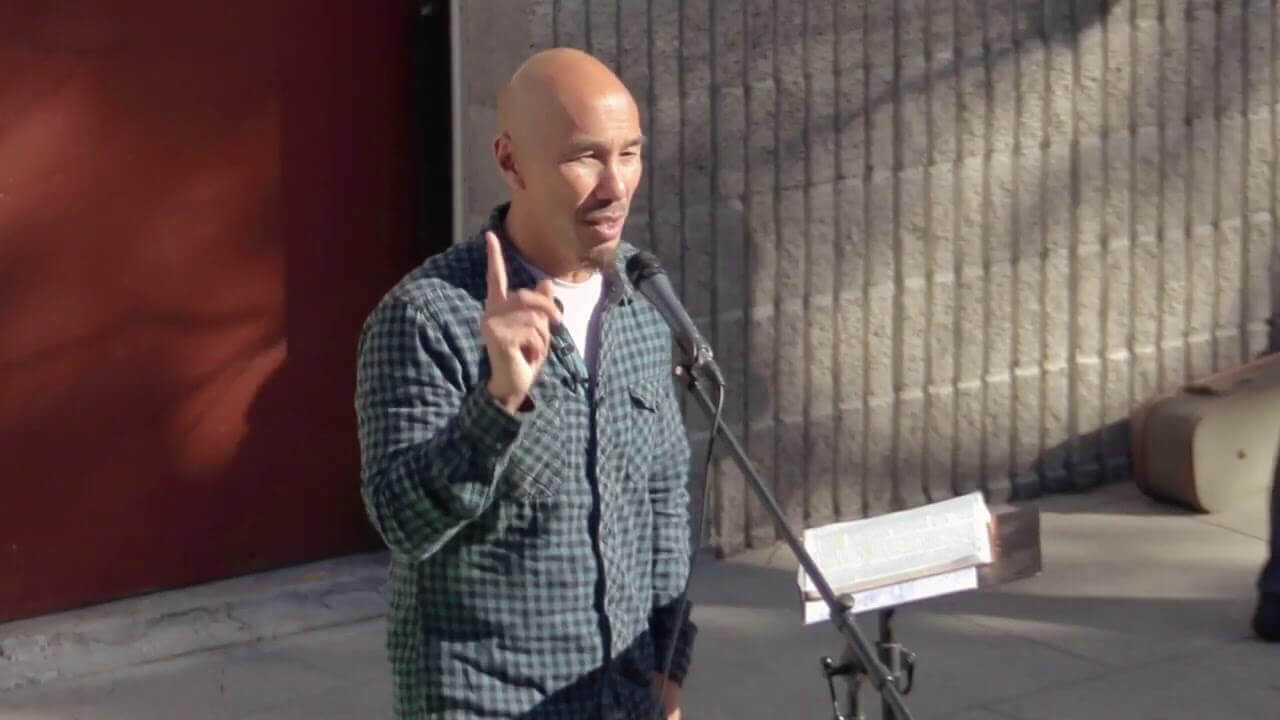
Francis Chan turns towards a more historical and ancient view of Communion
Posted by Luke J. Wilson on 14th January 2020 in General Interest | eucharist,communion,francis chan,church fathers,church history,controversy
...le of the liturgy leads up to the celebration of Christ’s presence with us as the high point of the service. This isn’t to say or diminish the importance of preaching, but that it too should be a stepping stone into the presence of God; and if you believe in the Real Presence in communion, then that is where we meet with Christ in a very real way as the crescendo of the whole service.
Despite what some bloggers and YouTubers are claiming, I don’t think we can say from this video and short clip alone that Francis Chan is “swimming the Tiber” and becoming a Roman Catholic. His statements are too broad and vague to say he is specifically talking about tr...
Great is the Mystery of Faith!
Posted by Luke J. Wilson on 17th September 2022 in Early Church | Melito of Sardis,Faith,mysteries,church fathers,early church fathers,Quotes,fragment
...Anglican liturgy (and it may be the same in other liturgical churches, I’m not sure), we will often recite similar words speaking to the mystery: “Great is the mystery of faith: Christ has died, Christ has risen, Christ will come again!”.
What we believe and live by in the life, death and resurrection of Jesus is a mystery! It is a strange and powerful thing that God did by sending his Son in the form of a human to grow, teach and ultimately die for us so that we can be made righteous and adopted into the family of God. I don’t think we’ll ever quite wrap our heads around it all fully.
I’m going to end this with another poetic excerpt from Melito....
Powered by WebBoss.io 3.7.1
Copyright © 2026 The Sacred Faith: Timeless Truths for Modern Minds. All Rights Reserved.
