
Blog Search Results


Did you mean:
resurrection
?
65 results for Resurrection
found
within the Blog
6 displayed out of 65 (0.04seconds)Page 4 of 11

A Historic Easter Change Is Coming — But Will Protestants Get On Board?
Posted by Luke J. Wilson on 29th January 2025 in Easter | current events,easter,history,ecumenical,roman catholic,eastern orthodox,Anglican
Pope Francis has recently expressed the Catholic Church’s willingness to accept a unified date for Easter, a move aimed at fostering greater Christian unity, particularly with the Orthodox Church. This long-standing issue arises from the different calendars used by Western and Eastern Christian traditions — the Gregorian and Julian calendars — leading to discrepancies in Easter celebrations. Talks between Catholic and Orthodox leaders have intensified, hoping a common date could be agreed upon. However, this raises important questions for Protestant denominations regarding whether they would adopt the unified date or risk falling out of alignment w...
Lent: Day 10 - Ignatius to the Smyrnaeans
Posted by Luke J. Wilson on 11th March 2017 in Lent | Lent,great lent,fasting,early church fathers,devotional,daily reading,Ignatius,Ignatius to the smyrnaeans
Day Ten: St. Ignatius of Antioch: Letter to the Smyrnaeans (full text)
Who: Ignatius converted at a young age and later became Bishop of Antioch. A friend of Polycarp and fellow disciple of John, there is a long standing tradition that Ignatius was the child that Jesus held in his arms and blessed in Mark 10:13-16
What: A defence against the heresy of Docetism and an intriguing insight into the possible origins of evil spirits!
Why: Ignatius wrote a series of letters to the churches in Asia Minor whilst en route to Rome to face martyrdom by wild beasts in the Colosseum around 108 AD.
When: Around 107-108 AD
The opening chapters of this letter pulls no punc...
Lent Day 28: Athanasius: Life of Anthony: Chaps. 71-80
Posted by Luke J. Wilson on 1st April 2017 in Lent | Lent,great lent,fasting,early church fathers,devotional,daily reading,Athanasius,Bishop of Alexandria,Confessor,Doctor of the Church,Anthony the Great,miracles,Greek Philosophy,demons,healing,deliverance,the cross,foolishness of the cross
Day Twenty-eight: St. Athanasius: Life of Anthony: Chaps. 71-80
Who: Bishop of Alexandria; Confessor and Doctor of the Church; born c. 296; died 2 May, 373 AD. He was the main defender of orthodoxy in the 4th-century battle against the Arianism heresy. Certain writers received the title “Doctor” on account of the great advantage their doctrine had on the whole Church, Athanasius especially for his doctrine on the incarnation.
What: The biography of Anthony the Great’s life, which helped to spread the concept of Christian monasticism, particularly in Western Europe.
Why: From the letter’s own prologue: “The life and conversation of our holy Father...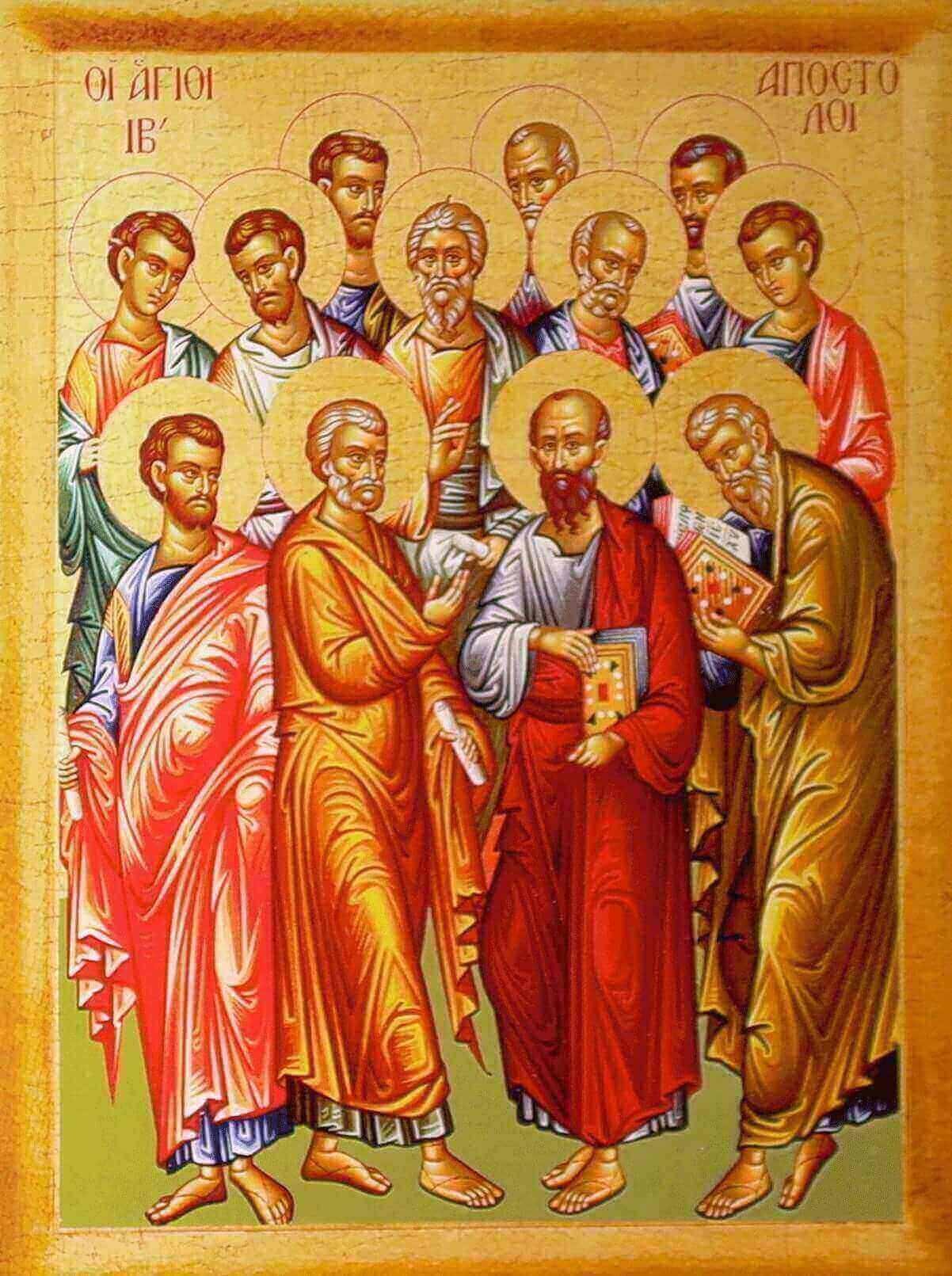
How many apostles are there in the New Testament?
Posted by Luke J. Wilson on 22nd May 2018 in Gifts of the Spirit | apostles,five fold ministry,gifts of the Spirit,Greek
...or at The Resurrection, which makes complete sense if these five major roles are to “to equip the saints” and for “building up the body of Christ”.
So if these five gifts are for the continued benefit of the whole Church body, then it makes sense that we should see others who possess them, and the apostolic gift is often the most controversial one (along with prophet). So let's see how many apostles there were in the pages of the New Testament:
Acts 1:13
When they arrived, they went to the room upstairs where they were staying:
Peter, John,
James, Andrew,
Philip, Thomas,
Bartholomew, Matthew,
James the son of Alphaeus,
Simon the Zealot,
and J...
Creedal Christians: The Apostle's Creed
Posted by Luke J. Wilson on 11th October 2018 in Early Church | creedal christians,creeds,creedal,apostles,apostolic creed,apostolic tradition,rule of faith,early church fathers,early church
...The Apostle's creed — what is it and why is it called that?
Outside of the New Testament, this is one of the oldest creeds we have, dating back to the sixth – eighth century in its current form that is commonly known today, but having its origins much earlier — as far back as the second century in a shorter form known simply as the “Old Roman Creed”.
The Apostles creed is also sometimes referred to as the “Rule of Faith” as it is a summary of the Gospel and is the basis for pretty much all modern theology. The points of the creed cover all the major pillars of the Christian faith which aims to safeguard what is true orthodoxy (right belief), whic...
Fasting: A spiritual and physical discipline
Posted by Luke J. Wilson on 27th May 2019 in Fasting | fasting,didache,discipline,self control,Lent,early church,early church fathers
...The topic of fasting often comes up in online discussion groups that I'm a part of, more often in Protestant circles where the practice is more often sidelined in low churches. So let's take a look at the practice of fasting from a practical and historical view, as it seems to be a spiritual discipline which has been pushed aside in many churches today, with prayer, worship and bible reading taking more precedence in a Christian's life instead (not that those are bad things to do!).
Why fast?
There are many reasons to fast, and recent studies have shown a lot of health benefits that can be derived from fasting. But on the spiritual side of life, there are also...
Powered by WebBoss.io 3.7.1
Copyright © 2026 The Sacred Faith: Timeless Truths for Modern Minds. All Rights Reserved.
