
Blog Search Results


Did you mean:
second coming
?
106 results for Second Coming
found
within the Blog
6 displayed out of 106 (1.11seconds)Page 4 of 18
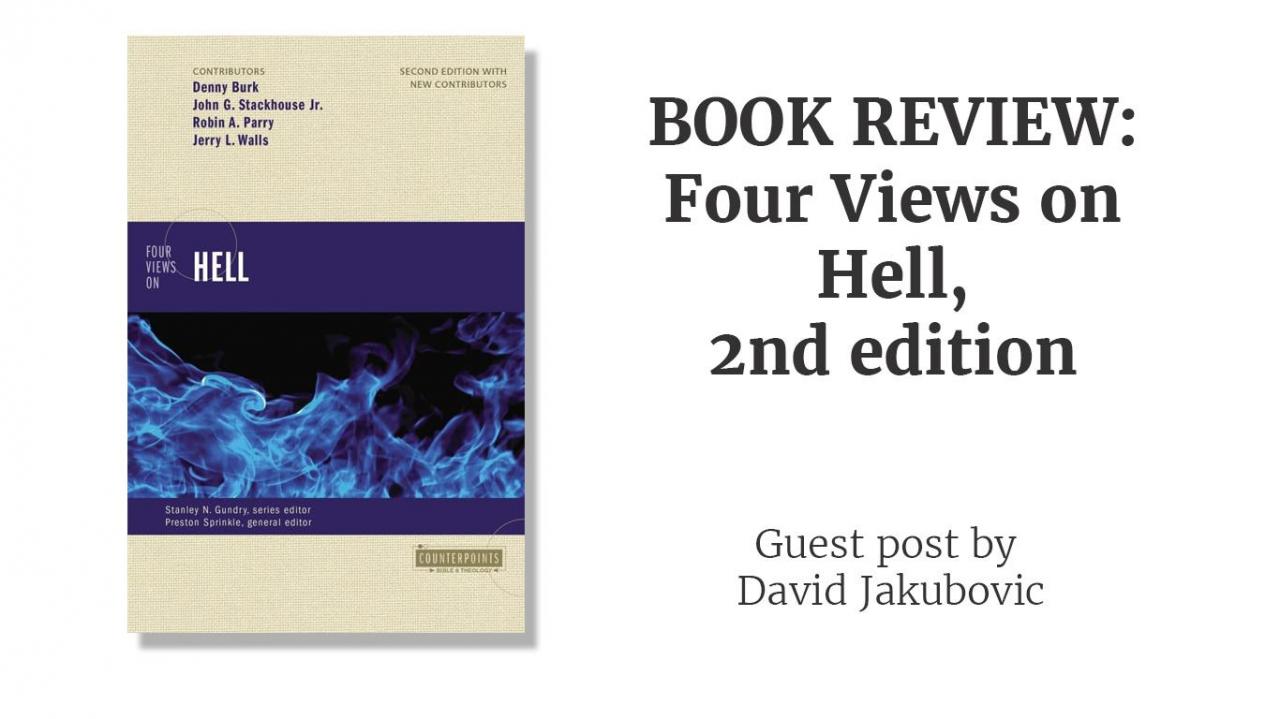
BOOK REVIEW: Four Views on Hell 2nd edition
Posted by David Jakubovic on 17th March 2021 in Book Review |
This is a guest post by David Jakubovic. The views are that of the author and don't necessarily reflect the views of That Ancient Faith.
A 20 year update of the 1996 book by the same name, this slim volume (211 pages) is a helpful cross-section of current evangelical thought on Final Punishment, sampling Denny Burk on Eternal Conscious Torment (ECT hereafter), John Stackhouse Jr on Conditional immortality (CI hereafter), Robin Parry on Christian Universalism (CU hereafter) and Jerry Walls on (a Protestant) Purgatory. Preston Sprinkle pens both Introduction and Conclusion, plus there are Scripture, Author and Subject indices.
The Introduction sets the scene,...
Does Christmas have pagan origins?
Posted by Luke J. Wilson on 19th December 2019 in Christmas | christmas,xmas,origins,pagan,pagan roots,church fathers,church history,Saturnalia,Epiphany,Annunciation,Tertullian,Origen,john chrysostom,incarnation,liturgical calendar,church calendar,festivals
For most people, the question of the origins of Christmas is probably far from their minds. Some may recognise and give a cursory glance towards the Biblical narrative on the birth of Jesus as something to do with it (although a 2017 study showed that almost 1 in 20 Brits thought Easter was the birth of Jesus!);—but in some Christian circles the question (accusation?) that “Christmas is pagan” is at the forefront of their minds.
Table of Contents
When was December 25th celebrated?
The Christian Calendar
Concluding Thoughts
Bonus Information
Further Reading & Sources:
As time goes on and we move further and further into the future,...
What does the word "Catholic" mean?
Posted by Luke J. Wilson on 8th March 2021 in Etymology | catholic,church fathers,church history,etymology,roman catholic,eastern orthodox,Great Schism,Muratorian Fragment
For many people today, non-Christians and (low church) Christians alike, when they hear the word “Catholic”, certain images spring to mind: the Pope, the rosery, Catholic school, big old churches buildings, choirboys, maybe monks or statues of Mary even; and sadly more recently, sex abuse scandals.
But, generally speaking, all of these are actually aspects of Roman Catholicism — a particular branch of Christianity, and not what the word “catholic” truly means as we’ll see when examining how the early church used the word and what the original Greek word means.
καθολικός (katholikos)
The Greek word where we get the English word “c...
The Early Concept of the Trinity: Tracing the Roots
Posted by Luke J. Wilson on 16th November 2023 in Trinity | trinity,early church,early church fathers,tri-unity,triune God,godhead
The doctrine of the Trinity, which asserts the co-equality of the Father, Son, and Holy Spirit, has deep roots in the early Christian writings of the first three centuries. While the full articulation of the Trinity developed over time, culminating at the Council of Nicaea in the fourth century, references to the equality of these three persons can be traced back to influential documents and the teachings of early Church Fathers in the centuries leading up to this pivotal moment in Church History.
Early Church Beliefs and Teachings
One of the earliest Christian documents, the Didache, believed to have been written in the late first or early Second century, pro...
Kirk Cameron And The Biblical Case For Annihilationism
Posted by Luke J. Wilson on 15th December 2025 in Hell | annihilationism,conditional immortality,Kirk Cameron,hell,controversy,controversial topics
Christian conversations about hell have never been especially calm, but the recent online reaction to Kirk Cameron’s comments in favour of annihilationism has been particularly revealing. Social media has erupted with accusations of heresy, doctrinal collapse, and theological compromise.
It’s the “Rob Bell Incident” all over again (if anyone remembers that).
The infamous John Piper tweet about Rob Bell
A lot of comments I saw were wondering what Ray Comfort thinks of this, as he and Kirk worked closely together in ministry for about 25 years, and while Ray wasn’t as dismissive as John Piper was of Rob Bell, he still calls out Kirk’s new vi...
Does Easter Have Pagan Origins?
Posted by Luke J. Wilson on 22nd March 2021 in Easter | Easter,easter sunday,early church,church history,paganism,pagan roots,Ishtar,Eostre,fertility goddess
Much like any major Christian holiday, there are the usual arguments and accusations about how it’s all just pagan festivities with a “Christian mask”. Easter is no different, and usually gets hit the hardest over its so-called “pagan roots”, or in the month or so preceding it, Lent being some “invention of the Catholic Church”.
Table of Contents
The Lenten Fast
The Easter controversy and why we celebrate it when we do
Is the Name “Easter” really the Anglo-Saxon goddess Eostre?
Chocolate eggs and bunnies?
Concluding Thoughts
Further Reading and Sources
I like to try and observe Lent, as it is one of the most ancient custom...
Powered by WebBoss.io 3.7.1
Copyright © 2026 The Sacred Faith: Timeless Truths for Modern Minds. All Rights Reserved.
