
Blog Search Results


210 results for biblical canon
found
within the Blog
6 displayed out of 210 (0.42seconds)Page 4 of 35

What is Monarchical Trinitarianism?
Posted by Luke J. Wilson on 21st July 2024 in Trinity | trinity,monarchy of the Father,Monarchical Trinitarianism,church fathers,church history
Monarchical Trinitarianism, also referred to as the “Monarchy of the Father,” is a theological perspective that asserts the Father as the sole source (or monarch) within the Trinity. This view maintains a clear distinction of roles among the Father, the Son, and the Holy Spirit while upholding their unity in essence. It is essential to distinguish this from Monarchianism, a heretical belief condemned in the 4th century, which posited that God is a single person rather than three distinct persons.
The Eternal Begottenness of the Son
The term “created” used by the early pre-Nicene Fathers does not align with the Arian view, which posits that the Son was...
An Examination of Conditional Immortality (Part One)
Posted by Luke J. Wilson on 25th May 2020 in Hell | Conditional Immortality,Annihilationism,church fathers,church history,Hell,theology
I know that "Conditional Immortality" is quite a divisive topic, and one you may have come across before (sometimes referred to as “Annihilationism”); and have been told outright that it’s “heresy” or false, or that it’s an emotional argument people want to believe because it ‘sounds nicer’ than the doctrine of Eternal Conscious Torment (ECT). Or maybe you’ve never even heard of this before and you didn’t realise there were alternative interpretations and views on hell. If you are new to this, in brief it means that “the wicked” will be removed from existence after judgement and finite torment, rather than living forever in torment.
Any...
Understanding The New Testament: Inspiration, canonisation, And Historical Context
Posted by Luke J. Wilson on 23rd December 2023 in Early Church | Inspiration,Scripture,early church,early church fathers,islam,Bible
A common modern perception of the inspiration of Scripture often portrays it as a rigid, divine dictation of words from God to be written down verbatim. This perspective leads to concerns among some religious communities, such as Muslims, who view any alteration or addition to the text as a potential threat to the entire faith. The Islamic understanding of inspiration emphasises direct and unalterable divine dictation, contributing to their scepticism of multiple Bible translations, which they falsely label as “corruption”.
In contrast, the biblical inspiration of the Scriptures has never been viewed as a literal divine dictation, as if the apostles were un...
The Coming of Jesus: The Olivet Discourse – Part 2
Posted by Luke J. Wilson on 3rd February 2016 in Second Coming Series | Second Coming,Return of Christ,Return of Jesus,Preterism,Prophecy,Last Days,Left Behind,Eschatology,Matthew 24,Olivet Discourse,Josephus,history,Part 2,Desolation,Temple Destruction,Jewish War,70AD
Welcome to Part Two of the Olivet Discourse! It’s been a while, so we’ll pick up right where we left off with Matthew 24 verse 15 onwards, after a small recap of the chapter so far.
The Olivet Discourse begins with the disciples admiring the architecture of the temple in Jerusalem. Jesus responds to this by telling them that it will all be thrown down and destroyed, to the point that not one stone will be left on another. Later on, when they are sat on the Mount of Olives, Jesus’ disciples come to him and ask “when will this happen?” and “what will be the sign” that all of this is about to commence?
If we look at the accou...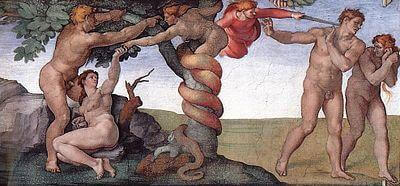
Was there death before the Fall?
Posted by Luke J. Wilson on 15th April 2014 in Death | Sheol,the Fall,Creation,Genesis,Adam and Eve,death,resurrection
It is often said and believed by many that our souls are immortal - that God gave us a spirit/soul that cannot die when he created us, and that death was not even a concept or reality before Adam and Eve sinned in the Garden of Eden. Despite this idea being a fairly "recent" concept (in terms of history and theology), and it stemming from Greek philosophy, it's also not supported by the biblical text - especially in Genesis.
Lets look at the creation account in Gen 2:7—
then the Lord God formed man from the dust of the ground, and breathed into his nostrils the breath of life; and the man became a living being.
The word "being" in that verse, or "sou...
Does Christmas have pagan origins?
Posted by Luke J. Wilson on 19th December 2019 in Christmas | christmas,xmas,origins,pagan,pagan roots,church fathers,church history,Saturnalia,Epiphany,Annunciation,Tertullian,Origen,john chrysostom,incarnation,liturgical calendar,church calendar,festivals
For most people, the question of the origins of Christmas is probably far from their minds. Some may recognise and give a cursory glance towards the biblical narrative on the birth of Jesus as something to do with it (although a 2017 study showed that almost 1 in 20 Brits thought Easter was the birth of Jesus!);—but in some Christian circles the question (accusation?) that “Christmas is pagan” is at the forefront of their minds.
Table of Contents
When was December 25th celebrated?
The Christian Calendar
Concluding Thoughts
Bonus Information
Further Reading & Sources:
As time goes on and we move further and further into the future,...
Powered by WebBoss.io 3.7.1
Copyright © 2026 The Sacred Faith: Timeless Truths for Modern Minds. All Rights Reserved.
