
Blog Search Results


56 results for greek
found
within the Blog
6 displayed out of 56 (0.03seconds)Page 4 of 10

The Coming of Jesus: Coming on the clouds
Posted by Luke J. Wilson on 21st April 2014 in Second Coming Series | Second Coming,Return of Christ,Return of Jesus,Preterism,Prophecy,Last Days,Left Behind,Part 2,Part two,Coming in the Clouds,surfing,Eschatology
Coming on the clouds of heaven
Then the sign of the Son of Man will appear in heaven, and then all the tribes of the earth will mourn, and they will see ‘the Son of Man coming on the clouds of heaven’ with power and great glory.
When people read Jesus saying that he will be "coming on the clouds of heaven with power and great glory" in Matthew 24:30, it often taken to mean that he will be doing that literally as opposed to figuratively.
Kinda like this, but on clouds.
Careful now, before you put on your heretic hunting hats and grab your pitchforks — let me explain why I say that Jesus wasn't telling his fol...
Lent: Day 17 - Justin Martyr: First Apology: Chaps. 60-68
Posted by Luke J. Wilson on 20th March 2017 in Lent | Lent,great lent,fasting,early church fathers,devotional,daily reading,Justin Martyr,apologetics,Plato,trinity,baptism,sunday worship
Day Seventeen: St. Justin Martyr: First Apology, Chaps. 60-68
Who: Justin Martyr was a Philosopher who converted to Christianity and became a tireless evangelist and apologist. Justin wrote more Christianity than any other person prior to his time. He is classified herein as Eastern, since he a native of Samaria and his thought patterns were Eastern. However, he spent the last years of his life in Rome, where he was executed as a martyr (c. 165).
What: An apologetic (defence) essay to explain what Christians believe and do.
Why: Justin is demanding the Emperor to investigate accusations and unjust persecution against Christians so that they at least may fac...
Creedal Christians: The Apostle's Creed
Posted by Luke J. Wilson on 11th October 2018 in Early Church | creedal christians,creeds,creedal,apostles,apostolic creed,apostolic tradition,rule of faith,early church fathers,early church
The Apostle's creed — what is it and why is it called that?
Outside of the New Testament, this is one of the oldest creeds we have, dating back to the sixth – eighth century in its current form that is commonly known today, but having its origins much earlier — as far back as the second century in a shorter form known simply as the “Old Roman Creed”.
The Apostles creed is also sometimes referred to as the “Rule of Faith” as it is a summary of the Gospel and is the basis for pretty much all modern theology. The points of the creed cover all the major pillars of the Christian faith which aims to safeguard what is true orthodoxy (right belief), whic...
Lent: Day 2 - Mathetes to Diognetus, pt. 1
Posted by Luke J. Wilson on 3rd March 2017 in Lent | Lent,great lent,fasting,early church fathers,devotional,daily reading,epistle of mathetes to diognetus
Day two: Epistle of Mathetes to Diognetus: Chaps. 1-6
Who: Anonymous author, “mathetes” is not a name, but is the greek word for “a disciple”
What: possibly one of the earliest examples of a Christian apologetic defending the faith from its accusers, written to someone interested in learning more about the faith and its customs
Why: The Christian faith was under attack and ridicule in the early centuries, many things about the Church were misunderstood and so various Christians took to writing apologetic's (defences) to clarify doctrines and beliefs from being maligned.
When: Estimated between AD 130 and late 2nd century
I've only ever come acros...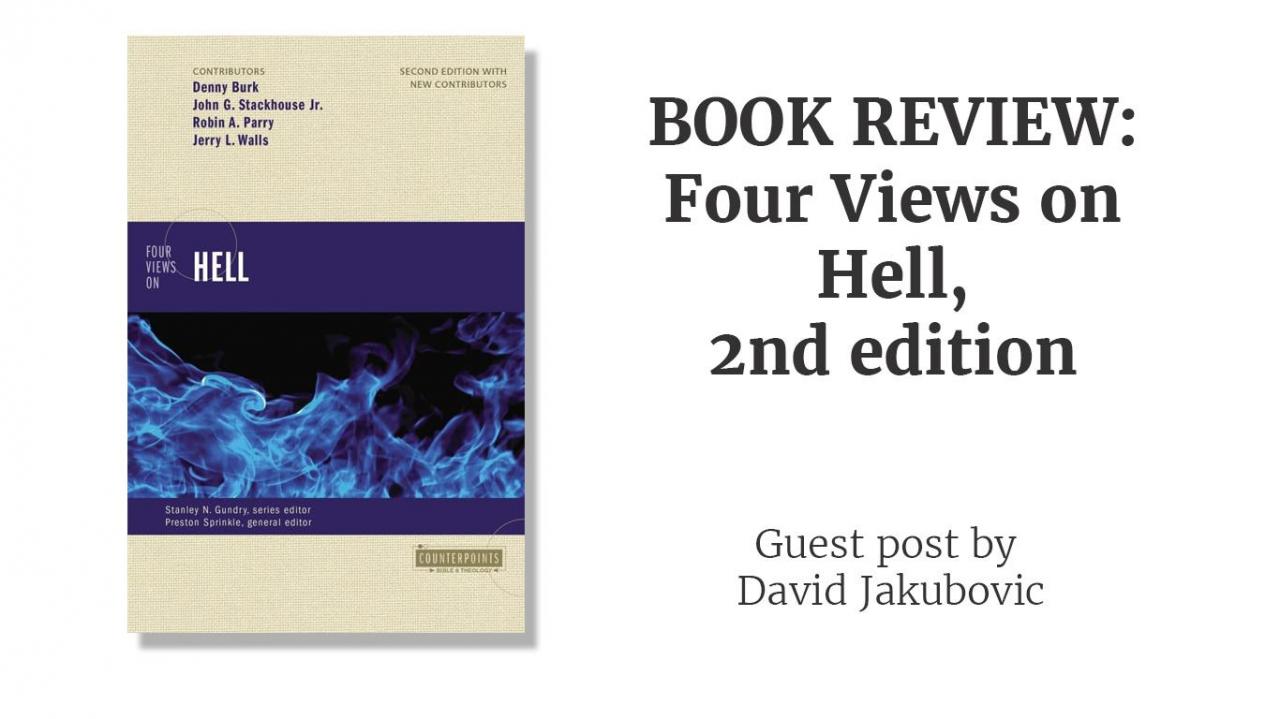
BOOK REVIEW: Four Views on Hell 2nd edition
Posted by David Jakubovic on 17th March 2021 in Book Review |
This is a guest post by David Jakubovic. The views are that of the author and don't necessarily reflect the views of That Ancient Faith.
A 20 year update of the 1996 book by the same name, this slim volume (211 pages) is a helpful cross-section of current evangelical thought on Final Punishment, sampling Denny Burk on Eternal Conscious Torment (ECT hereafter), John Stackhouse Jr on Conditional immortality (CI hereafter), Robin Parry on Christian Universalism (CU hereafter) and Jerry Walls on (a Protestant) Purgatory. Preston Sprinkle pens both Introduction and Conclusion, plus there are Scripture, Author and Subject indices.
The Introduction sets the scene,...
Does Christmas have pagan origins?
Posted by Luke J. Wilson on 19th December 2019 in Christmas | christmas,xmas,origins,pagan,pagan roots,church fathers,church history,Saturnalia,Epiphany,Annunciation,Tertullian,Origen,john chrysostom,incarnation,liturgical calendar,church calendar,festivals
For most people, the question of the origins of Christmas is probably far from their minds. Some may recognise and give a cursory glance towards the Biblical narrative on the birth of Jesus as something to do with it (although a 2017 study showed that almost 1 in 20 Brits thought Easter was the birth of Jesus!);—but in some Christian circles the question (accusation?) that “Christmas is pagan” is at the forefront of their minds.
Table of Contents
When was December 25th celebrated?
The Christian Calendar
Concluding Thoughts
Bonus Information
Further Reading & Sources:
As time goes on and we move further and further into the future,...
Powered by WebBoss.io 3.7.1
Copyright © 2026 The Sacred Faith: Timeless Truths for Modern Minds. All Rights Reserved.
