
Blog Search Results


76 results for part
found
within the Blog
6 displayed out of 76 (0.03seconds)Page 4 of 13

Lent Day 36: Ambrose of Milan: Concerning the Mysteries: 5-9
Posted by Luke J. Wilson on 11th April 2017 in Lent | Lent,great lent,fasting,early church fathers,devotional,daily reading,Doctor of the Church,lectures,liturgy,catechism,Eucharist,Bishop of Milan,St Ambrose,mysteries,treatise,baptism,transubstantiation,real presence
Day Thirty-six: St. Ambrose of Milan: Concerning the Mysteries: 5-9
Who: Bishop of Milan from 374 to 397; born probably 340, at Trier, Arles, or Lyons; died 4 April, 397. He was one of the most illustrious Fathers and Doctors of the Church.
What: The treatise was composed for use during the latter part of Lent, for the benefit of those about to be baptised, the rites and meaning of that Sacrament, as well as of Confirmation and the Holy Eucharist. For all these matters were treated with the greatest reserve in the Early Church, for fear of being misused by unbelievers.
Why: Ambrose states that after the explanations he has already given of holy living (in pre...
Lent Day 37: Leo the Great: Letter XXVIII (called the "Tome")
Posted by Luke J. Wilson on 12th April 2017 in Lent | Lent,great lent,fasting,early church fathers,devotional,daily reading,Doctor of the Church,lectures,Tome,Leo the Great,St Leo,hypostatic union,deity of christ,heresy,Pope Leo I
...were only part of the ‘the man’ which was distinct from the ‘God the Word’ part of Jesus. To combat this, Eutyches went too far in the other direction and declared that Christ was "a fusion of human and divine elements" which created a new, single nature in Jesus, rather than a twofold nature which the Creeds declare. This actually led to himself being declared a heretic also for this belief!
Now Leo is writing against the teaching of Eutyches because it seems that he was unwilling to accept any correction to his doctrine. “But what more iniquitous”, Leo says, “than to hold blasphemous opinions, and not to give way to those who are wiser and mo...
The Temptations of Jesus: Testing God
Posted by Luke J. Wilson on 4th March 2018 in Lent | temptation,testing God,pinnacle,Temple,Jesus,Satan,wilderness,Lent,desert,Armour of God
...ipture as part of his temptation as though to try and use Jesus’ weapon against him.
This is similar to what Paul writes about the devil in 2 Cor 11:14 when he says that even Satan “disguises himself as an angel of light”. We must be ever vigilant and discerning so that we may not get tricked by misapplied and twisted Scripture. Paul again, in his wisdom, when writing to Timothy also instructed him in these things when he said to study and know the Word of God to “rightly [explain] the word of truth” (2 Timothy 2:15). If we are immersed in the Scriptures and know them inside and out, then when things get misquoted or twisted to be applied in situatio...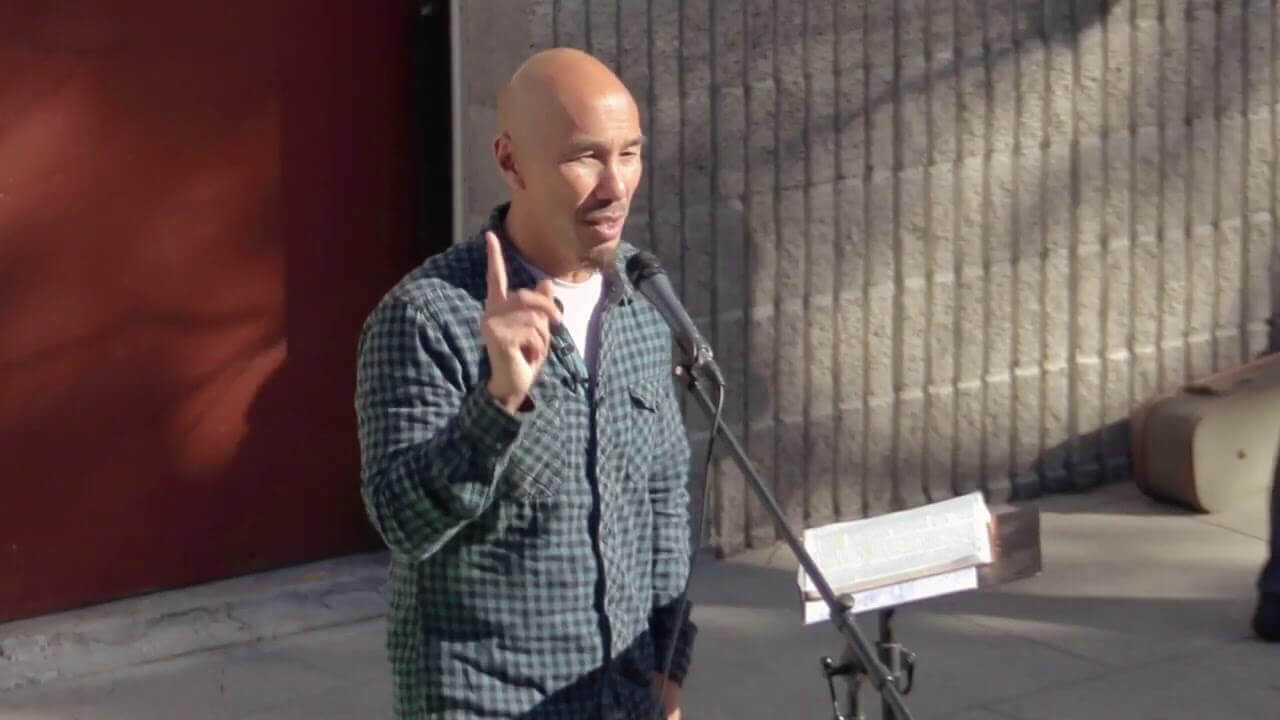
Francis Chan turns towards a more historical and ancient view of Communion
Posted by Luke J. Wilson on 14th January 2020 in General Interest | eucharist,communion,francis chan,church fathers,church history,controversy
...”
This part isn’t too far from reality, really, though a little over-simplified. But I understand his zeal and excitement about this discovery of his, as I went through the exact same mind-blowing realisation around five or so years ago when I first delved into the writings of the Early Church Fathers and was forced to come to the same conclusion that there was something there to seriously consider. If the Church had always understood Jesus’ words and the interpretation of Scripture in a fairly singular and unified way for nearly two millennia, then who was I to come along and say my understanding exceeds the wisdom of everyone before me?
It was actually...
The Eighth Day
Posted by Luke J. Wilson on 26th October 2016 in Eschatology | eighth day,early church,new creation,baptism,resurrection,eschatology,sabbath,Lord's Day,Festival of Booths
...: being a part of the New Covenant, which makes us a new creation through baptism and through our outworking of the faith, we reconcile the world back to God as co-workers with Jesus (1 Corinthians 3:9)!
2 Corinthians 5:18-19
All this is from God, who reconciled us to himself through Christ, and has given us the ministry of reconciliation; that is, in Christ God was reconciling the world to himself, not counting their trespasses against them, and entrusting the message of reconciliation to us.
Resting with God
This is God showing that things work differently now. No longer is he only found in a physical brick and mortar temple, or a specific holy pla...
Is The Rapture Biblical?
Posted by Luke J. Wilson on 21st September 2020 in Eschatology | rapture,the rapture in the bible,scriptures on the rapture,N.T. Wright,john chrysostom,church fathers,church history,signs of the rapture,Coming of Christ
...ary. This particular Bible became wildly popular across America in the early 1900s and ended up solidifying the futurist dispensational viewpoint for generations to come within Evangelicalism.
Despite the popularity of Scofield’s Bible, what it (and Darby) taught was a novel idea which had not been seen nor heard of before in the previous 1800 years of Church History, yet many Christians accepted it without hesitation, likely due to it being part of the exposition alongside the Scripture they were reading, and therefore a seeming authority.
I realise there is somewhat of an irony here in that I’m acting similarly like an authority telling you that this bel...
Powered by WebBoss.io 3.7.1
Copyright © 2026 The Sacred Faith: Timeless Truths for Modern Minds. All Rights Reserved.
