
Blog Search Results


65 results for resurrection
found
within the Blog
6 displayed out of 65 (0.03seconds)Page 4 of 11

A Historic Easter Change Is Coming — But Will Protestants Get On Board?
Posted by Luke J. Wilson on 29th January 2025 in Easter | current events,easter,history,ecumenical,roman catholic,eastern orthodox,Anglican
...ating the resurrection of Christ and hoped for an agreement within a decade, or at least before he retired. Recently uncovered scandals forced him to retire earlier than planned, so that dream isn’t happening for him anymore.
A long time ago here in the UK, an act of Parliament was passed in 1928 which allowed for Easter Sunday to be fixed on the first Sunday after the second Saturday in April. But this Act has never been activated and so Easter has remained a variable date, determined by the moon’s cycle.
From an Anglican perspective, aligning the date of Easter with Catholic and Orthodox churches would be a significant ecumenical step, reflecting a commi...
Lent: Day 10 - Ignatius to the Smyrnaeans
Posted by Luke J. Wilson on 11th March 2017 in Lent | Lent,great lent,fasting,early church fathers,devotional,daily reading,Ignatius,Ignatius to the smyrnaeans
...fends the resurrection by telling of how the Apostles ate and drank with, and touched the risen Christ since “He was still possessed of flesh”, but to this he also adds that he believes Jesus is still possessing a body of flesh, whilst being spiritually “united to the Father”. I'm not sure if he means this in the same way we might today when we talk about the glorified/resurrected bodies, since you don't often hear people say they are “flesh”, but it's probably just a semantics issue here.
With regards to the unbelievers who taught that Jesus wasn't really in the flesh, Ignatius gives us a strange insight into a belief about where evil spirits come...
Lent Day 28: Athanasius: Life of Anthony: Chaps. 71-80
Posted by Luke J. Wilson on 1st April 2017 in Lent | Lent,great lent,fasting,early church fathers,devotional,daily reading,Athanasius,Bishop of Alexandria,Confessor,Doctor of the Church,Anthony the Great,miracles,Greek Philosophy,demons,healing,deliverance,the cross,foolishness of the cross
...el at the resurrection! But “the same men who told us of the [resurrection] wrote [about the cross]”, Anthony responds. They would mock the cross but be then are silent about all the miracles and wonders which Jesus did which show that “Christ is no longer a man but God”; so they do themselves “much injustice” to have not read the Scriptures properly in order that they should see that “the deeds of Christ prove Him to be God come upon earth for the salvation of men”.
Since they allegorise all of creation with the Greek legends of Poseidon, Apollo, Artemis etc, they “do not worship God Himself, but serve the creature rather than God who created...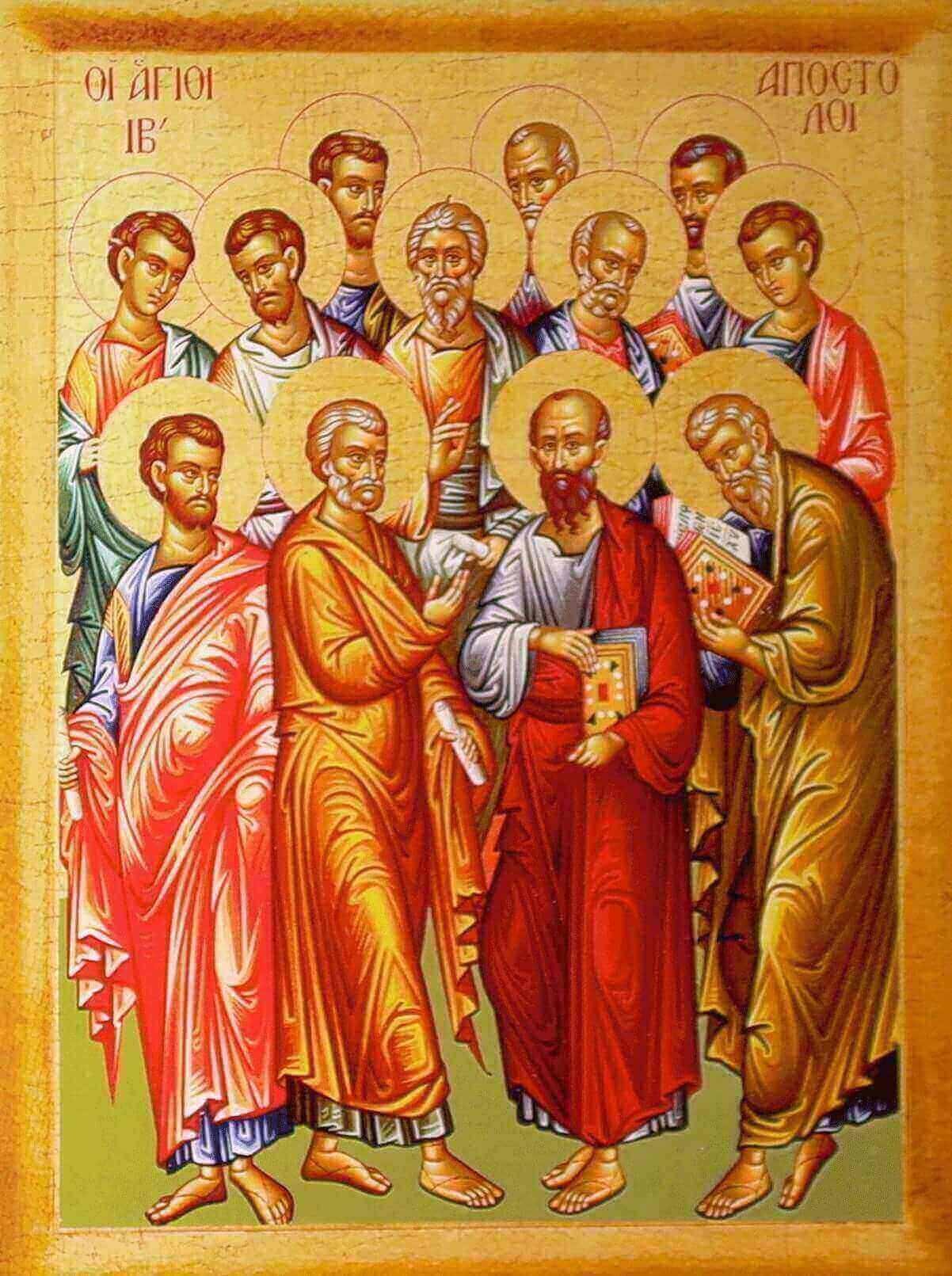
How many apostles are there in the New Testament?
Posted by Luke J. Wilson on 22nd May 2018 in Gifts of the Spirit | apostles,five fold ministry,gifts of the Spirit,Greek
...came post-resurrection, sent out and chosen by the Church, and thus are gifted apostles in the Ephesian 4 “five fold ministry” sense, but are just not "of the Lamb" like the original Twelve were.
I hope this makes sense and will act as a springboard into your own personal further study on this topic about the gift of being an apostle. I intend to follow up on this with a post about what the apostolic gift should look like, practically.
If you have any questions, please leave a comment below.
Endnote
As mentioned above in the list of apostles mentioned in the New Testament, a couple of times the Greek word “apostolos” is translated simply as “me...
Creedal Christians: The Apostle's Creed
Posted by Luke J. Wilson on 11th October 2018 in Early Church | creedal christians,creeds,creedal,apostles,apostolic creed,apostolic tradition,rule of faith,early church fathers,early church
...the resurrection of the flesh,
the resurrection of the flesh,
Daniel 12:1; Luke 14:14; Luke 20:35-36; John 5:29; John 11:24-25; Acts 4:2; Acts 24:15; Romans 6:5; 1 Corinthians 15:12-13, 21;Philippians 3:10-11; Hebrews 6:2; 1 Peter 1:3; Revelation 20:5-6
[life everlasting]**This line was included by Marcellus but omitted by Rufinus
and eternal life.
Amen.
Matthew 19:29; Matthew 25:46; John 3:15-16; John 3:36; John 4:14; John 5:24; John 6:40, 47, 54; John 10:28; John 12:50; John 17:3; Romans 2:7; Romans 6:23; Galatians 6:8; Titus 3:7; 1 John 2:25; Jude 1:21
As can be seen in the above table, there’s not a lot of chan...
Fasting: A spiritual and physical discipline
Posted by Luke J. Wilson on 27th May 2019 in Fasting | fasting,didache,discipline,self control,Lent,early church,early church fathers
...enjoy the resurrection of Christ in the spirit (Rom 8:13, Col 3:5).
It’s pure discipline and obedience (Jesus did say when not if – Matthew 6:16-18; Mark 2:20).
It’s putting to death the body – killing the flesh in order to live by the Spirit. (Gal 5:17)
It’s training you in self-control, discipline and willpower; growing and nurturing the fruit of the Spirit (Galatians 5:23; 2 Timothy 1:7; 1 Peter 4:7; 1 Peter 5:8).
For healing and deliverance of others (Mark 9:29; Matthew 17:21).
To prepare to hear from God via visions and revelation (Acts 10:30).
For preparation for Church leadership (Acts 13:2-3; Acts 14:23)
To not be ruled by your desir...
Powered by WebBoss.io 3.7.1
Copyright © 2026 The Sacred Faith: Timeless Truths for Modern Minds. All Rights Reserved.
