
Blog Search Results


Did you mean:
greek
?
54 results for Greek
found
within the Blog
6 displayed out of 54 (0.04seconds)Page 5 of 9

Understanding The New Testament: Inspiration, Canonisation, And Historical Context
Posted by Luke J. Wilson on 23rd December 2023 in Early Church | Inspiration,Scripture,early church,early church fathers,islam,Bible
...” (from Greek ἀντιλεγόμενα) literally meaning “spoken against”. In the Early Church, the antilegomena enjoyed widespread readership, encompassing works such as the Epistle of James, Jude, 2 Peter, 2 and 3 John, the Book of Revelation, the Gospel of the Hebrews, the Epistle to the Hebrews, the Apocalypse of Peter, the Acts of Paul, the Shepherd of Hermas, the Epistle of Barnabas, and the Didache. Within the Early Church, there existed differing opinions on whether these particular texts merited canonical status, though.
Eusebius, who wrote Church History (~325), used the Greek term “antilegomena” to refer to the group of disputed writings....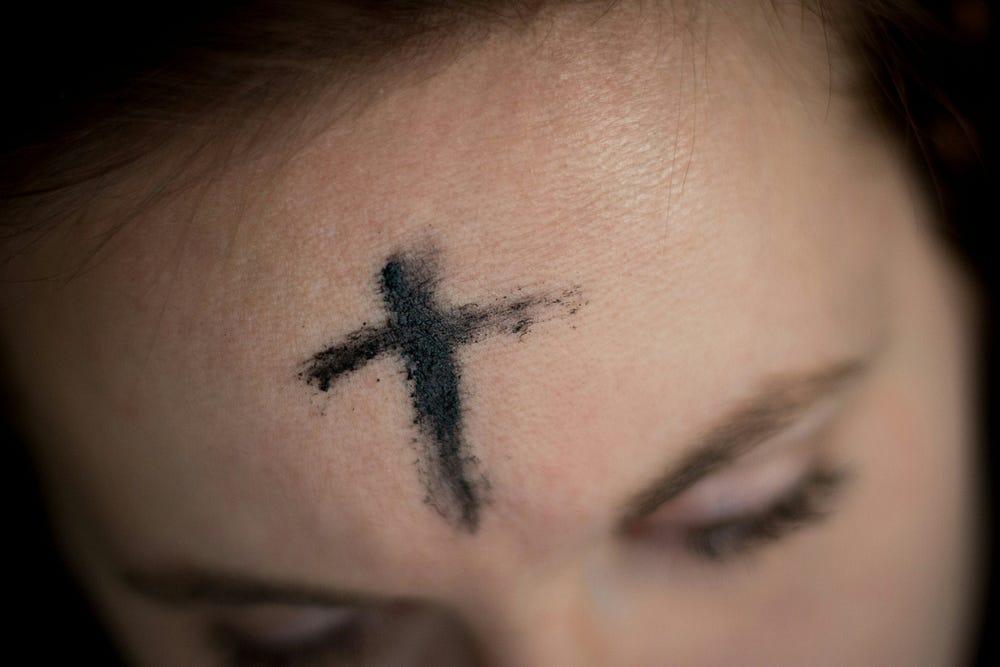
From Dust to Redemption: The Meaning of Ash Wednesday
Posted by Luke J. Wilson on 5th March 2025 in Lent |
...grace.
Greek Orthodox Yearly Fasting Calendar (2025). Fasting isn’t just for Lent!
An Anglican Perspective
The Church of England, along with many other Anglican churches, recognises Ash Wednesday as an important day in the liturgical calendar. The Book of Common Prayer (1662) includes a special Commination Service, calling the faithful to repentance. While this service is less commonly used today, Ash Wednesday services in Anglican churches typically follow a solemn and reflective tone, with readings, prayers, and the imposition of ashes.
The Anglican tradition emphasises that Lent is not merely about external observances but about an inward transform...
Lent: Day 14 - Justin Martyr: First Apology, Chaps. 24-35
Posted by Luke J. Wilson on 16th March 2017 in Lent | Lent,great lent,fasting,early church fathers,devotional,daily reading,Justin Martyr,apologetics
...what the Greek say and believe, yet despite this, they are still “hated on account of the name of Christ”. Even though the Greeks worship some animals which others will hunt and eat, and that there is no consensus on which animals are gods and which are food, these people can still worship freely without fear, but Christians are persecuted and threatened with death simply for being called as such.
He then goes on to outline the various different gods and magicians that the Greeks believed in and how in all their various and blasphemous ways, yet all under one name or doctrine, they are still free from threat. But even in spite of death, Christians will sti...
Debunking the Myth: The Council of Nicaea and the Formation of the Biblical Canon
Posted by Luke J. Wilson on 20th November 2023 in Early Church | church history,council of nicaea,myths,debunked,canon,biblical canon
...h-century Greek manuscript known as the Synodicon Vetus. This manuscript, claiming to be a summary of decisions from Greek councils up to that point, presented a narrative where a divine miracle occurred at the Council of Nicaea. According to the manuscript, the Lord miraculously separated the canonical books, placing them on the table, while the apocryphal or spurious ones fell beneath.
The canonical and apocryphal books it distinguished in the following manner: in the house of God the books were placed down by the holy altar; then the council asked the Lord in prayer that the inspired works be found on top and the spurious on the bottom. (Synodicon Vetus, 35...
Scientist Uncovers Hidden 1,750-Year-Old New Testament Translation with Ultraviolet Imaging
Posted by Luke J. Wilson on 17th April 2023 in Archaeology | Syriac bible,Codex Sinaiticus,textual criticism,history,archaeology,Old Syriac
...original Greek of Matthew 12:1 states: "At that time Jesus went through the grainfields on the Sabbath; and his disciples became hungry and began to pick the heads of grain and eat," the Syriac translation says: "[...] began to pick the heads of grain, rub them in their hands, and eat them."
Claudia Rapp, director of the Institute for Medieval Research at the OeAW, commends Kessel for his discovery, attributing it to his "profound knowledge" of ancient Syriac texts and script features.
Rapp estimates that the Syriac translation predates some of the oldest surviving Greek manuscripts, including the Codex Sinaiticus, by at least a century. The Codex Sinaiticus...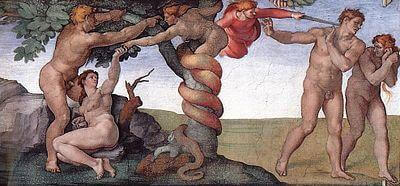
Was there death before the Fall?
Posted by Luke J. Wilson on 15th April 2014 in Death | Sheol,the Fall,Creation,Genesis,Adam and Eve,death,resurrection
...It is often said and believed by many that our souls are immortal - that God gave us a spirit/soul that cannot die when he created us, and that death was not even a concept or reality before Adam and Eve sinned in the Garden of Eden. Despite this idea being a fairly "recent" concept (in terms of history and theology), and it stemming from Greek philosophy, it's also not supported by the Biblical text - especially in Genesis.
Lets look at the creation account in Gen 2:7—
then the Lord God formed man from the dust of the ground, and breathed into his nostrils the breath of life; and the man became a living being.
The word "being" in that verse, or "sou...
Powered by WebBoss.io 3.7.1
Copyright © 2026 The Sacred Faith: Timeless Truths for Modern Minds. All Rights Reserved.
