
Blog Search Results


27 results for athanasius
found
within the Blog
3 displayed out of 27 (0.26seconds)Page 5 of 5

Debunking the Myth: The Council of Nicaea and the Formation of the Biblical Canon
Posted by Luke J. Wilson on 20th November 2023 in Early Church | church history,council of nicaea,myths,debunked,canon,biblical canon
A myth that never seems to fade away: the idea that the Council of Nicaea, convened in 325 AD under the authority of Roman Emperor Constantine, played a pivotal role in establishing the Biblical canon. This notion suggests a conspiracy and power play orchestrated by a select group of elite bishops; a narrative popularised by works like Dan Brown’s Da Vinci Code. However, a closer examination reveals a lack of historical basis for this claim.
The Council of Nicaea and the Canon
Contrary to popular belief, there is no evidence that the Council of Nicaea discussed or established the Canon of Scripture, leading to the creation of the Bible. Early Christian cano...
What is Monarchical Trinitarianism?
Posted by Luke J. Wilson on 21st July 2024 in Trinity | trinity,monarchy of the Father,Monarchical Trinitarianism,church fathers,church history
Monarchical Trinitarianism, also referred to as the “Monarchy of the Father,” is a theological perspective that asserts the Father as the sole source (or monarch) within the Trinity. This view maintains a clear distinction of roles among the Father, the Son, and the Holy Spirit while upholding their unity in essence. It is essential to distinguish this from Monarchianism, a heretical belief condemned in the 4th century, which posited that God is a single person rather than three distinct persons.
The Eternal Begottenness of the Son
The term “created” used by the early pre-Nicene Fathers does not align with the Arian view, which posits that the Son was...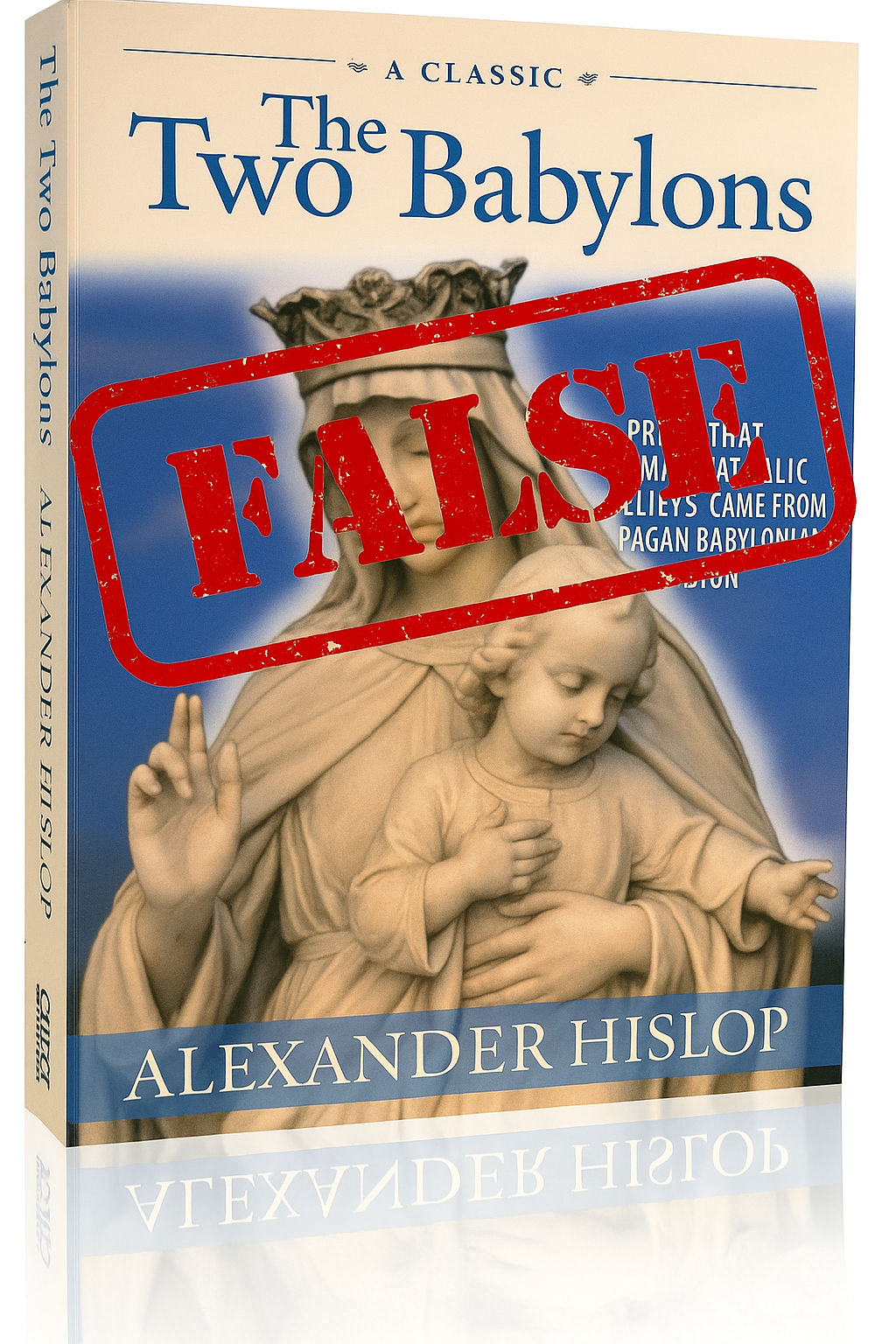
The Two Babylons Exposed: The Book That Misled Millions
Posted by Luke J. Wilson on 21st April 2025 in Easter |
Over the years, I’ve encountered many Christians who’ve quoted from Alexander Hislop’s The Two Babylons as if it were a solid historical resource. The book claims that the Roman Catholic Church is not truly Christian but rather a continuation of ancient Babylonian religion. It’s self-assured and sweeping, and for many people, it seems to explain everything, from Marian devotion to Lent and Easter, to Christmas, as rooted in paganism. But is it accurate?
In short: no, it really isn’t.
Hislop’s work is a classic example of 19th-century pseudohistory — a polemical piece, written to prove a point, not to explore any historical truth.
Flawed Meth...
Powered by WebBoss.io 3.7.1
Copyright © 2026 The Sacred Faith: Timeless Truths for Modern Minds. All Rights Reserved.
