Blog Search Results


Did you mean:
google home
?
83 results for Google Home
found
within the Blog
6 displayed out of 83 (0.76seconds)Page 6 of 14

Does The UN Statue Resemble The End Times Beast From Daniel And Revelation?
Posted by Luke J. Wilson on 15th December 2021 in Eschatology |
There’s been a lot of fuss on the internet lately about this new statue that the UN has erected outside their headquarters on the Visitor’s Plaza.
I’ve seen screenshots of the original tweet shared on Facebook and other social media platforms, as well as copious articles flooding my newsfeed, all suggesting the same thing: this is the beast from Daniel 7. This of course carries with it the implication that it is also a fulfilment of that prophecy and therefore we should expect something more to happen soon, like “the antichrist” to rise up and consume the world. Or something along those lines. I don’t follow the Dispensational “end times” view a...
What is Monarchical Trinitarianism?
Posted by Luke J. Wilson on 21st July 2024 in Trinity | trinity,monarchy of the Father,Monarchical Trinitarianism,church fathers,church history
Monarchical Trinitarianism, also referred to as the “Monarchy of the Father,” is a theological perspective that asserts the Father as the sole source (or monarch) within the Trinity. This view maintains a clear distinction of roles among the Father, the Son, and the Holy Spirit while upholding their unity in essence. It is essential to distinguish this from Monarchianism, a heretical belief condemned in the 4th century, which posited that God is a single person rather than three distinct persons.
The Eternal Begottenness of the Son
The term “created” used by the early pre-Nicene Fathers does not align with the Arian view, which posits that the Son was...
Lent 2018: The Temptations of Jesus
Posted by Luke J. Wilson on 13th February 2018 in Lent | lent,series,Temptation,Sacrifice,passover lamb,paschal lamb
Lent is just around the corner, and so this year I've decided to write a short series over the next 40 days looking at the forty days that Jesus spent in the wilderness, and the temptations he faced.
I'll post a new blog each Sunday of Lent looking at each temptation, and then finish the series just before Easter Sunday looking at “how was Jesus a sacrifice?”.
Series outline:
Temptation one: Pride (1st Sunday of Lent, February 18, 2018)
Temptation two: Worship and Glory (2nd Sunday of Lent, February 25, 2018)
Temptation three: Testing God (3rd Sunday of Lent, March 4, 2018)
Temptation four: Complacency (4th Sunday of Lent, March 11, 2018)
Topical: W...
Does Christmas have pagan origins?
Posted by Luke J. Wilson on 19th December 2019 in Christmas | christmas,xmas,origins,pagan,pagan roots,church fathers,church history,Saturnalia,Epiphany,Annunciation,Tertullian,Origen,john chrysostom,incarnation,liturgical calendar,church calendar,festivals
For most people, the question of the origins of Christmas is probably far from their minds. Some may recognise and give a cursory glance towards the Biblical narrative on the birth of Jesus as something to do with it (although a 2017 study showed that almost 1 in 20 Brits thought Easter was the birth of Jesus!);—but in some Christian circles the question (accusation?) that “Christmas is pagan” is at the forefront of their minds.
Table of Contents
When was December 25th celebrated?
The Christian Calendar
Concluding Thoughts
Bonus Information
Further Reading & Sources:
As time goes on and we move further and further into the future,...
An Examination of Conditional Immortality (Part Two)
Posted by Luke J. Wilson on 3rd July 2021 in Hell | hell,theology,conditional immortality,annihilationism
Welcome to Part Two of my study and examination of Conditional Immortality (aka Annihilationism). If you missed part one, you can read that one here.
As with part one, this will be a long post as there is still much ground to cover before we can really grasp the bigger picture about what Scripture teaches. So with that said, I’ll pick right up where we left off. In part one, I covered a lot of New Testament texts, a few Old Testament passages, plus a look at what some of the earliest church leaders also wrote on the topic to the early church. In this one, we will be looking at a few more Old Testament examples and how they relate to the imagery used in Revela...
Did the Early Church invent the Trinity?
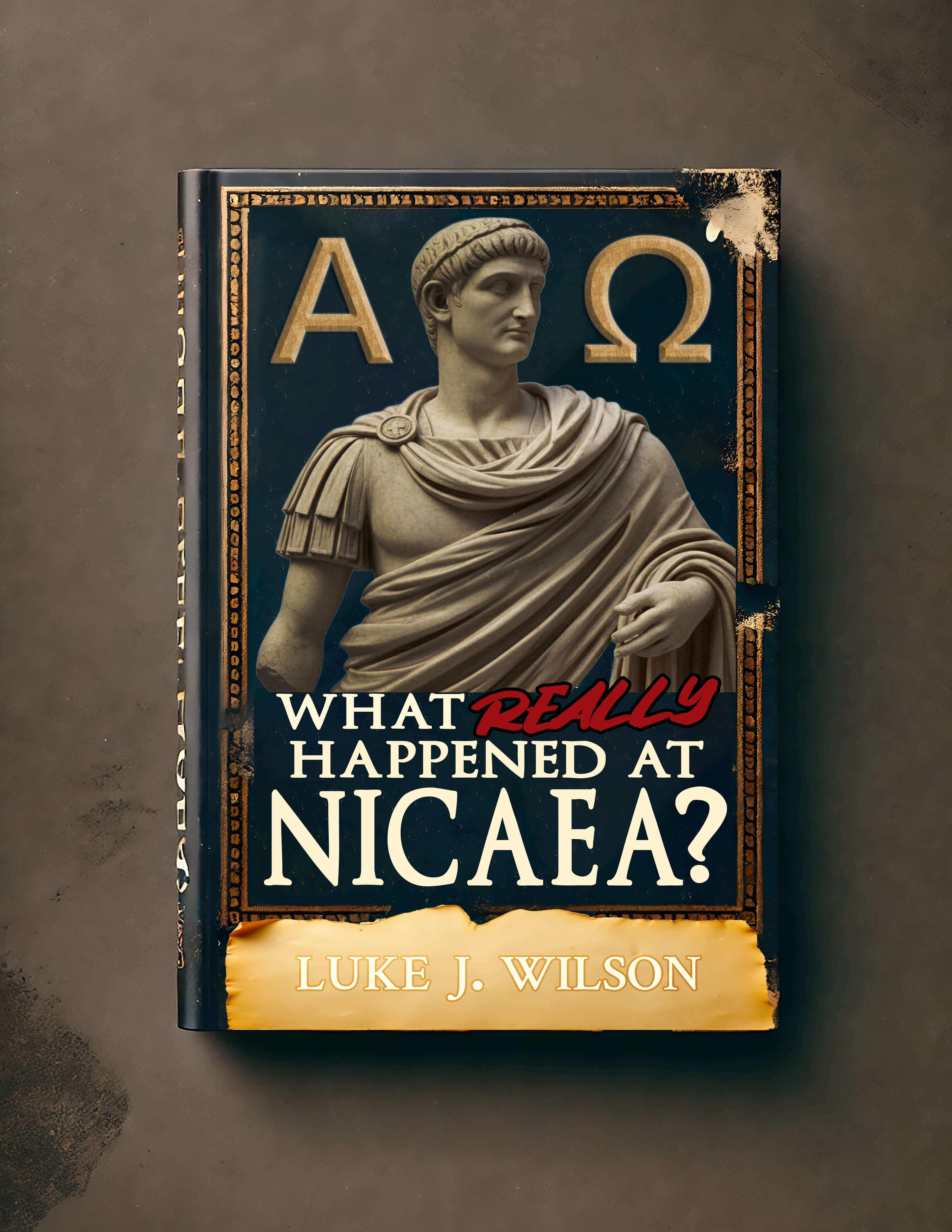
Posted by Luke J. Wilson on 4th January 2022 in Trinity | early church,trinity,church fathers,theology,council of nicaea,nicea council
The doctrine and concept of the Trinity is encapsulated in Matthew 28:19, where Jesus instructs the apostles: “Go therefore and make disciples of all nations, baptizing them in the name of the Father and of the Son and of the Holy Spirit”. John, who was very close to Jesus and obviously knew him well, alludes to this teaching frequently in his Gospel, too. For example: John 1:1; John 8:58; John 10:30; and John 10:38.
Yet, despite this, and numerous other examples throughout the New Testament which point towards the threefold nature of God, plenty of myths and legends abound online and in books which state that the divinity of Jesus (and therefore the Trinit...
Powered by WebBoss.io 3.7.1
Copyright © 2026 The Sacred Faith: Timeless Truths for Modern Minds. All Rights Reserved.