
Blog Search Results


33 results for authority
found
within the Blog
3 displayed out of 33 (0.04seconds)Page 6 of 6
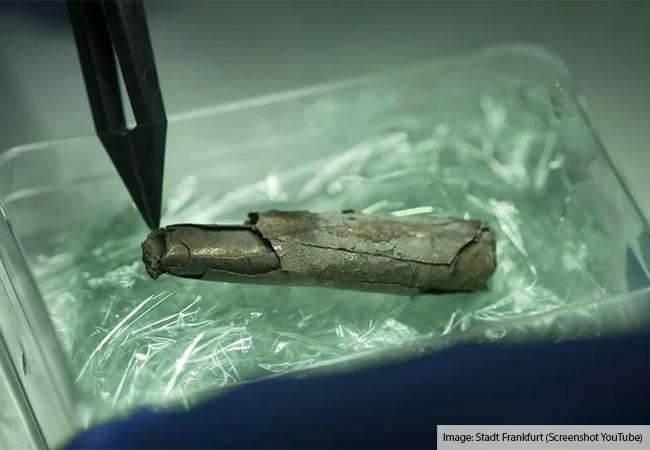
Implications Of The Frankfurt Silver Amulet: Insights Into Early Christian Practice And Belief
Posted by Luke J. Wilson on 6th January 2025 in Archaeology | amulet,liturgy,history,current events,early church
...Apostolic authority and continuity. Titus, known for his leadership within the early church, symbolises the rootedness of Christian faith in the teachings and mission of the Apostles.
In this context, the invocation of a saint also invites a deeper exploration of the “cult of saints,” a term scholars use to describe the veneration of saints within Christian tradition. The cult of saints became a significant aspect of Christian worship in the 4th and 5th centuries, with practices such as the commemoration of martyrs, the dedication of churches to saints, and the belief in their intercessory power. The earliest documented evidence of this practice, including...
How Old Was Jesus When He Died? A Fresh Look At The Historical Clues
Posted by Luke J. Wilson on 9th April 2025 in History | history,church fathers,church history,Jesus,crucifixion
...imperial authority in the East around AD 11 or 12.
If Luke used this earlier date, then the 15th year would fall around AD 26–27.
2. From the death of Augustus (AD 14)
Augustus died in AD 14, and Tiberius became sole emperor.
The 15th year from this would be AD 28–29.
Depending on whether Luke calculated from the co-regency or the sole rule, determines where the fifteenth year lands on our Gregorian calendars:
How Does This Affect Jesus’ Age and Ministry Start?
If Jesus was born in 6 BC (the most likely date), and what year the 15th year of Tiberius was, then Jesus could have been anywhere between 32 and 35 at his baptism.
Luke 3:23 sa...
An Examination of Conditional Immortality (Part One)
Posted by Luke J. Wilson on 25th May 2020 in Hell | Conditional Immortality,Annihilationism,church fathers,church history,Hell,theology
...given him authority over all people, to give eternal life to all whom you have given him.
1 John 5:12Whoever has the Son has life; whoever does not have the Son of God does not have life.
See also the many other times the New Testament authors speak of this as a gift: John 3:16,36; Rom. 2:7; 1 Cor. 15:42–43; 50, 54; Gal. 6:8. We also see from Hebrews 1:3 that Christ “sustains all things by his powerful word”, so even if the soul survives death, it would only be because God willed it to be so for his purpose of judgement. There’s nothing to suggest immortality (or even life in general) is inherent in anyone other than God unless it is given or sustained...
Powered by WebBoss.io 3.7.1
Copyright © 2026 The Sacred Faith: Timeless Truths for Modern Minds. All Rights Reserved.
