
Blog Search Results


62 results for historical
found
within the Blog
6 displayed out of 62 (0.03seconds)Page 6 of 11

Understanding The New Testament: Inspiration, Canonisation, And historical Context
Posted by Luke J. Wilson on 23rd December 2023 in Early Church | Inspiration,Scripture,early church,early church fathers,islam,Bible
...rmine the historical context of the apostles’ work for the Lord. Through this we can trust that what has been handed down to us, is the same things written by the apostles (as modern textual criticism can attest to), and that the New Testament contains all knowledge we need for faith and salvation in Christ Jesus.
Further Reading
Misquoting Jesus: The Story Behind Who Changed the Bible and Why (Plus): Amazon.co.uk: Bart D. Ehrman: 9780060859510: Books
Gospel of the Hebrews — Wikipedia
Philip Schaff: ANF08. The Twelve Patriarchs, Excerpts and Epistles, The Clementia, Apocrypha, Decretals, Memoirs of Edessa and Syriac Documents, Remains of...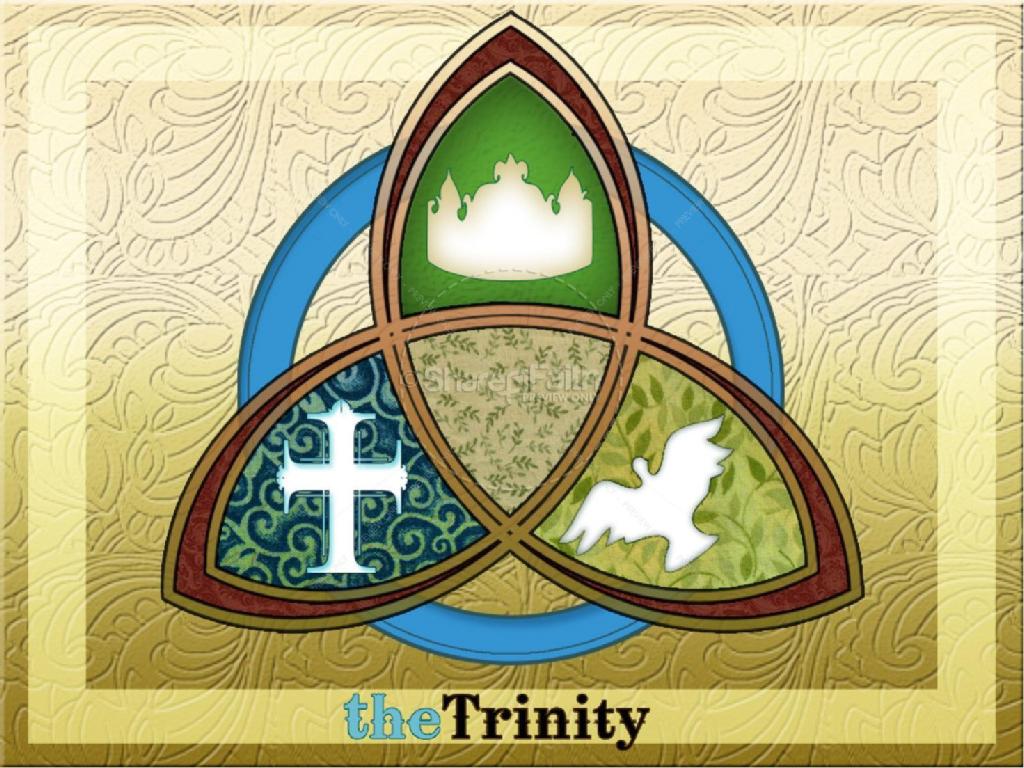
The Battle for the Trinity: historical Heresies and Church Defences
Posted by Luke J. Wilson on 1st July 2024 in Trinity | trinity,heresy,heretics,theology,creeds
...The Trinity is a cornerstone of Christian faith, defining God as one Being in three Persons: Father, Son, and Holy Spirit. However, throughout history, various misunderstandings and false teachings — known as heresies — have arisen, challenging this core doctrine. Understanding these heresies can strengthen our faith and deepen our appreciation for the truths held by the Church since its earliest days.
What Is the Trinity?
Before diving into the heresies, let’s briefly review what we mean by the Trinity. The Christian doctrine of the Trinity teaches that God is one essence in three distinct Persons:
The Father: The Creator and sustainer of al...
What is Monarchical Trinitarianism?
Posted by Luke J. Wilson on 21st July 2024 in Trinity | trinity,monarchy of the Father,Monarchical Trinitarianism,church fathers,church history
...nfirm the historical orthodoxy of Monarchical Trinitarianism, which maintains the unity and co-equality of the Trinity while acknowledging the Father as the source. This theological framework provides a robust understanding of the relational dynamics within the Godhead, affirming the eternal generation of the Son and the procession of the Spirit from the Father, without compromising the divine essence shared among the three Persons.
In conclusion, Monarchical Trinitarianism, grounded in the early church’s teachings and biblical exegesis, offers a coherent and historically rooted articulation of the Christian doctrine of the Trinity. It emphasises the Father...
From Paradise to Presents: The Christian Story Behind the Christmas Tree
Posted by Luke J. Wilson on 23rd December 2024 in Christmas | history,St Boniface,christmas,christmas tree
...The Christmas tree is one of the most recognisable symbols of the festive season, adorning homes, churches, and public spaces with its evergreen beauty. But where did this tradition originate, and how did it become a central feature of Christmas celebrations? Looking into the history of the Christmas tree has turned out to be a fascinating historical story woven from various cultural and theological strands.
The Paradise Tree and the Feast of Adam and Eve
The connection between the Christmas tree and the Feast of Adam and Eve offers a large clue into its origins. In medieval Europe, December 24th was observed as the feast day of Adam and Eve, a commemoration t...
From Dust to Redemption: The Meaning of Ash Wednesday
Posted by Luke J. Wilson on 5th March 2025 in Lent |
...itual and historical significance. Many years ago, when I was a child, even non-religious people and things on TV were talking about what they were giving up for Lent (at least, here in the UK where the Church of England is more prominent), though that is much less common these days.
Some churches have also adopted modern approaches, such as offering “Ashes to Go”, where clergy administer ashes in public places like train stations or city centres for those unable to attend a service.
Ash Wednesday, then, is not simply a ritual but an invitation: to reflect, repent, and renew one’s faith in preparation for Easter. It serves as a powerful reminder that lif...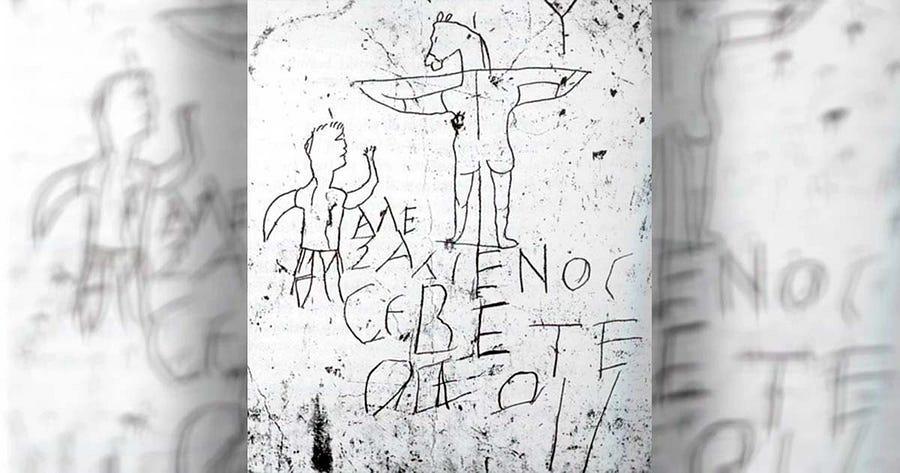
The World's Oldest Anti-Christian Meme
Posted by Luke J. Wilson on 9th March 2026 in Archaeology | Alexamenos graffito,archaeology,history
...I first came across the Alexamenos graffito back in Bible college in the early 2000s. It was one of those “fun facts” that gets dropped into a church history lecture and sticks with you — the ancient Roman equivalent of someone spray-painting an insult on a wall. I filed it away, thought it was fascinating, and largely forgot about it for two decades.
Then, recently, I discovered something about it I had never known. There’s a response to it. Scratched in a different room, in a different hand.
So I started digging into this more to verify the information and discovered more historical curiosities surrounding the graffiti than I ever knew existed wh...
Powered by WebBoss.io 3.7.1
Copyright © 2026 The Sacred Faith: Timeless Truths for Modern Minds. All Rights Reserved.
