
Blog Search Results


Did you mean:
left behind
?
81 results for Left Behind
found
within the Blog
6 displayed out of 81 (0.93seconds)Page 7 of 14
Lent Day 20: Cyprian: On the Unity of the Church: 19-27
Posted by Luke J. Wilson on 23rd March 2017 in Lent | Lent,great lent,fasting,early church fathers,devotional,daily reading,Cyprian,Bishop of Carthage,unity
Day Twenty: St. Cyprian: On the Unity of the Church: 19-27
Who: Third century bishop of Carthage (in modern Tunisia), and martyr from Africa
What: A letter to encourage the unity of the church against schisms and heresy during massive Roman persecution
Why: A disturbance had happened in the church because of a priest called Novatian — a schismatic of the third century, and founder of the sect of the Novatians. Cyprian wrote to counter this and argues that there can only be one united Church, and the Novatian breakaway was a false church and that Novatian was an antipope.When: Around 249 AD
You can find today’s reading on page 102 here: lentfatherscomple...
Lent Day 21: Athanasius: Life of Anthony: Chaps. 1-10
Posted by Luke J. Wilson on 24th March 2017 in Lent | Lent,great lent,fasting,early church fathers,devotional,daily reading,Athanasius,Bishop of Alexandria,Confessor,Doctor of the Church,Anthony the Great
Day Twenty-one: St. Athanasius: Life of Anthony: Chaps. 1-10
Who: Bishop of Alexandria; Confessor and Doctor of the Church; born c. 296; died 2 May, 373 AD. He was the main defender of orthodoxy in the 4th-century battle against the Arianism heresy. Certain writers received the title “Doctor” on account of the great advantage their doctrine had on the whole Church, Athanasius especially for his doctrine on the incarnation.
What: The biography of Anthony the Great’s life, which helped to spread the concept of Christian monasticism, particularly in Western Europe.
Why: From the letter’s own prologue: “The life and conversation of our holy Father, A...
The Temptations of Jesus: Testing God
Posted by Luke J. Wilson on 4th March 2018 in Lent | temptation,testing God,pinnacle,Temple,Jesus,Satan,wilderness,Lent,desert,Armour of God
Here we are at the final temptation that the devil directly attacks Jesus with (I say directly, because next week I’m going to look at the more subtle attacks and temptations we can face).
Let’s begin with the text:
Matthew 4:5-7
Then the devil took him to the holy city and placed him on the pinnacle of the temple, saying to him, “If you are the Son of God, throw yourself down; for it is written,
‘He will command his angels concerning you,’
and ‘On their hands they will bear you up,
so that you will not dash your foot against a stone.’”
Jesus said to him, “Again it is written, ‘Do not put the Lord your God to the test.’” (...
Immanuel, God with us
Posted by Luke J. Wilson on 19th December 2016 in Christmas | christmas,xmas,nativity,book,David H. Petersen,author,God With Us,Immanuel,Bethlehem,house of bread,bread of life
I had been thinking about what to write this coming Christmas time, when I came across this quote the other day. I thought it sufficient enough, rather than go into a long theological treatise! So without further ado, here is a quote/excerpt by David H. Petersen, author of God With Us:
“The Savior is born unto you in Bethlehem, the house of bread, on earth. It is no coincidence that He lacked a crib and was placed instead into a feeding trough. He was born unto you to be bread: bread for beasts, bread for wolves, and bread for sheep. He comes in His body to feed you into life, to slake your thirst, to satisfy your soul. He is put into a manger, not only b...
Creedal Christians: The Apostle's Creed
Posted by Luke J. Wilson on 11th October 2018 in Early Church | creedal christians,creeds,creedal,apostles,apostolic creed,apostolic tradition,rule of faith,early church fathers,early church
The Apostle's creed — what is it and why is it called that?
Outside of the New Testament, this is one of the oldest creeds we have, dating back to the sixth – eighth century in its current form that is commonly known today, but having its origins much earlier — as far back as the second century in a shorter form known simply as the “Old Roman Creed”.
The Apostles creed is also sometimes referred to as the “Rule of Faith” as it is a summary of the Gospel and is the basis for pretty much all modern theology. The points of the creed cover all the major pillars of the Christian faith which aims to safeguard what is true orthodoxy (right belief), whic...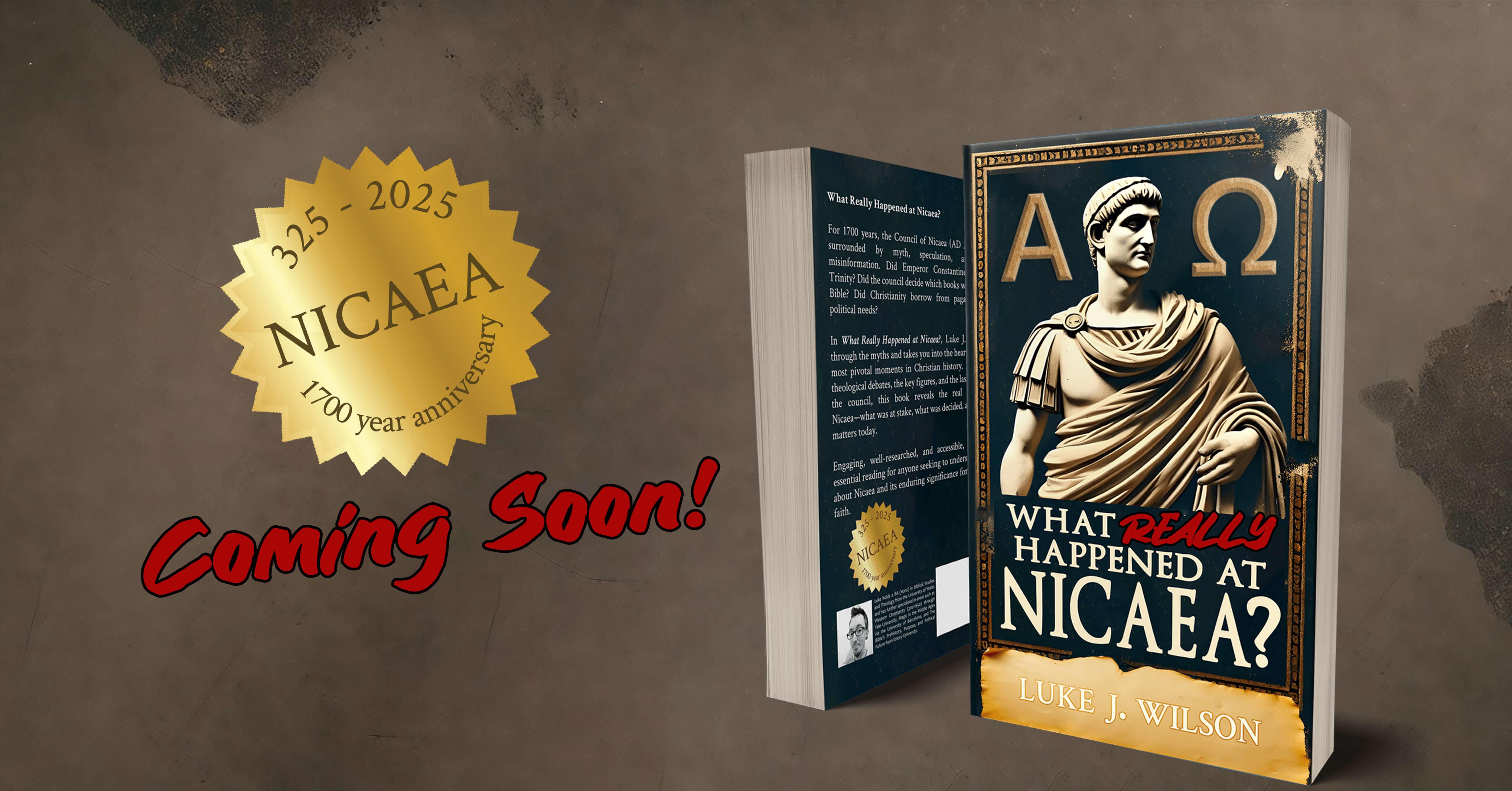
Announcing My New Book: What Really Happened at Nicaea?
Posted by Luke J. Wilson on 23rd February 2025 in Book Release | nicene council,nicene creed,controversy,constantine,book release
For 1700 years, the Council of Nicaea has been surrounded by myths, misunderstandings, and outright fabrications. From claims that Constantine “invented” the Trinity to the idea that the council decided the books of the Bible, there’s no shortage of misinformation floating around.
That’s why I’m excited to announce my upcoming book, What Really Happened at Nicaea? This book sets the record straight, taking you inside the actual events of 325 AD—what was debated, what was decided, and why it still matters today.
If you’ve ever wondered:✅ Did Constantine rewrite Christianity?✅ Was Jesus’ divinity really up for debate?✅ Did Nicaea creat...
Powered by WebBoss.io 3.7.1
Copyright © 2026 The Sacred Faith: Timeless Truths for Modern Minds. All Rights Reserved.
