
Blog Search Results


56 results for greek
found
within the Blog
6 displayed out of 56 (0.06seconds)Page 7 of 10

40 Days with the Fathers: Companion Texts OUT NOW!
Posted by Luke J. Wilson on 8th May 2019 in Early Church | early church,early church fathers,book,40 days,my book
40 Days with the Fathers: Companion Texts is now available to buy as Paperback or Kindle!
I am happy to say that the new book is now available in paperback and Kindle format on Amazon! Other eBook formats will be available soon as it rolls out.
This book is the companion to my other book (40 Days with the Fathers: A Daily Reading Plan), and includes twenty-three Early Church texts in full—including all additional footnotes from the original editors and translators so that you can get as close as possible to reading these ancient texts without needing to know ancient greek or Latin.
It's structured in such a way to read a chapter a day over a 40 day period...
Lent: Day 3 - Mathetes to Diognetus, pt. 2
Posted by Luke J. Wilson on 3rd March 2017 in Lent | Lent,great lent,fasting,early church fathers,devotional,daily reading,epistle of mathetes to diognetus
Day three: Epistle of Mathetes to Diognetus: Chaps. 7-12
Who: Anonymous author, “mathetes” is not a name, but is the greek word for “a disciple”
What: possibly one of the earliest examples of a Christian apologetic defending the faith from its accusers, written to someone interested in learning more about the faith and its customs
Why: The Christian faith was under attack and ridicule in the early centuries, many things about the Church were misunderstood and so various Christians took to writing apologetic's (defences) to clarify doctrines and beliefs from being maligned.
When: Estimated between AD 130 and late 2nd century
Today's reading is the...
Fasting: A spiritual and physical discipline
Posted by Luke J. Wilson on 27th May 2019 in Fasting | fasting,didache,discipline,self control,Lent,early church,early church fathers
The topic of fasting often comes up in online discussion groups that I'm a part of, more often in Protestant circles where the practice is more often sidelined in low churches. So let's take a look at the practice of fasting from a practical and historical view, as it seems to be a spiritual discipline which has been pushed aside in many churches today, with prayer, worship and bible reading taking more precedence in a Christian's life instead (not that those are bad things to do!).
Why fast?
There are many reasons to fast, and recent studies have shown a lot of health benefits that can be derived from fasting. But on the spiritual side of life, there are also...
Support Israel? OK, which Israel?
Posted by Luke J. Wilson on 9th August 2014 in Israel | Israel,war,politics,current events,Hamas,terrorism,promised land,Church Fathers,pacifism,nonviolence,New Covenant
"We interrupt your regularly scheduled programme to bring you this..." Sorry if you were waiting for part 3 of the Coming of Jesus series, but what with all that's going on in the news lately, I felt that this needed to be written first.
"Support Israel's right to defend itself from terror."
Images like this really don't help anything.
If you've been on Facebook, or any other social media no doubt, I'm sure you will have seen (or even said) words to this effect in status' or memes. I keep seeing memes and images posted by people, often from Christians, about "supporting Israel" and each time it makes me stop and question that statement and/or sentiment....
New Covenant Israel is no longer physical (nor literal)!
Posted by Luke J. Wilson on 11th October 2015 in Israel | Israel,new creation,born again,new covenant
If you've read my previous two articles on Israel, then this will probably seem familiar. This is a combination of the previous two combined into one study, focussing more on who Israel is under the New Covenant rather than the geopolitical/war situation of the Middle East.
So Who is Israel?
No doubt what I'm about to say will cause some knee-jerk reactions, but to properly understand the New Covenant, we need to address the issue of who is Israel, Biblically speaking? Yes, there is a modern nation known as "Israel" now since 1948, but is that the same Israel of the Bible? The same Israel to whom God made his promises? If so, does that mean...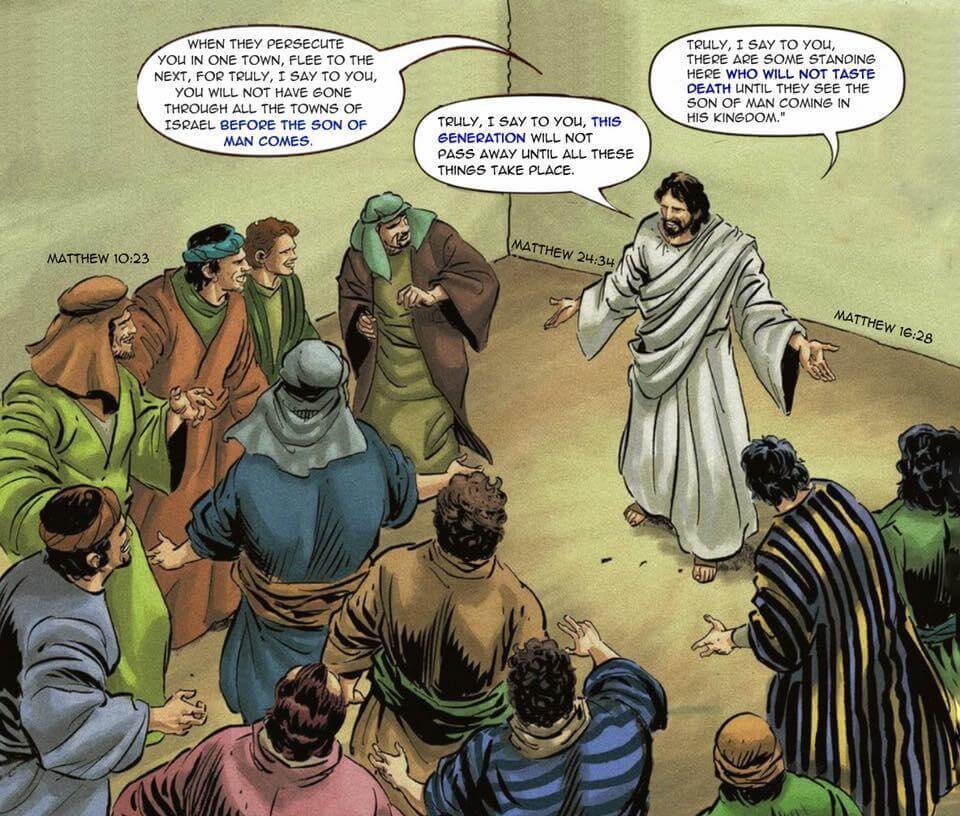
The Coming Kingdom of the Son of Man
Posted by Luke J. Wilson on 20th July 2016 in Eschatology | second coming,preterism,Kingdom of God,Coming kingdom,olivet discourse,Gospels,end times,end of the world,end of the age
The importance of context of what's being said, and to whom, in Scripture.
I came across this image the other day (in the header above; see larger here) that links together three parts of Matthew’s Gospel to highlight the connection which many often miss, or read as separate events. I like the image because it shows that when Jesus spoke these things, he would have been saying them directly to the disciples and others who were listening to his teaching, and not in some cryptic, ambiguous dictation to a prophetic scribe, devoid of all context and meaning to those around him at the time.
Update Feb 2017: I am adding some additional information to this to dis...
Powered by WebBoss.io 3.7.1
Copyright © 2026 The Sacred Faith: Timeless Truths for Modern Minds. All Rights Reserved.
