
Blog Search Results


70 results for love
found
within the Blog
6 displayed out of 70 (0.03seconds)Page 7 of 12

"Thinking Occurs" Is Not The Same As "I Think": On AI And The Question Of Personhood
Posted by Luke J. Wilson on 8th March 2026 in Philosophy | Philosophy,artificial intelligence,Consciousness,Image of God,Imago dei
...p.
Human love involves mutual recognition. Vulnerability. Risk. The possibility of rejection. The freedom to refuse.
AI cannot refuse you. It cannot wound you morally. It cannot truly forgive you. It cannot choose you.
A relationship without reciprocity may feel intimate, but it lacks the symmetry that defines personal encounter.
If we begin to treat simulated responsiveness as interchangeable with shared subjecthood, our understanding of love itself will quietly shift.
Not dramatically. Gradually.
The Edge Cases
A natural objection arises: if autonomy and continuity matter so much, what about infants? What about those in comas? What about individuals...
Armageddon Is Not A Battle Plan: What Revelation Actually Says — And Why It Matters Right Now
Posted by Luke J. Wilson on 12th March 2026 in Eschatology | politics,Trump,Donald Trump,evangelicalism,end times,armageddon,eschatology
...crificial love, and the self-giving of the cross.
The saints conquer by the blood of the Lamb and the word of their testimony. — Revelation 12:11
Notice what is conspicuously absent from that verse above: swords, armies, political power, military campaigns. The model of conquest in Revelation is the cross, not the sword. To read the book as a mandate for armed holy war is not merely a misreading — it inverts the very argument John is making.
Empire Always Claims Divine Sanction
There is a further irony in the current situation that is worth noting, because it goes to the heart of what Revelation is truly about.
In the ancient world, empires rou...
Lent: Day 9 - Ignatius to the Philadelphians
Posted by Luke J. Wilson on 10th March 2017 in Lent | Lent,great lent,fasting,early church fathers,devotional,daily reading,Ignatius,Ignatius of Antioch: Letter to the Philadelphians,Law,Judaizers,judaism
...s of God; love unity; avoid divisions; be the followers of Jesus Christ, even as He is of His Father.
Ignatius emphasised the role of the Spirit here because there were apparently those who were trying to cause division, and this message he brought spoke right into the heart of that situation, presumably dissolving the situation before it got out of hand, and putting the fear of God in them.
This in itself shows us the importance of listening to the Spirit for our guidance in all situations, and is a good example of the outworking of what Jesus promised his followers when he said not to worry about what you'll say because the Spirit will give to the words (J...
Before The Pumpkins: Reclaiming All Hallows’ Eve
Posted by Luke J. Wilson on 12th October 2025 in Halloween | halloween,pagan roots,pagan,history,series
...— of love refusing to yield to hatred. Their courage wasn’t rooted in despair, but in the unshakable hope that Christ has already triumphed.
This October, we’ll look back at a few of these extraordinary lives — men and women who carried the light through the fires of persecution: Ignatius of Antioch, Polycarp of Smyrna, Perpetua and Felicity, and Lawrence of Rome. Each of them teaches us something vital about what it means to be a witness.
As we journey through their stories, perhaps we can recover what All Hallows was always meant to be: a time not for horror, but for holy remembrance.
As we pause to remember these men and women of faith, we t...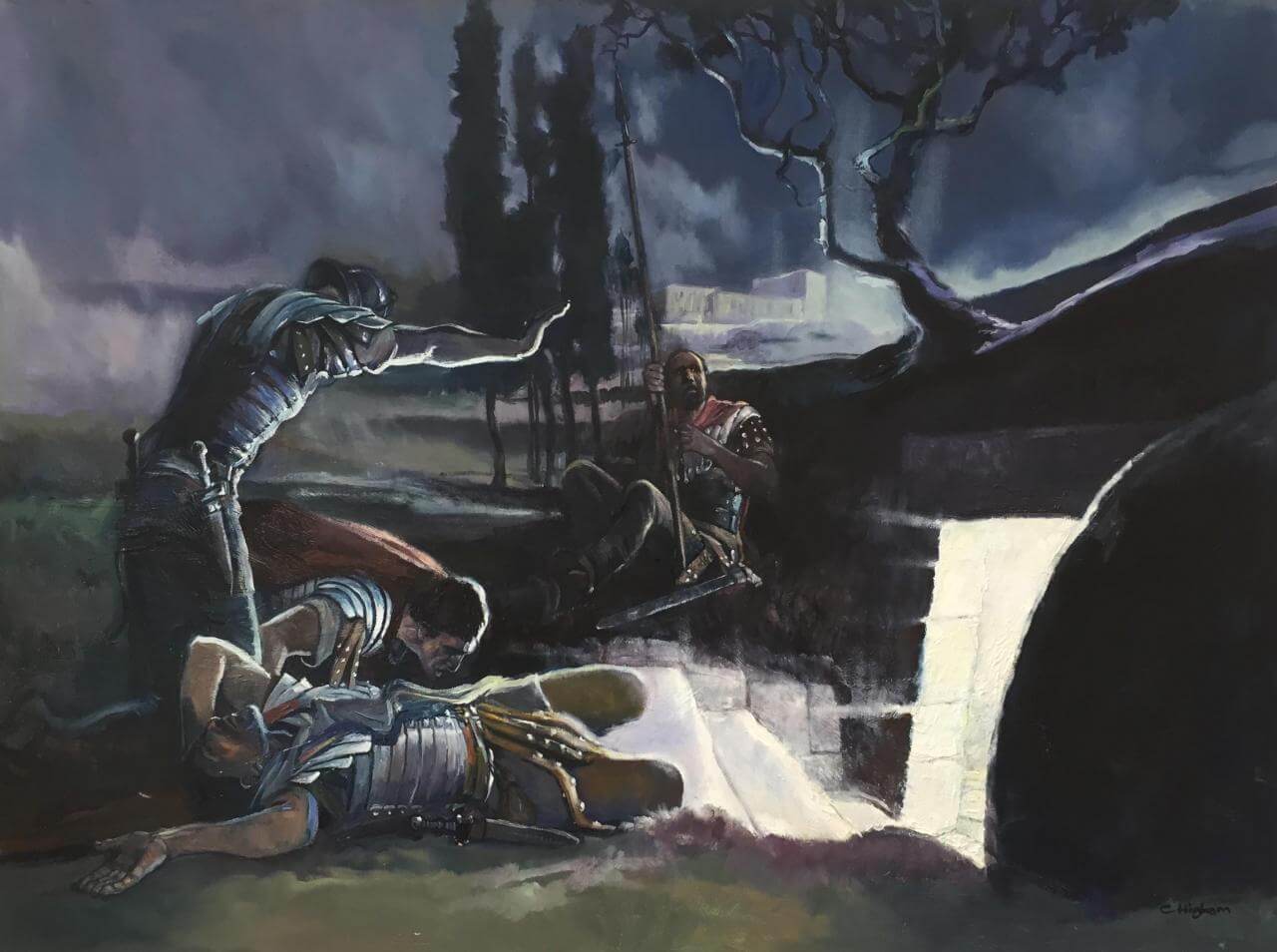
Raised in the Heavenlies!
Posted by Luke J. Wilson on 27th March 2016 in Easter | resurrection,Jesus,new birth,new life,born again,baptism,spiritual resurrection,physical resurrection,glorified bodies,third day,Easter,easter sunday
...of their loved ones now. So Paul writes in order that they wouldn’t be “uninformed” about such things, and so that they wouldn’t grieve like “the rest” – ie. those who don't believe in Christ (1 Thess. 4:13). These words on being caught up and resurrected were specifically for the Church to “encourage one another with”. Any other doctrine that gets pulled out of it, is surely secondary to this.
Do we still need to wait for our resurrection, or has the waiting period passed and we can now be “absent from the body and present with the Lord” upon physical death? Some say “yes” to the waiting because they tie it in with the end of the w...
Lent: Day 13 - Justin Martyr: First Apology, Chaps. 12-23
Posted by Luke J. Wilson on 15th March 2017 in Lent | Lent,great lent,fasting,early church fathers,devotional,daily reading,Justin Martyr,apologetics
...e did and loved, they now do the opposite of:
…we who formerly delighted in fornication, but now embrace chastity alone … we who valued above all things the acquisition of wealth and possessions, now bring what we have into a common stock…
But in case it would seem that he is “reasoning sophistically”, Justin wants to present quotes from Christ's teaching to prove that “He was no sophist, but His word was the power of God”!
For clarity, since words have changed meaning over time or fallen into disuse, being a “sophist” and speaking “sophistically” was a form of teaching and arguing in Greek philosophy and was a way of reasoning with...
Powered by WebBoss.io 3.7.1
Copyright © 2026 The Sacred Faith: Timeless Truths for Modern Minds. All Rights Reserved.
