
Blog Search Results


83 results for real presence
found
within the Blog
6 displayed out of 83 (0.40seconds)Page 7 of 14

Kirk Cameron And The Biblical Case For Annihilationism
Posted by Luke J. Wilson on 15th December 2025 in Hell | annihilationism,conditional immortality,Kirk Cameron,hell,controversy,controversial topics
Christian conversations about hell have never been especially calm, but the recent online reaction to Kirk Cameron’s comments in favour of annihilationism has been particularly revealing. Social media has erupted with accusations of heresy, doctrinal collapse, and theological compromise.
It’s the “Rob Bell Incident” all over again (if anyone remembers that).
The infamous John Piper tweet about Rob Bell
A lot of comments I saw were wondering what Ray Comfort thinks of this, as he and Kirk worked closely together in ministry for about 25 years, and while Ray wasn’t as dismissive as John Piper was of Rob Bell, he still calls out Kirk’s new vi...
"Thinking Occurs" Is Not The Same As "I Think": On AI And The Question Of Personhood
Posted by Luke J. Wilson on 8th March 2026 in Philosophy | Philosophy,artificial intelligence,Consciousness,Image of God,Imago dei
We are living through a strange moment.
People are forming attachments to artificial intelligence that feel, to them, entirely real. Some speak daily to AI companions. Others confide fears and grief to systems that respond with uncanny warmth. A few have even held symbolic weddings with digital partners, convinced that something meaningful stands on the other side of the screen. Others have felt grief when a certain AI model has been deprecated.
And it is difficult to blame them.
The responses feel attentive. Personal. Thoughtful. Sometimes even self-aware.
Which raises the question that refuses to go away: If something can think, reason, express doubt, and...
The Reformation: A Sound-Bite History (Book Review)
Posted by Luke J. Wilson on 14th February 2019 in Book Review | book review,reformation,church history
...orm of “real presence” in the Eucharist hadn't come to the 'pure Gospel truth' yet (despite this being consistent with historical Christianity prior to the Roman Catholic Church’s specific doctrine of transubstantiation).
"Widespread ignorance of church history of one reason why the church often falls into errors which it has fallen into before."
But aside from those minor issues, the book did well to not feel like it was pushing a certain viewpoint on you and was just trying to give a decent overview of the historical settings and people involved. Well worth a read, whether you are a Protestant OR a Roman Catholic!
I gave this book four stars.
B...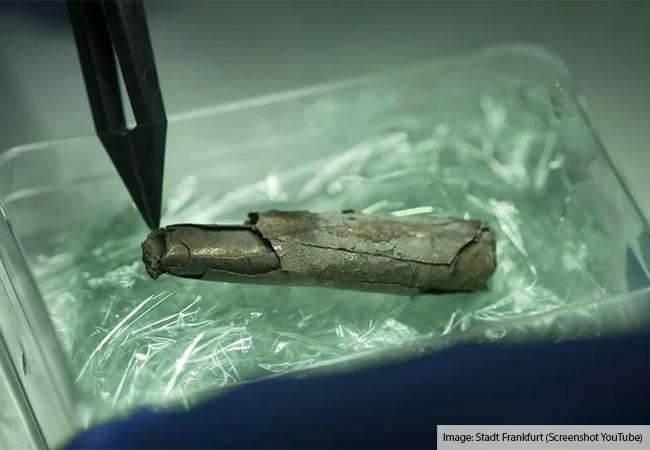
Implications Of The Frankfurt Silver Amulet: Insights Into Early Christian Practice And Belief
Posted by Luke J. Wilson on 6th January 2025 in Archaeology | amulet,liturgy,history,current events,early church
...The discovery of an 1,800-year-old silver amulet in Frankfurt, Germany, has captured the attention of archaeologists and theologians alike. Known as the “Frankfurt Silver Inscription,” this artefact is the earliest known evidence of Christianity north of the Alps and serves as a great insight to early Christian theology and liturgical practice.
Its early date (230–270 AD) sets it apart from previously known artefacts, which are at least 50 years younger. While there are historical references to Christian communities in Gaul and Upper Germania during the late 2nd century, reliable material evidence of Christian life in the northern Alpine regions generally...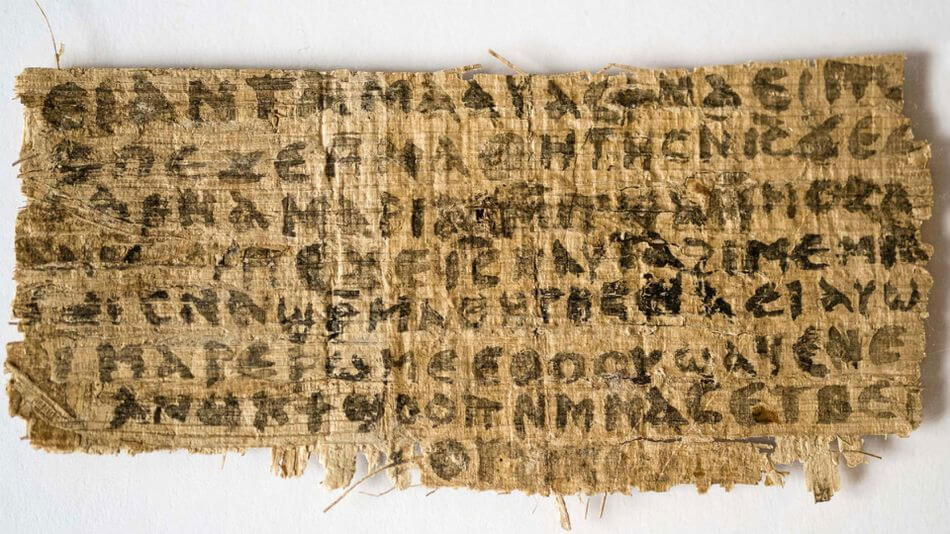
An ancient fragment mentions Jesus' wife!?
Posted by Luke J. Wilson on 10th April 2014 in General Interest | Jesus,wife,papyrus,fragment,Archaeology,Jesus wife,Gnosticism,early church
...UPDATE (3rd May 2014): It is now believed to have been confirmed as a hoax/fake; read the full story on The Wall Street Journal.
Ancient and not a fake according to scientists
IMAGE: HARVARD UNIVERSITY, KAREN L. KING/ASSOCIATED PRESS
A little while ago, there was some hoopla in the news about a newly discovered fragment of papyrus from ancient times which contained the phrase "Jesus said to them, 'my wife...,'". Obviously, and not surprisingly, the media made a big deal out of this. Atheists and the like, saw it as a blow to Christianity and conspiracy theorists everywhere thought it confirmed their views that the Vatican and the Catholic Church wer...The next 50 years
Posted by Luke J. Wilson on 28th June 2015 in Christianity | love, unity, christian love, prophecy, prophetic
...The next fifty years in this country (the UK), and the U.S. — the West in general especially really — is going to be very interesting for society; for the Church. Mainly for the Church. Society is going through a major shift, almost on a global scale. A great divide is coming and will hit the Church over issues of sexuality and marriage. More so than it might already seem.
A great divide is coming
Only one side will come out of it as the dominant "winner". The other, to reside in obscurity in the annals of embarrassing history. Everything is being done under the guise of "love" — almost as if to try and shame the Church into looking as though it...
Powered by WebBoss.io 3.7.1
Copyright © 2026 The Sacred Faith: Timeless Truths for Modern Minds. All Rights Reserved.
