Blog Search Results


78 results for scripture
found
within the Blog
6 displayed out of 78 (0.05seconds)Page 7 of 13

The Coming of Jesus: The Olivet Discourse – Part 1
Posted by Luke J. Wilson on 19th October 2014 in Second Coming Series | Second Coming,Return of Christ,Return of Jesus,Preterism,Prophecy,Last Days,Left Behind,Eschatology,Matthew 24,Olivet Discourse,birth pangs,Josephus,history
Hello again, it's been a while since I've wrote anything, and longer since getting back to this series on the Second Coming of Jesus. This isn't for lack of motivation, but rather because this is such a huge topic that I've been reading and thinking about this next part for a very long time to make sure I know what I'm saying, and am well read enough to do the topic justice. Having said that, there will always be far more to say on this than I can give time for here, but I hope to give enough of an overview to expound this prophecy faithfully without being too technical as to cause confusion! You can also catch up on the previous parts...
Is it the end of the world as we know it?
Posted by Luke J. Wilson on 27th September 2015 in Eschatology | blood moon,last days,end of the world,second coming,apocalypse,prophecy,false prophets,predictions
... And the scripture, foreseeing that God would justify the Gentiles by faith, declared the gospel beforehand to Abraham, saying, “All the Gentiles shall be blessed in you.” For this reason, those who believe are blessed with Abraham who believed.
I've already wrote extensively on this topic before, here and here, which you can read and comment on, if you want.
I believe wholeheartedly, that if you want to make a good and positive difference in this world, then our theology and doctrine has to be right. Because when it's wrong, it can lead to all sorts of wrong actions and atrocities in the name of God. Believing national Israel and geographical Israe...The Coming of Jesus: The Olivet Discourse – Part 2
Posted by Luke J. Wilson on 3rd February 2016 in Second Coming Series | Second Coming,Return of Christ,Return of Jesus,Preterism,Prophecy,Last Days,Left Behind,Eschatology,Matthew 24,Olivet Discourse,Josephus,history,Part 2,Desolation,Temple Destruction,Jewish War,70AD
...Welcome to Part Two of the Olivet Discourse! It’s been a while, so we’ll pick up right where we left off with Matthew 24 verse 15 onwards, after a small recap of the chapter so far.
The Olivet Discourse begins with the disciples admiring the architecture of the temple in Jerusalem. Jesus responds to this by telling them that it will all be thrown down and destroyed, to the point that not one stone will be left on another. Later on, when they are sat on the Mount of Olives, Jesus’ disciples come to him and ask “when will this happen?” and “what will be the sign” that all of this is about to commence?
If we look at the accou...Was the omniscience of God a developed idea?
Posted by Luke J. Wilson on 21st April 2014 in The Nature of God | progressive revelation, Christocentric, Christotelic, Hermeneutics, omniscience, omnipresence, theology
...Or do we retroactively place our current theology of God on God?
Consider the Garden of Eden: '[T]he Lord God called to the man, and said to him, “Where are you?”' (Gen. 3:8-10)
Now today we make it into a rhetorical question, but was this always so? In this story, God is spoken of almost in a physical-bodily sense as walking in the garden, since "they heard the sound of the Lord God walking in the garden" as he moved about, and then tried to hide themselves from his view!
Next think of the tower of Babel - "The Lord came down to see the city and the tower, which mortals had built" (Gen 11:5) - Did he not just know already? Also this story...
The Temptations of Jesus: Pride
Posted by Luke J. Wilson on 18th February 2018 in Lent | pride,temptation,Jesus,forty days,40 days,Lent,fasting,sin,wilderness,desert
...Welcome to the first part of a short series I'm writing during Lent. We’re on the first Sunday of Lent, and so I’m going to be looking at the forty days that Jesus spent in the wilderness, and the temptations he endured. A new post will be up every Sunday, and you can view the series overview here: Lent 2018.
Mark 1:12-13And the Spirit immediately drove him out into the wilderness. He was in the wilderness forty days, tempted by Satan; and he was with the wild beasts; and the angels waited on him.
That’s all Mark has to say on that time Jesus spent there, and John doesn’t mention the forty days at all. That leaves only Luke and Matthew which mention th...
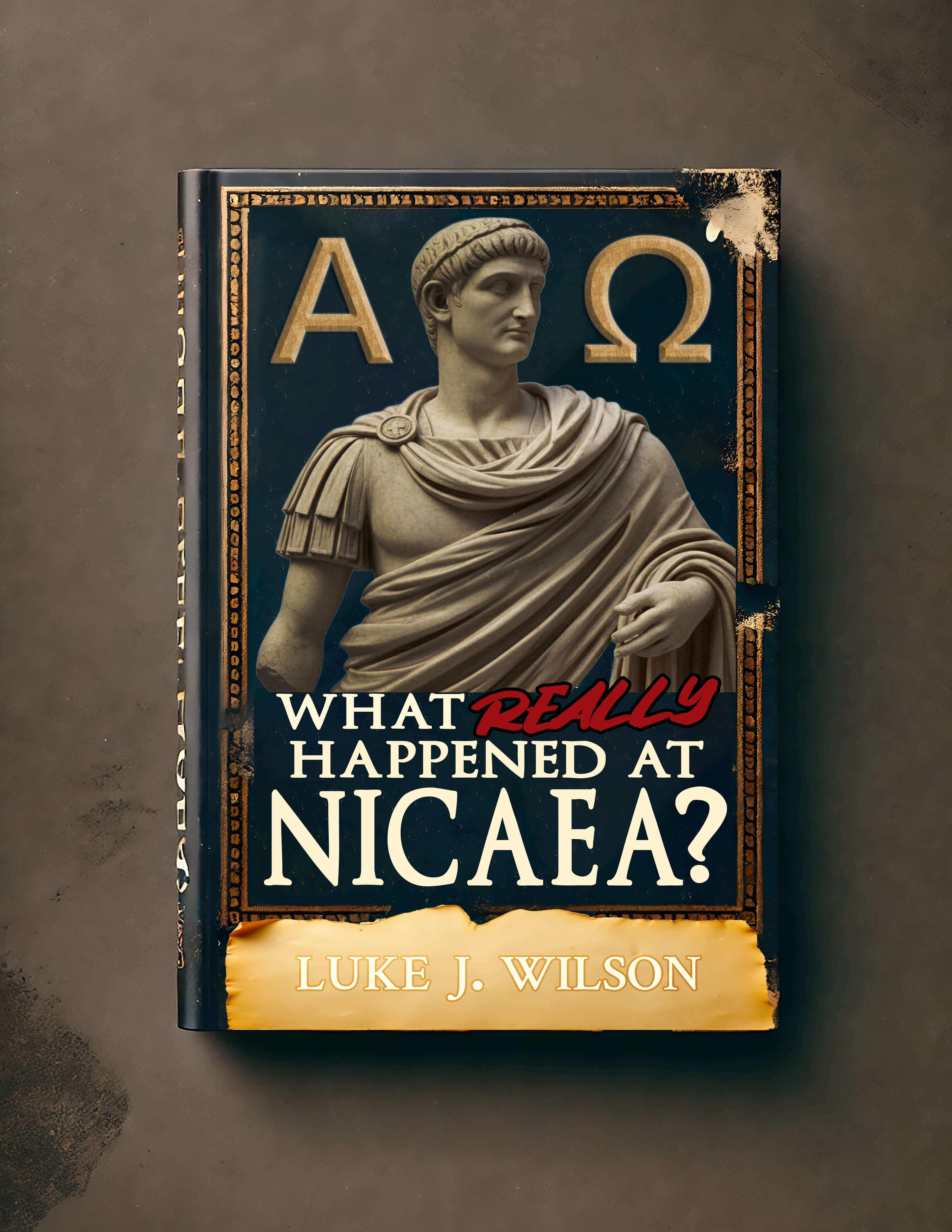
Debunking the Myth: The Council of Nicaea and the Formation of the Biblical Canon
Posted by Luke J. Wilson on 20th November 2023 in Early Church | church history,council of nicaea,myths,debunked,canon,biblical canon
...A myth that never seems to fade away: the idea that the Council of Nicaea, convened in 325 AD under the authority of Roman Emperor Constantine, played a pivotal role in establishing the Biblical canon. This notion suggests a conspiracy and power play orchestrated by a select group of elite bishops; a narrative popularised by works like Dan Brown’s Da Vinci Code. However, a closer examination reveals a lack of historical basis for this claim.
The Council of Nicaea and the Canon
Contrary to popular belief, there is no evidence that the Council of Nicaea discussed or established the Canon of scripture, leading to the creation of the Bible. Early Christian cano...
Powered by WebBoss.io 3.7.1
Copyright © 2026 The Sacred Faith: Timeless Truths for Modern Minds. All Rights Reserved.