
Blog Search Results


51 results for worship
found
within the Blog
6 displayed out of 51 (0.06seconds)Page 8 of 9

The Early Concept of the Trinity: Tracing the Roots
Posted by Luke J. Wilson on 16th November 2023 in Trinity | trinity,early church,early church fathers,tri-unity,triune God,godhead
...easonably worship Him, having learned that He is the Son of the true God Himself, and holding Him in the second place, and the prophetic Spirit in the third, we will prove. For they proclaim our madness to consist in this, that we give to a crucified man a place second to the unchangeable and eternal God, the Creator of all; for they do not discern the mystery that is herein, to which, as we make it plain to you, we pray you to give heed.
Origen's work "De Principiis" (On First Principles), written around AD 220, also displays an early understanding of the equality of the three Persons within the Godhead. In Book 1, Chapter 3, Section 7 of this work, Origen dis...
What is Advent?
Posted by Luke J. Wilson on 1st December 2023 in Christmas | Advent,christmas,second coming,parousia
...It’s that time of year when Christmas lights and decorations go up, things start to look a little more sparkly, and kids are getting ready to open their Advent Calendars.
But what exactly is “Advent”? You may be from a Church tradition which recognises this each year so are more familiar, but if not, you may be curious to know more about this ancient Christian tradition.
Advent, derived from the Latin “adventus,” signifying “coming” or “arrival,” stands as a sacred season deeply entrenched in the hearts of many Christians globally. This period of expectant waiting and preparation marks the initiation of the liturgical year in Western Christia...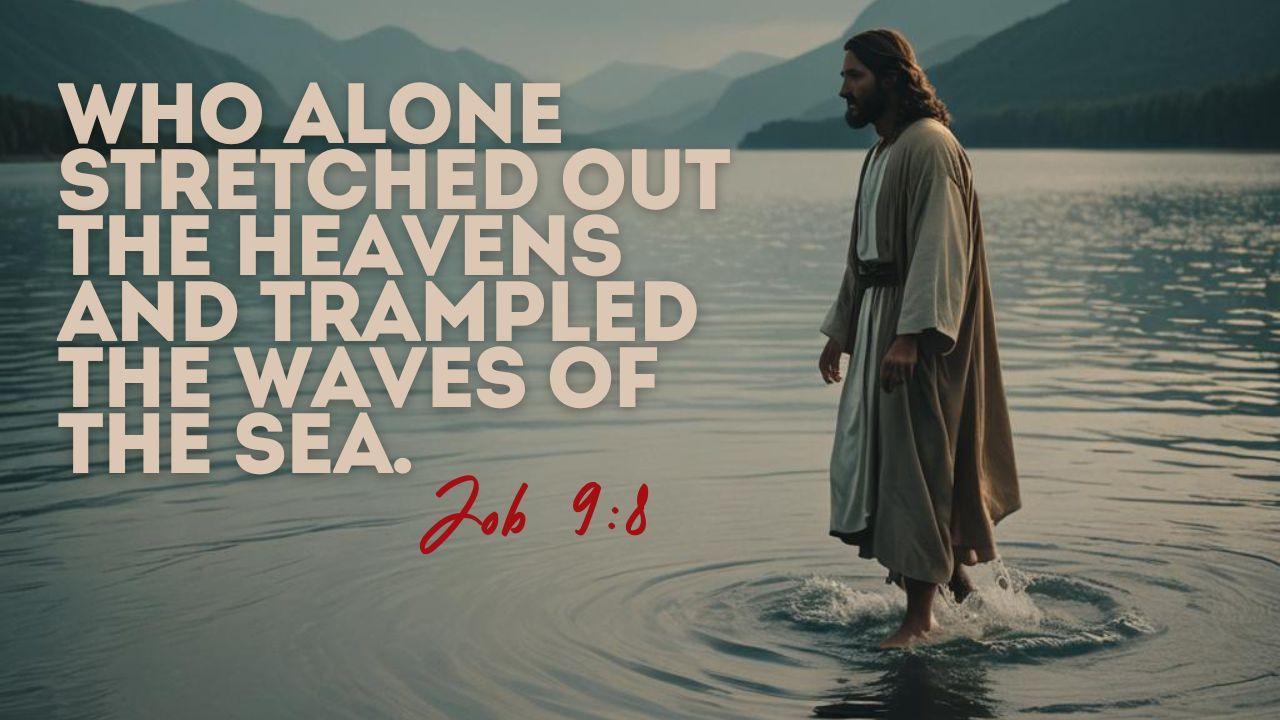
Jesus, Yahweh, And The Power Over The Storm
Posted by Luke J. Wilson on 29th July 2024 in Deity of Christ | Jesus,deity of christ,Yahweh,old testament,elements
...Critics of Christianity will often make the claim that Jesus never said he was God or divine in the Gospels. The problem comes when they set unrealistic demands and expectations, like wanting a chapter and verse where Jesus says, “I am God, worship me”. But this isn’t how the Bible works and definitely not how Jesus went about his ministry.
Throughout the Gospels, there are clear connections that reveal the true nature of Jesus in ways that would have been obvious to the Jewish people and leaders of his day who were very familiar with the Torah and other Scriptures we now call the Old Testament. One of the most striking examples is His demonstration of po...
From Paradise to Presents: The Christian Story Behind the Christmas Tree
Posted by Luke J. Wilson on 23rd December 2024 in Christmas | history,St Boniface,christmas,christmas tree
...als to be worshipped as gods. The phrase “worked with an axe by the hands of an artisan” and the description of these objects being “like scarecrows” underscore that these trees were not left in their natural state but were fashioned into idols.
Canaanite figurine of a seated god from Late Bronze Age Megiddo (photo credit: COURTESY OF THE ORIENTAL INSTITUTE OF THE UNIVERSITY OF CHICAGO)
The text also emphasises the futility of these idols: they cannot speak, walk, or act. This critique aligns with other biblical denunciations of idolatry, such as Isaiah 44:9–20, which similarly mocks the idea of worshipping a lifeless object crafted by human hand...
Does Easter Have Pagan Origins?
Posted by Luke J. Wilson on 22nd March 2021 in Easter | Easter,easter sunday,early church,church history,paganism,pagan roots,Ishtar,Eostre,fertility goddess
...Much like any major Christian holiday, there are the usual arguments and accusations about how it’s all just pagan festivities with a “Christian mask”. Easter is no different, and usually gets hit the hardest over its so-called “pagan roots”, or in the month or so preceding it, Lent being some “invention of the Catholic Church”.
Table of Contents
The Lenten Fast
The Easter controversy and why we celebrate it when we do
Is the Name “Easter” really the Anglo-Saxon goddess Eostre?
Chocolate eggs and bunnies?
Concluding Thoughts
Further Reading and Sources
I like to try and observe Lent, as it is one of the most ancient custom...
Lent: Day 3 - Mathetes to Diognetus, pt. 2
Posted by Luke J. Wilson on 3rd March 2017 in Lent | Lent,great lent,fasting,early church fathers,devotional,daily reading,epistle of mathetes to diognetus
...jesty and worship.
There is a lot of emphasis on “the Word” in these chapters, you don't see the name Jesus or the title of Christ, except in a chapter heading, but there's no mistaking who the author is writing about, with some great descriptions of the nature and love of God throughout the remaining portion of this book.
There is one small detail which stood out to me near the end of the epistle, and that's when the author gives a small tidbit of information about himself by saying that the things he is teaching are not “strange to [him]” nor is it “inconsistent with right reason” because he had been, in fact, “a disciple of the Apostles” and...
Powered by WebBoss.io 3.7.1
Copyright © 2026 The Sacred Faith: Timeless Truths for Modern Minds. All Rights Reserved.
