
Blog Search Results


Did you mean:
christians
?
113 results for Christians
found
within the Blog
6 displayed out of 113 (0.05seconds)Page 9 of 19

The Coming of Jesus: Our Future Hope - What Now?
Posted by Luke J. Wilson on 22nd January 2016 in Second Coming Series | second coming,70 weeks,70ad,what now?,what next,preterism,fulfilled prophecy,eighth day
...the early Christians had a belief and view of the resurrection of Jesus as being the beginning of the new creation – the eighth day they called it. The epistle of Barnabas conveys it well:
The sabbaths, that now are, are not acceptable unto me, but that which I have made is, even that in which, after that I have brought all things to an end, I shall make a beginning of the eighth day, which thing is the beginning of another world.
Wherefore we keep the eighth day as a day of gladness, on which also Jesus rose from the dead, and after he had appeared ascended unto heaven.
Barnabas 15:8,9
An unexpected twist
After an exploration through Revelation,...
Jesus, Mithras and Ancient Roman Cults: Separating Fact from Fiction
Posted by Luke J. Wilson on 25th April 2023 in Mythology | Jesus,mithras,apologetics,roman gods,atheist
...brated by Christians as a divine miracle, with the virgin Mary giving birth to him in a humble stable in Bethlehem after being overshadowed by the Spirit of God (Luke 1:34-35), but still being born in the flesh like everyone else from a woman. Nothing like how Mithras supposedly came about.
Central Acts and Teachings
Mithras is best known for the tauroctony, where he slays a bull to release life-giving forces that ensure the Earth’s fertility. The name comes from the Greek word tauroktonos (ταυροκτόνος) meaning “bull killing”. This act represents Mithras’ divine intervention in the natural world as the blood from the bull was believed to rel...
Jesus Like You've Never Seen Before - Discoveries from Early Christian Art
Posted by Luke J. Wilson on 13th May 2023 in Archaeology | archaeology,icons,Jesus,history,historical
...hat early Christians understood Jesus as a magician. The problem with this identification is that early Christians greatly maligned magic … For early Christians, Jesus performing miracles with the staff was not magical. Rather, it was intrinsically biblical (recalling Moses) and innately ecclesial (touting the supremacy of the Church)
Another notable depiction from around 250 A.D, found in the Catacombs of Callixtus, presents Jesus as the Good Shepherd. Further along, in a place in Syria called Dura Europos, which is somewhat of a time capsule for archaeologists, we find the world’s oldest surviving church. Inside this church, there’s an image from aro...
Is The Rapture Biblical?
Posted by Luke J. Wilson on 21st September 2020 in Eschatology | rapture,the rapture in the bible,scriptures on the rapture,N.T. Wright,john chrysostom,church fathers,church history,signs of the rapture,Coming of Christ
...s all the Christians into the sky and takes them to heaven, away from all the troubles on the earth, before coming back later to do a proper “second coming”.
John Nelson Darby, a 19th-century theologian, is often credited with creating this premillennial rapture doctrine, followed closely by C.I. Scofield who wrote a best-selling annotated Bible which promoted Darby’s rapture views in its footnote commentary. This particular Bible became wildly popular across America in the early 1900s and ended up solidifying the futurist dispensational viewpoint for generations to come within Evangelicalism.
Despite the popularity of Scofield’s Bible, what it (and Da...
From Paradise to Presents: The Christian Story Behind the Christmas Tree
Posted by Luke J. Wilson on 23rd December 2024 in Christmas | history,St Boniface,christmas,christmas tree
...onnection Christians saw in the evergreen tree as a symbol of Christ’s enduring presence and light in the darkness. Luther’s influence in Protestant Germany may have helped popularise the use of Christmas trees in Christian households.
The Spread of the Christmas Tree
The tradition of the Christmas tree gained popularity in Germany during the 16th and 17th centuries. By the 18th and 19th centuries, German immigrants brought the custom to other parts of Europe and North America. One pivotal moment in its wider adoption was the depiction of Queen Victoria and Prince Albert around a decorated Christmas tree in an illustration published in the Illustrated Lond...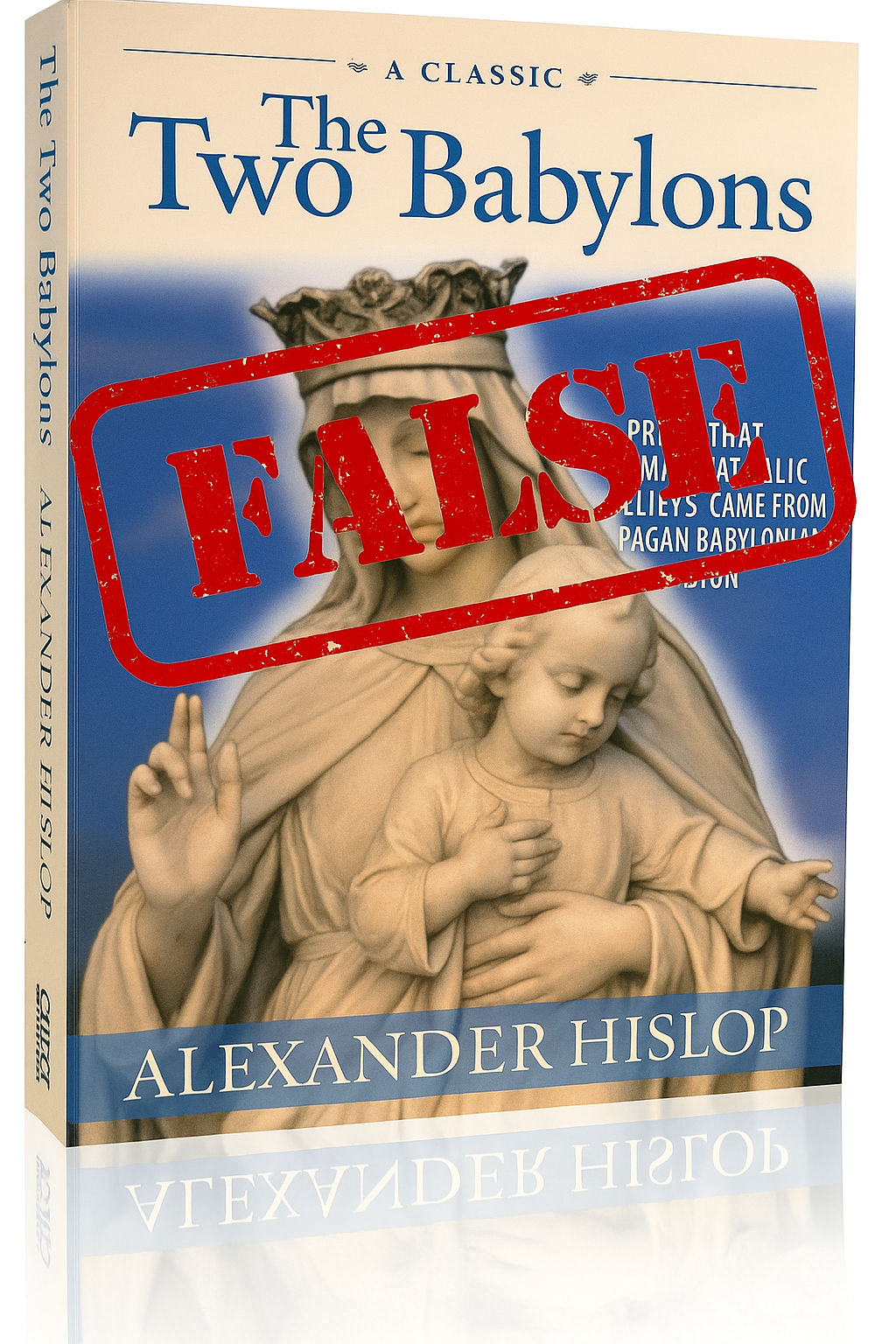
The Two Babylons Exposed: The Book That Misled Millions
Posted by Luke J. Wilson on 21st April 2025 in Easter |
...Over the years, I’ve encountered many Christians who’ve quoted from Alexander Hislop’s The Two Babylons as if it were a solid historical resource. The book claims that the Roman Catholic Church is not truly Christian but rather a continuation of ancient Babylonian religion. It’s self-assured and sweeping, and for many people, it seems to explain everything, from Marian devotion to Lent and Easter, to Christmas, as rooted in paganism. But is it accurate?
In short: no, it really isn’t.
Hislop’s work is a classic example of 19th-century pseudohistory — a polemical piece, written to prove a point, not to explore any historical truth.
Flawed Meth...
Powered by WebBoss.io 3.7.1
Copyright © 2026 The Sacred Faith: Timeless Truths for Modern Minds. All Rights Reserved.
