
Blog Search Results


Did you mean:
faith
?
140 results for Faith
found
within the Blog
6 displayed out of 140 (0.03seconds)Page 9 of 24

Did Jesus lead the first youth group?
Posted by Luke J. Wilson on 23rd November 2023 in General Interest | disciples,apostles,youth group,apologetics
The Bible can be a complex thing, with many interwoven connections not always immediately apparent, linking topics and themes together across the ages. One such intriguing relationship lies between Exodus 30:14 and Matthew 17:24–27, offering valuable perspectives on the age dynamics among Jesus’ disciples with a hidden clue in the brief encounter about paying temple tax.
Exodus 30:14 — The Age of Accountability
Exodus 30:14 establishes a significant criterion for temple tax payment: “Everyone who is numbered, from twenty years old and over, shall give the offering to the Lord.” This biblical guideline sets what might be considered a standard for...
Keeping Christ in Xmas
Posted by Luke J. Wilson on 15th November 2023 in Christmas | xmas,christmas,history
The abbreviation “Xmas” often sparks discussions about its origins and whether it diminishes the significance of Christmas. Contrary to misconceptions, the use of 'X' in "Xmas" has deep historical roots dating back to ancient Greek, where it represents the first letter of “Christ” (Χριστός). Additionally, the Chi Rho symbol, formed by superimposing the Greek letters Chi (Χ) and Rho (Ρ), is a notable Christian symbol representing Christ.
The Origins of "Xmas"
The letter ‘X’ in “Xmas” finds its roots in the Greek letter ‘Chi’ (Χ), which abbreviates the word “Christ” in Greek. This practice of using ‘X’ as an abbreviation for...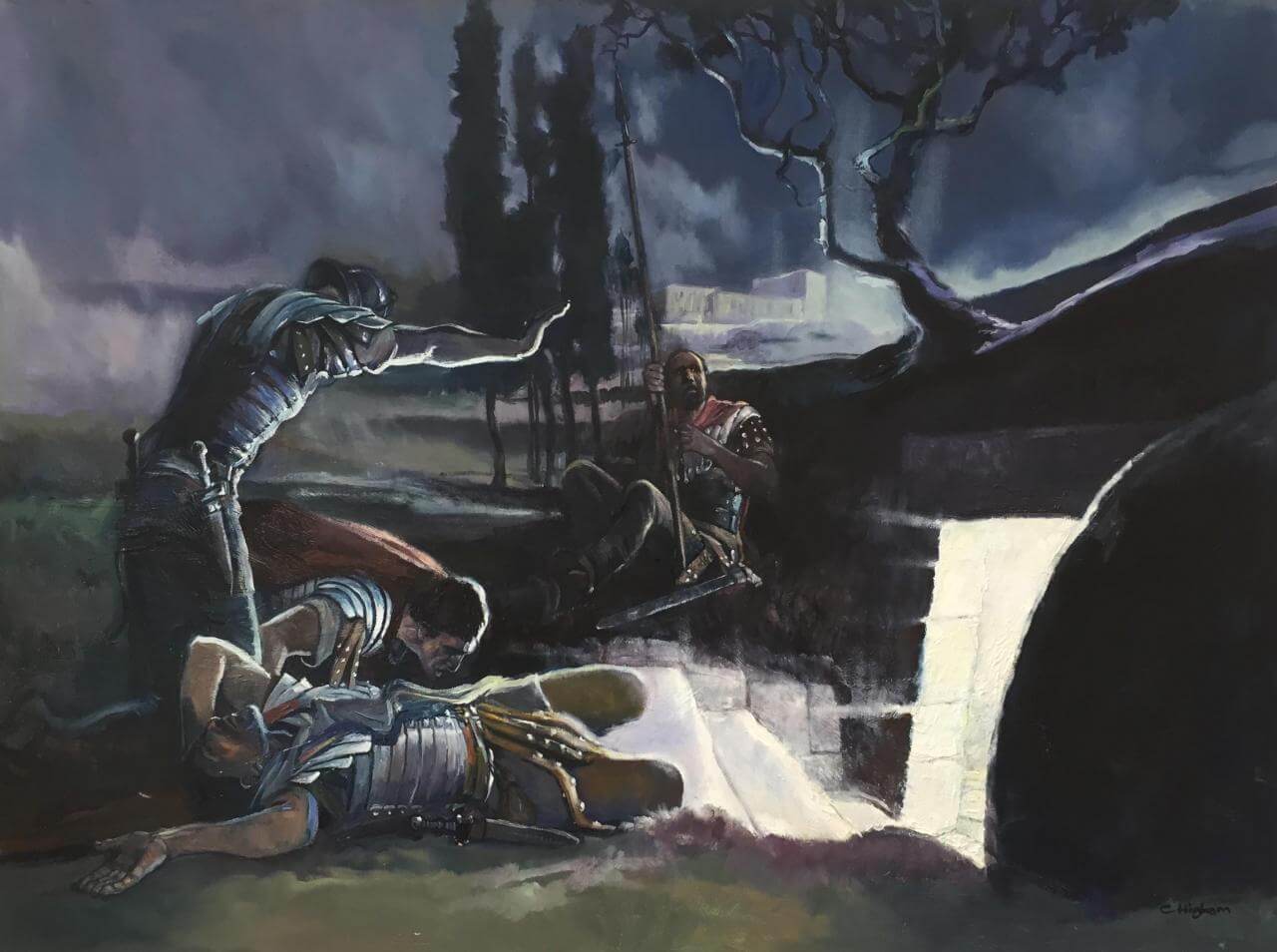
Raised in the Heavenlies!
Posted by Luke J. Wilson on 27th March 2016 in Easter | resurrection,Jesus,new birth,new life,born again,baptism,spiritual resurrection,physical resurrection,glorified bodies,third day,Easter,easter sunday
Easter is upon us once again! Lent is over, Good Friday has passed and now the time for mourning and fasting is complete. It's a time to feast, a time to remember and celebrate the resurrection of Christ as we look forward to our own final resurrection!But what really is the resurrection? How will we be resurrected, and what does it mean for us that Jesus rose again? Let’s explore what this means for us as Christians, and see what the Scriptures say.
The resurrection is spiritual!
That heading may cause some reading this to question me, but do read on – this is actually what the New Testament teaches us (though not only this type of resurrection).
Many ti...
Lent Day 19: Cyprian: On the Unity of the Church: 10-18
Posted by Luke J. Wilson on 22nd March 2017 in Lent | Lent,great lent,fasting,early church fathers,devotional,daily reading,Cyprian,Bishop of Carthage,unity
Day Nineteen: St. Cyprian: On the Unity of the Church: 10-18
Who: Third century bishop of Carthage (in modern Tunisia), and martyr from Africa
What: A letter to encourage the unity of the church against schisms and heresy during massive Roman persecution
Why: A disturbance had happened in the church because of a priest called Novatian — a schismatic of the third century, and founder of the sect of the Novatians. Cyprian wrote to counter this and argues that there can only be one united Church, and the Novatian breakaway was a false church and that Novatian was an antipope.When: Around 249 AD
You can find today’s reading on page 97 here: lentfatherscomple...
The Coming of Jesus: Our Future Hope - What Now?
Posted by Luke J. Wilson on 22nd January 2016 in Second Coming Series | second coming,70 weeks,70ad,what now?,what next,preterism,fulfilled prophecy,eighth day
So here we are at the final part of this Coming of Jesus series. If you’re new here, you can start from the beginning by clicking here, or carry on reading as I will give a brief overview of what’s been covered so far.
This series has covered many topics and themes of eschatology, starting with Daniel’s prophecy of the Messiah’s first coming to this world, all the way through to the prophecies of another coming. It’s been a very interesting and eye-opening journey of discovery, at least for myself, if no one else. I didn’t start this study with a particular doctrine or conclusion in mind, but rather went in with the minds...
The Eighth Day
Posted by Luke J. Wilson on 26th October 2016 in Eschatology | eighth day,early church,new creation,baptism,resurrection,eschatology,sabbath,Lord's Day,Festival of Booths
What is the “eighth day” you may ask; surely we know there are only seven days in a week!
But in ancient times, Sunday – which was also known as the first day of the week, was also referred to as the eighth day by Christians.
This day was considered a holy day from the earliest of times by Christians (despite some weak arguments that Constantine, or the Pope, “changed the Sabbath” some 400 years later), and this was because it was the day on which Christ rose from the dead!
I will make a beginning of the eighth day, that is, a beginning of another world. For that reason, also, we keep the eighth day with joyfulness, the day on which Jesus rose aga...
Powered by WebBoss.io 3.7.1
Copyright © 2026 The Sacred Faith: Timeless Truths for Modern Minds. All Rights Reserved.
