
Blog Search Results


Did you mean:
festival
?
5 results for festivals
found
within the Blog
5 displayed out of 5 (0.02seconds)Page 1 of 1

Does Christmas have pagan origins?
Posted by Luke J. Wilson on 19th December 2019 in Christmas | christmas,xmas,origins,pagan,pagan roots,church fathers,church history,Saturnalia,Epiphany,Annunciation,Tertullian,Origen,john chrysostom,incarnation,liturgical calendar,church calendar,festivals
...wed these festivals, as they were still happening in full force whilst the Church was still young and were a contemporary concern, and what date they pinned the birth of Christ on to.
Much of the earliest references to the Nativity occur in a passing way as a commentary on the event rather than anything celebratory about it. Justin Martyr in his First Apology (~160 AD) mentions that Jesus was born 150 years before him, in the time of Quirinius (or Cyrenius as some translations have it – cf. Luke 2:2), where his readers could “ascertain also from the registers” the accuracy of his statement. Tertullian (197 AD) also references this census as a place where...
Is Halloween a Pagan Holiday?
Posted by Luke J. Wilson on 30th October 2017 in Halloween | halloween,all saints day,all hallows eve,early church,tradition,cultural and society,celebrations,festivals,holidays,holy day
...It's that time of year when you begin to see various articles and debates online about Hallowe'en, and whether it's entirely pagan in origin and the Church "stole it"; or if it's something that Christians should even have any part in.
Table of Contents
Origins of the holiday
Aren’t there pagan roots?
What about “Trick or Treat”, costumes and pumpkins?
In conclusion
To some people, the answer is a straightforward “no”, while others say it falls into the realm of Christian freedom and personal discernment. But what about if you're unsure or somewhere in the middle of those two positions, how should you decide what is the right thing to do?...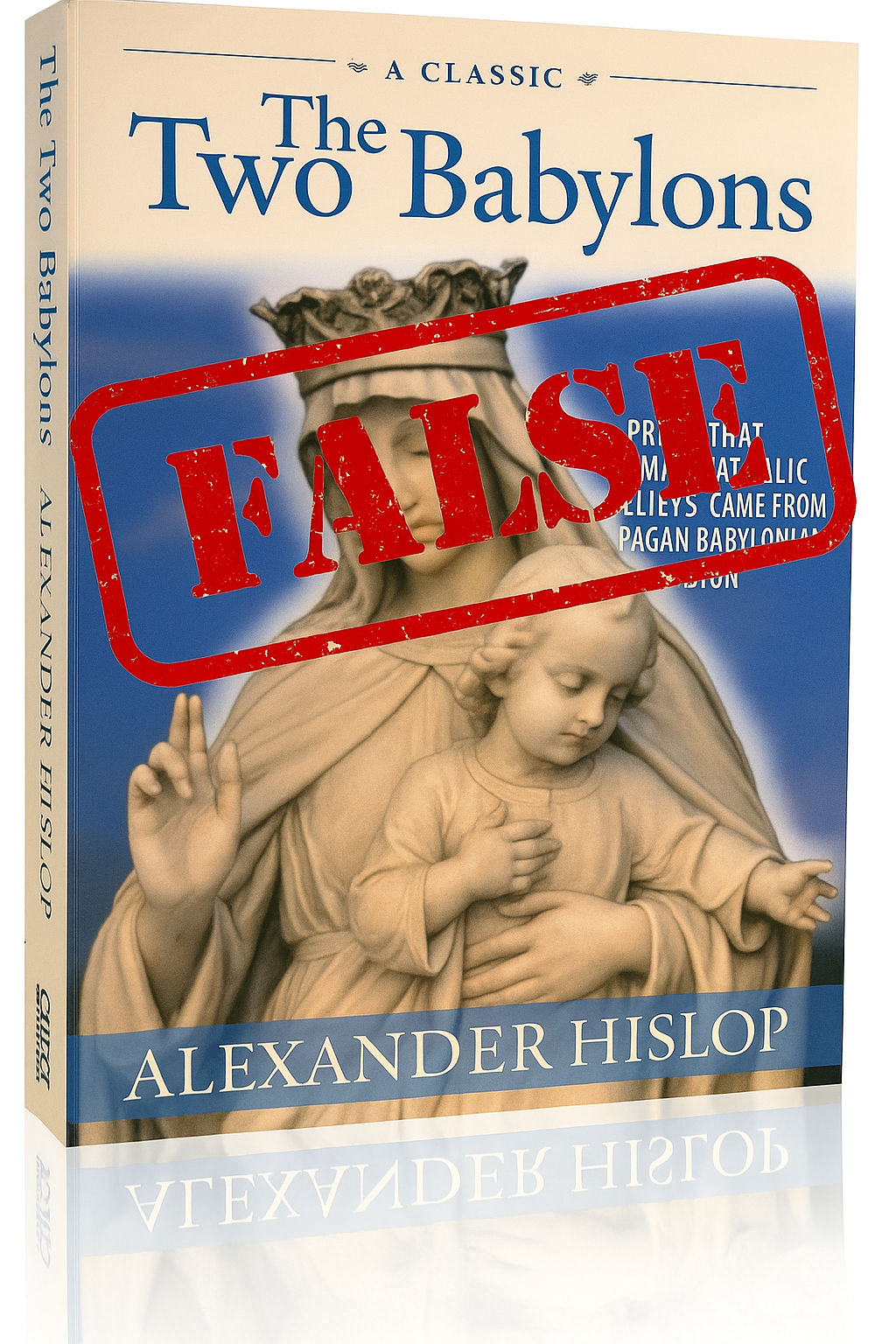
The Two Babylons Exposed: The Book That Misled Millions
Posted by Luke J. Wilson on 21st April 2025 in Easter |
...robes to festivals like Christmas and Easter — were somehow borrowed from Babylonian religion. The problem being that Hislop doesn’t rely on primary sources or credible historical data. Instead, he draws connections based on word similarities (like Easter and Ishtar) or visual resemblances (like Mary and child compared with mother-goddess statues from ancient cultures). But phonetic resemblance isn’t evidence, and neither is visual similarity.
For example, if I say “sun” and “son” in English, they may sound alike, but they aren’t the same thing. That’s the level of reasoning at work in much of The Two Babylons. Hislop often lumps together...
Lent Day 30: Cyril of Jerusalem: Catechetical Lectures: Lecture XIX
Posted by Luke J. Wilson on 4th April 2017 in Lent | Lent,great lent,fasting,early church fathers,devotional,daily reading,Doctor of the Church,lectures,liturgy,catechism,Bishop of Jerusalem
...p at idol festivals, either meat or bread, or other such things polluted by the invocation of the unclean spirits”.
All thy service – From taking part in “idol temples; things done in honour of lifeless idols [...] The watching of birds, divination, omens, or amulets, or charms written on leaves, sorceries, or other evil arts”
I believe… – A way to symbolise and declare the turning from “West to East”, from darkness to light. Now through the “holy Laver of regeneration God has wiped away every tear from off all faces” by their regeneration in Christ.
This is the end of this lecture, and from the way Cyril concludes, it sounds like ea...
From Paradise to Presents: The Christian Story Behind the Christmas Tree
Posted by Luke J. Wilson on 23rd December 2024 in Christmas | history,St Boniface,christmas,christmas tree
...ed during festivals like the Roman Saturnalia and the Germanic Yule. These practices celebrated the endurance of life through the cold and darkness, offering hope of the spring to come. While these customs were not inherently Christian, they provided a cultural framework that could be adapted to Christian theology.
The evergreen tree, in this context, became a symbol of eternal life in Christ, as suggested by John 10:28: “I give them eternal life, and they will never perish.”
Martin Luther and the Candlelit Tree
A significant figure in the history of the Christmas tree is the Reformer Martin Luther. According to tradition, Luther was struck by the beauty...
Powered by WebBoss.io 3.7.1
Copyright © 2026 The Sacred Faith: Timeless Truths for Modern Minds. All Rights Reserved.
