
Blog Search Results


211 results for theology
found
within the Blog
6 displayed out of 211 (0.05seconds)Page 1 of 36

Did the Early Church invent the Trinity?
Posted by Luke J. Wilson on 4th January 2022 in Trinity | early church,trinity,church fathers,theology,council of nicaea,nicea council
...ws in our theology and beliefs will also be wrong.
Further Reading
Ante-Nicene Fathers, Vol II: THEOPHILUS: Chapter XV. — Of the Fourth Day. (sacred-texts.com)
Philip Schaff: ANF03. Latin Christianity: Its Founder, Tertullian — Christian Classics Ethereal Library (ccel.org), Against Praxeas, chapter 2
Philip Schaff: ANF03. Latin Christianity: Its Founder, Tertullian — Christian Classics Ethereal Library (ccel.org), Against Praxeas, chapter 3
Author info: Philip Schaff — Christian Classics Ethereal Library (ccel.org)
The Early Church Fathers | Patristics.info
Explanation of the Christian doctrine of the Trinity — Apost...
Is it the end of the world as we know it?
Posted by Luke J. Wilson on 27th September 2015 in Eschatology | blood moon,last days,end of the world,second coming,apocalypse,prophecy,false prophets,predictions
...e Zionist theology that can be seen mainly in America, although it does come across sometimes here in the UK too, where Churches and Christian organisations are striving so hard to "Support Israel" with time, money and resources because they have also bought into this line of thinking. But it isn't so, and I'm not sure how it can be when the New Testament repeatedly speaks of Israel in spiritual terms linked with those who now believe in and follow Jesus.
I don't think it gets much clearer than this in the book of Galatians:
Galatians 3:6-9Just as Abraham “believed God, and it was reckoned to him as righteousness,” so, you see, those who believe are the...
The Early Concept of the Trinity: Tracing the Roots
Posted by Luke J. Wilson on 16th November 2023 in Trinity | trinity,early church,early church fathers,tri-unity,triune God,godhead
...Christian theology.
One of the passages where he addresses the concept of the Trinity is from his work "Against Praxeas" (Adversus Praxean). In this treatise, Tertullian defends the distinction between the Father, Son, and Holy Spirit while maintaining the unity of the Godhead. Here is an excerpt from Tertullian's "Against Praxeas":
We define that there are two, the Father and the Son, and three with the Holy Spirit, and this number is made by the pattern of salvation… They are three not in dignity, but in degree, not in substance but in form, not in power but in kind. They are of one substance and power because there is one God from whom these degrees, fo...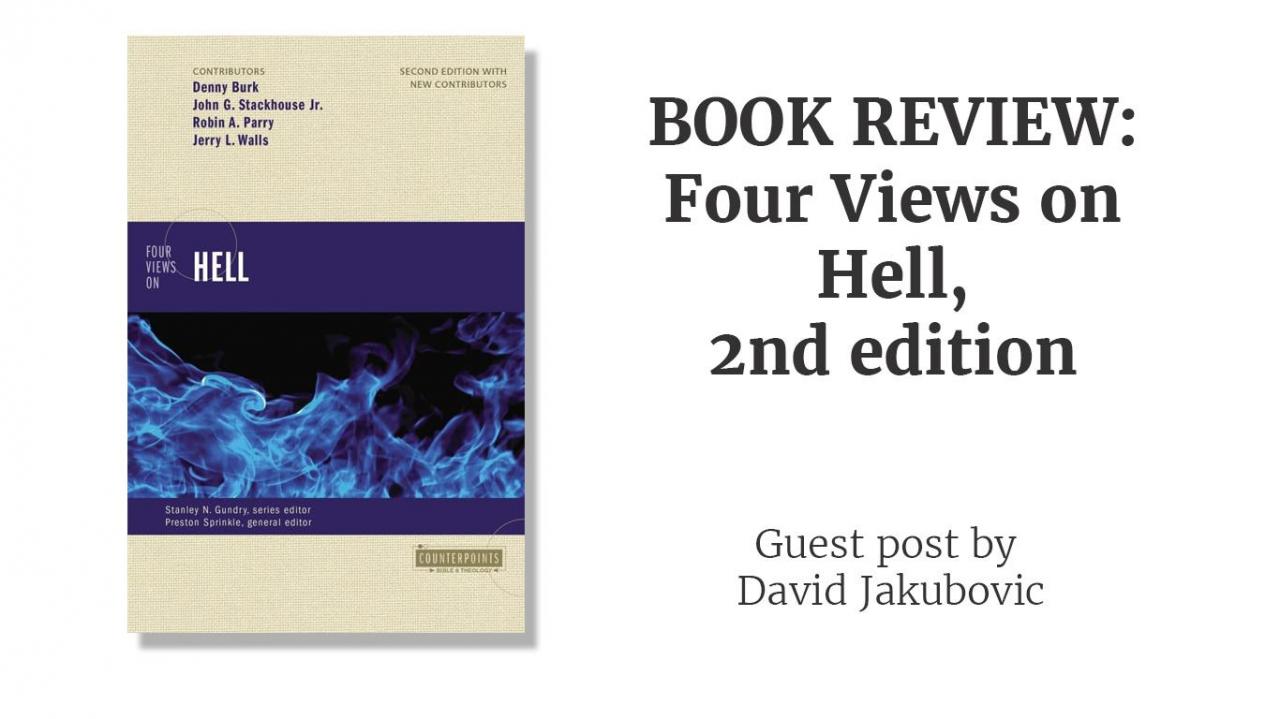
BOOK REVIEW: Four Views on Hell 2nd edition
Posted by David Jakubovic on 17th March 2021 in Book Review |
...rotestant theology.” (152) Asking the vital question ‘But is it in the Bible?’ (152), he draws a parallel with Trinitarianism: “The doctrine of the Trinity is not directly taught in Scripture, but is an inference from things that are.” (162) But Trinitarians would place their Trinitarian inference from the biblical data far above any putative biblical warrant for purgatory! Despite using only 1 Cor 3:11-15 (‘as one escaping through the flames’), he states that “there are a few key texts that suggest purgatory” (153), before relying on purgatory-supporter CS Lewis and his Arminian theology of human freedom:
“Lewis places such a premium on f...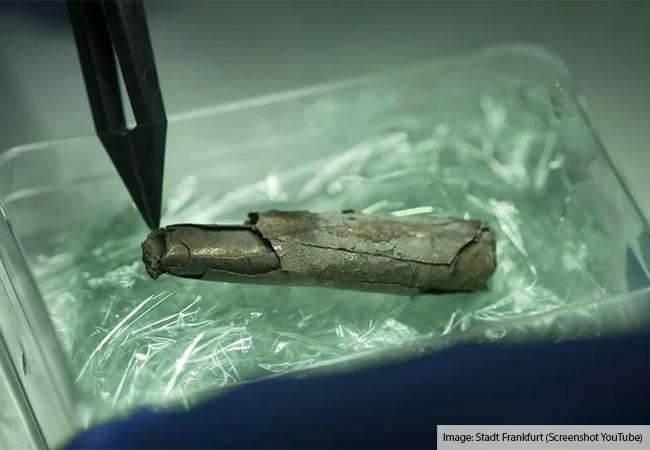
Implications Of The Frankfurt Silver Amulet: Insights Into Early Christian Practice And Belief
Posted by Luke J. Wilson on 6th January 2025 in Archaeology | amulet,liturgy,history,current events,early church
...The discovery of an 1,800-year-old silver amulet in Frankfurt, Germany, has captured the attention of archaeologists and theologians alike. Known as the “Frankfurt Silver Inscription,” this artefact is the earliest known evidence of Christianity north of the Alps and serves as a great insight to early Christian theology and liturgical practice.
Its early date (230–270 AD) sets it apart from previously known artefacts, which are at least 50 years younger. While there are historical references to Christian communities in Gaul and Upper Germania during the late 2nd century, reliable material evidence of Christian life in the northern Alpine regions generally...
Armageddon Is Not A Battle Plan: What Revelation Actually Says — And Why It Matters Right Now
Posted by Luke J. Wilson on 12th March 2026 in Eschatology | politics,Trump,Donald Trump,evangelicalism,end times,armageddon,eschatology
...cause the theology driving these claims does not hold up under scrutiny. And that matters here a lot; not as a partisan point, but as a question of biblical faithfulness.
First, a Word About Context
If you have read my previous article on Revelation some of what follows will be familiar ground. But it bears repeating, because the misunderstanding at the heart of this story is so widespread that it has taken on the feel of settled orthodoxy in many circles.
The Book of Revelation is commonly thought to be written in the late first century ~95 AD, during or around the reign of Emperor Domitian. Though there is internal evidence that it was possibly written dur...
Powered by WebBoss.io 3.7.1
Copyright © 2026 The Sacred Faith: Timeless Truths for Modern Minds. All Rights Reserved.
