
Blog Search Results


214 results for adam and eve
found
within the Blog
6 displayed out of 214 (0.36seconds)Page 10 of 36
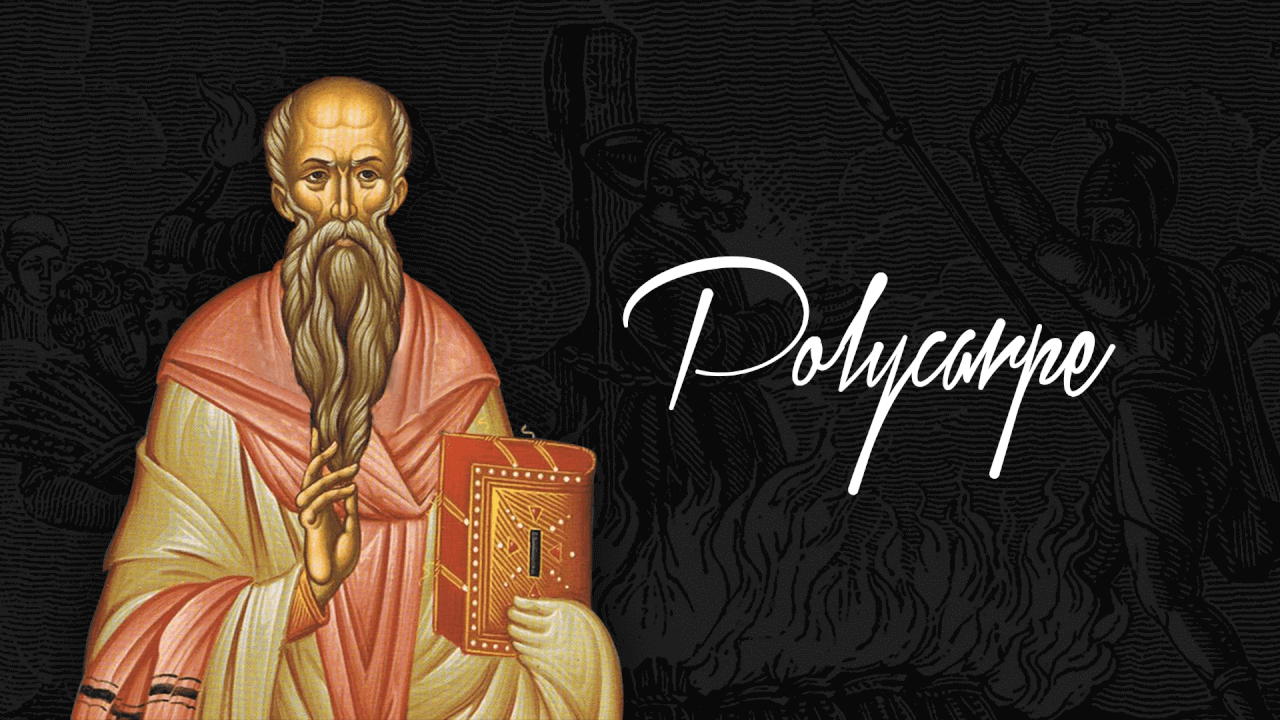
How Polycarp (and Others) Show The Early Use Of The New Testament
Posted by Luke J. Wilson on 21st November 2021 in Early Church | early church,early church fathers,polycarp,new testament,canon,biblical canon
Polycarp is one of the most important people in early church history. He was a disciple of John the Evangelist, and later became the bishop of Smyrna.
Polycarp was born around 69 A.D. in Smyrna, which is now modern-day Turkey. He grew up during a time when Christians were being persecuted for their beliefs, and he himself became a Christian at a young age. Polycarp is regarded as one of the earliest church fathers because he had a significant impact on Christianity as it spread throughout Asia Minor and Europe, and he also played an important role in shaping biblical canon for centuries to come.
We don’t know a great deal about his life, apart from t...
Lent Day 21: Athanasius: Life of Anthony: Chaps. 1-10
Posted by Luke J. Wilson on 24th March 2017 in Lent | Lent,great lent,fasting,early church fathers,devotional,daily reading,Athanasius,Bishop of Alexandria,Confessor,Doctor of the Church,Anthony the Great
Day Twenty-one: St. Athanasius: Life of Anthony: Chaps. 1-10
Who: Bishop of Alexandria; Confessor and Doctor of the Church; born c. 296; died 2 May, 373 AD. He was the main defender of orthodoxy in the 4th-century battle against the Arianism heresy. Certain writers received the title “Doctor” on account of the great advantage their doctrine had on the whole Church, Athanasius especially for his doctrine on the incarnation.
What: The biography of Anthony the Great’s life, which helped to spread the concept of Christian monasticism, particularly in Western Europe.
Why: From the letter’s own prologue: “The life and conversation of our holy Father, A...
Lent Day 23: Athanasius: Life of Anthony: Chaps. 21-30
Posted by Luke J. Wilson on 27th March 2017 in Lent | Lent,great lent,fasting,early church fathers,devotional,daily reading,Athanasius,Bishop of Alexandria,Confessor,Doctor of the Church,Anthony the Great,demons,demonology
Day Twenty-three: St. Athanasius: Life of Anthony: Chaps. 21-30
Who: Bishop of Alexandria; Confessor and Doctor of the Church; born c. 296; died 2 May, 373 AD. He was the main defender of orthodoxy in the 4th-century battle against the Arianism heresy. Certain writers received the title “Doctor” on account of the great advantage their doctrine had on the whole Church, Athanasius especially for his doctrine on the incarnation.
What: The biography of Anthony the Great’s life, which helped to spread the concept of Christian monasticism, particularly in Western Europe.
Why: From the letter’s own prologue: “The life and conversation of our holy Father...
Biblical Inspiration and the Canon: How We Got the Bible
Posted by Luke J. Wilson on 28th February 2025 in Early Church | canon,nicea council,nicene council,myths,church history,church fathers
The Bible is often described as “God-breathed,” a phrase taken from 2 Timothy 3:16: “All scripture is inspired by God and is useful for teaching, for reproof, for correction, and for training in righteousness.” But what does it mean for Scripture to be “inspired,” and how did the books of the Bible come to be recognised as part of the canon — the authoritative collection of writings that make up the Bible? Were they really “decided” at the Council of Nicaea, as some popular myths claim?
Table of Contents
Understanding Biblical Inspiration
What is the Canon?
The Septuagint and the Deuterocanonical Books
How Were the Books of the Bi...
Is The Rapture Biblical?
Posted by Luke J. Wilson on 21st September 2020 in Eschatology | rapture,the rapture in the bible,scriptures on the rapture,N.T. Wright,john chrysostom,church fathers,church history,signs of the rapture,Coming of Christ
Most people have some idea about what the rapture is – or do they? Generally there is an idea or concept of a form of escapism from the world when Jesus returns, which happens pre, mid or post tribulation and in some connection to the millenium. Now, if you understood any of those terms, you are most likely on, or aware of, the Dispensationalism side of things.
There’s a lot of doctrine all bundled together in “end times” beliefs, and a fair bit of speculation around “the rapture” with its timing and logistics etc. which makes the whole thing a but murky, but nonetheless, it’s pretty much taken for granted as a staple belief within the Evangelical...
The Historic Practice of Abortion and How Ancient Christians Responded
Posted by Luke J. Wilson on 1st July 2022 in Abortion | abortion,roe v wade,church history,current events,theology,politics,Why Are Christians Against Abortion?
It’s no secret that the majority of Christians are against abortion, no matter where you look in the world. But nowhere has the issue come to more of a head than in the US recently with the overturning of Roe v Wade, which had made abortion legal across the country. Now abortion is no longer a federal constitutional right, but individual states now have the authority to determine the legality and rulings around abortion.
Christian opposition to abortion in America has always been a heated topic, especially in recent decades, but this isn’t a novelty within the Church in America, or globally, and has been a position of the faithful for about 2000 years. even...
Powered by WebBoss.io 3.7.1
Copyright © 2026 The Sacred Faith: Timeless Truths for Modern Minds. All Rights Reserved.
