
Blog Search Results


171 results for good people
found
within the Blog
6 displayed out of 171 (0.32seconds)Page 10 of 29

Lent Day 39: Leo the Great: Sermon XLIX (On Lent XI)
Posted by Luke J. Wilson on 14th April 2017 in Lent | Lent,great lent,fasting,early church fathers,devotional,daily reading,Doctor of the Church,lectures,Leo the Great,St Leo,Pope Leo I,sermon,almsgiving
Day Thirty-nine: St. Leo the Great: Sermon XLIX (On Lent XI)
Who: Leo the Great, also known as Pope St. Leo I (the Great), was Pope from 440-61 AD. Place and date of birth unknown; died 10 November, 461. Leo's pontificate, next to that of St. Gregory I, is the most significant and important in Christian antiquity, as he tried to combat the heresies which seriously threatened church unity even in the West, such as Pelagianism.
What: A sermon on the season of Lent as the Easter festival approached.
Why: To encourage the Church to fast during this season in order than they may put away temptations and overcome their vices, to be guided by God in all things.
W...
The Relationship Between Jesus and Sophia
Posted by Luke J. Wilson on 22nd July 2021 in Christology | wisdom,Sophia,feminism,women,christology,early church,early church fathers
Now you may be wondering about the title, or thinking “who the heck is Sophia??” — well, bear with me, and all will be revealed. It’s not as sinister or weird as it may first appear.
I saw a post on my Instagram feed the other day that just got me a little riled up. I’ll admit it, I can be a little short-tempered at times, especially around the subject of Jesus and seeing him/the Christian faith misrepresented to such a degree that it could mislead others down the wrong path. I don’t normally write responses to things like this, but I felt this one deserved it, mainly just to add some clarity to a somewhat confusing topic, and so there’s a pla...
What does the word "Catholic" mean?
Posted by Luke J. Wilson on 8th March 2021 in Etymology | catholic,church fathers,church history,etymology,roman catholic,eastern orthodox,Great Schism,Muratorian Fragment
For many people today, non-Christians and (low church) Christians alike, when they hear the word “Catholic”, certain images spring to mind: the Pope, the rosery, Catholic school, big old churches buildings, choirboys, maybe monks or statues of Mary even; and sadly more recently, sex abuse scandals.
But, generally speaking, all of these are actually aspects of Roman Catholicism — a particular branch of Christianity, and not what the word “catholic” truly means as we’ll see when examining how the early church used the word and what the original Greek word means.
καθολικός (katholikos)
The Greek word where we get the English word “c...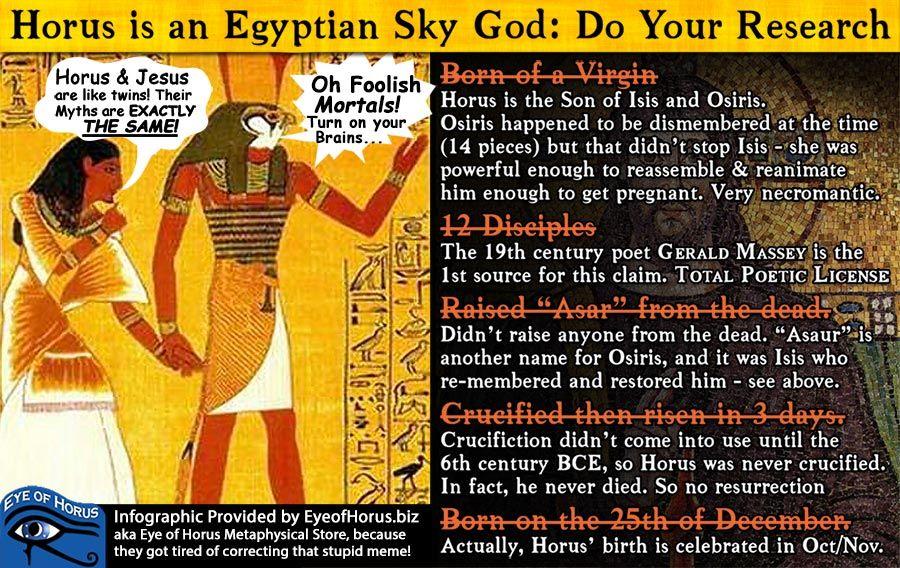
Horus, Jesus, and Egyptian Mythology: Separating Fact from Fiction
Posted by Luke J. Wilson on 22nd April 2023 in Mythology | Jesus,Horus,egyptian gods,mythology,Egyptian myths,apologetics
If you've ever found yourself immersed in the world of ancient Egyptian mythology or perhaps watching a documentary on the subject (or even just browsing social media around Christmas time), you might have come across the claim that the story of Jesus shares striking similarities with the story of Horus, an ancient Egyptian deity.
While it might seem convincing at first that there's a direct connection between the two, it's essential to understand that the similarities are often exaggerated in popular culture, and many scholars consider them vastly different. In this article, we'll explore the life of Horus, his birth, the miracles he performed, and the truth b...
Lent Day 22: Athanasius: Life of Anthony: Chaps. 11-20
Posted by Luke J. Wilson on 25th March 2017 in Lent | Lent,great lent,fasting,early church fathers,devotional,daily reading,Athanasius,Bishop of Alexandria,Confessor,Doctor of the Church,Anthony the Great
Day Twenty-two: St. Athanasius: Life of Anthony: Chaps. 11-20
Who: Bishop of Alexandria; Confessor and Doctor of the Church; born c. 296; died 2 May, 373 AD. He was the main defender of orthodoxy in the 4th-century battle against the Arianism heresy. Certain writers received the title “Doctor” on account of the great advantage their doctrine had on the whole Church, Athanasius especially for his doctrine on the incarnation.
What: The biography of Anthony the Great’s life, which helped to spread the concept of Christian monasticism, particularly in Western Europe.
Why: From the letter’s own prologue: “The life and conversation of our holy Father,...
What is Contemplative Prayer?
Posted by Luke J. Wilson on 9th February 2016 in Prayer | contemplation,prayer,meditate,meditation,waiting on the Lord,silence,Christian meditation,Lectio Divina
In the quiet, still silence, I await my God.
There seems to be some misgivings about the idea of “contemplative prayer” (also referred to as Christian Meditation) and in some of the descriptions I've read, I would agree that it can seem iffy.
Contemplation, or sometimes known as Lectio Divina, is in its most basic form, the idea and practice of waiting on the Lord. Often in silence or while you ponder on scripture or when you seek an answer or just to rest in his presence and have your strength renewed.
There are some people who think that this means “emptying your mind” and doing something akin to occultism, and ope...
Powered by WebBoss.io 3.7.1
Copyright © 2026 The Sacred Faith: Timeless Truths for Modern Minds. All Rights Reserved.
