
Blog Search Results


78 results for roman gods
found
within the Blog
6 displayed out of 78 (0.27seconds)Page 10 of 13

A Historic Easter Change Is Coming — But Will Protestants Get On Board?
Posted by Luke J. Wilson on 29th January 2025 in Easter | current events,easter,history,ecumenical,roman catholic,eastern orthodox,Anglican
Pope Francis has recently expressed the Catholic Church’s willingness to accept a unified date for Easter, a move aimed at fostering greater Christian unity, particularly with the Orthodox Church. This long-standing issue arises from the different calendars used by Western and Eastern Christian traditions — the Gregorian and Julian calendars — leading to discrepancies in Easter celebrations. Talks between Catholic and Orthodox leaders have intensified, hoping a common date could be agreed upon. However, this raises important questions for Protestant denominations regarding whether they would adopt the unified date or risk falling out of alignment w...
From Dust to Redemption: The Meaning of Ash Wednesday
Posted by Luke J. Wilson on 5th March 2025 in Lent |
Ash Wednesday marks the beginning of Lent, a season of repentance, fasting, and preparation for Easter in the Christian calendar. It is observed by many Western Christian traditions, including the roman Catholic Church, Anglican Communion, Lutheran churches, and some Methodist and Reformed communities. The day falls 46 days before Easter Sunday and is always on a Wednesday.
Origins and Historical Development
The practice of Ash Wednesday can be traced back to the early centuries of Christianity, though its formal observance developed over time. The use of ashes as a sign of repentance has deep biblical roots, appearing frequently in the Old Testament. People w...
Does Easter Have Pagan Origins?
Posted by Luke J. Wilson on 22nd March 2021 in Easter | Easter,easter sunday,early church,church history,paganism,pagan roots,Ishtar,Eostre,fertility goddess
Much like any major Christian holiday, there are the usual arguments and accusations about how it’s all just pagan festivities with a “Christian mask”. Easter is no different, and usually gets hit the hardest over its so-called “pagan roots”, or in the month or so preceding it, Lent being some “invention of the Catholic Church”.
Table of Contents
The Lenten Fast
The Easter controversy and why we celebrate it when we do
Is the Name “Easter” really the Anglo-Saxon goddess Eostre?
Chocolate eggs and bunnies?
Concluding Thoughts
Further Reading and Sources
I like to try and observe Lent, as it is one of the most ancient custom...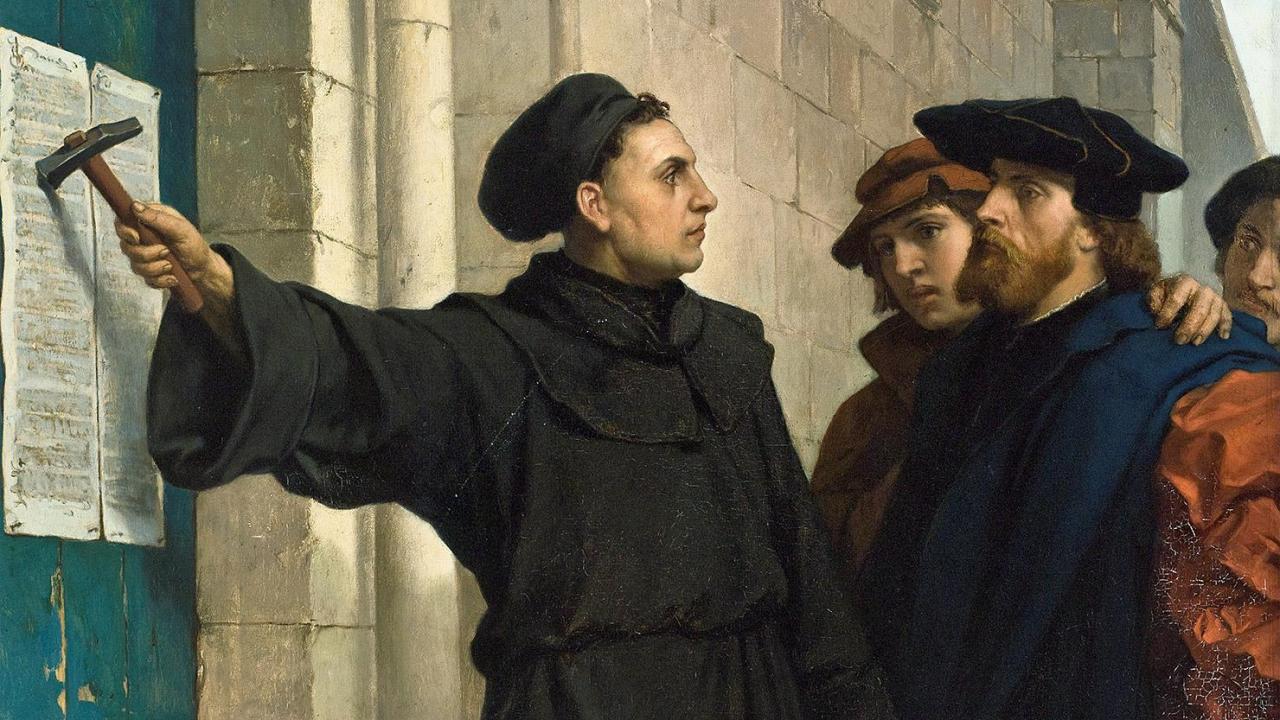
Nails, Theses, and Myth: The Truth About Luther's Famous Door
Posted by Luke J. Wilson on 5th June 2025 in Blogging | reformation,Luther,Protestantism,roman catholic
As we commemorated the 500th anniversary of the Protestant Reformation this year, the familiar image of Martin Luther striding up to the church door in Wittenberg — hammer in hand and fire in his eyes — has once again taken centre stage. It’s a compelling picture, etched into the imagination of many. But as is often the case with historical legends, closer scrutiny tells a far more nuanced and thought-provoking story.
The Myth of the Door: Was the Hammer Ever Raised?
Cambridge Reformation scholar Richard Rex is one among several historians who have challenged the romanticised narrative. “Strangely,” he observes, “there’s almost n...
The Author of Life Knew Death For Our Sake!
Posted by Luke J. Wilson on 25th March 2016 in Easter | Easter,Good Friday,Holy Week,crucifixion,resurrection,reconcilliation
A week or so ago, I stayed the night at a local monastery with a friend. We got to see, and be partially involved in the day to day life of the Monks there, especially during mealtimes. We sat and ate in silence together while someone read to us, which was actually more enjoyable than I expected it to be. I can't remember what the book was called now, but it was to do with the Passion and what the crucifixion meant, and the point they were reading about was when the roman soldier stabbed Jesus in the side.
This is where it got interesting and gave me something to think about that I'd never heard taught before. Normally most preachers and sermons talk about the...
Lent Day 19: Cyprian: On the Unity of the Church: 10-18
Posted by Luke J. Wilson on 22nd March 2017 in Lent | Lent,great lent,fasting,early church fathers,devotional,daily reading,Cyprian,Bishop of Carthage,unity
Day Nineteen: St. Cyprian: On the Unity of the Church: 10-18
Who: Third century bishop of Carthage (in modern Tunisia), and martyr from Africa
What: A letter to encourage the unity of the church against schisms and heresy during massive roman persecution
Why: A disturbance had happened in the church because of a priest called Novatian — a schismatic of the third century, and founder of the sect of the Novatians. Cyprian wrote to counter this and argues that there can only be one united Church, and the Novatian breakaway was a false church and that Novatian was an antipope.When: Around 249 AD
You can find today’s reading on page 97 here: lentfatherscomple...
Powered by WebBoss.io 3.7.1
Copyright © 2026 The Sacred Faith: Timeless Truths for Modern Minds. All Rights Reserved.
