
Blog Search Results


214 results for has
found
within the Blog
6 displayed out of 214 (0.05seconds)Page 11 of 36

Lent Day 36: Ambrose of Milan: Concerning the Mysteries: 5-9
Posted by Luke J. Wilson on 11th April 2017 in Lent | Lent,great lent,fasting,early church fathers,devotional,daily reading,Doctor of the Church,lectures,liturgy,catechism,Eucharist,Bishop of Milan,St Ambrose,mysteries,treatise,baptism,transubstantiation,real presence
Day Thirty-six: St. Ambrose of Milan: Concerning the Mysteries: 5-9
Who: Bishop of Milan from 374 to 397; born probably 340, at Trier, Arles, or Lyons; died 4 April, 397. He was one of the most illustrious Fathers and Doctors of the Church.
What: The treatise was composed for use during the latter part of Lent, for the benefit of those about to be baptised, the rites and meaning of that Sacrament, as well as of Confirmation and the Holy Eucharist. For all these matters were treated with the greatest reserve in the Early Church, for fear of being misused by unbelievers.
Why: Ambrose states that after the explanations he has already given of holy living (in pre...
American Gun Violence and the Early Church on War and Violence
Posted by Luke J. Wilson on 3rd October 2017 in Early Church | early church,early church fathers,gun violence,America,mass shooting
In light of the sad, recent events in the Las Vegas shooting — and similar events in America— I often see Christians across social media jumping to the defence of gun ownership whenever there is even a slight hint at gun control in America.
But how has gun culture become so ingrained in American Christianity when we can observe a clear theme and pattern of thought in the first few centuries of the Church, which goes completely against this?
Update 7th Nov 2017: It's so sad to have to update this post on the same subject so soon, almost a month to the day. Yet another shooting, this time in Texas where 26 people have been shot dead in a church of all pl...
What did Jesus actually sacrifice?
Posted by Luke J. Wilson on 18th March 2018 in Lent | Jesus,Jesus death,sacrifice,Jesus sacrifice,atheist,meme,flogging,crucifixion,Godhead,eternal consequences
...1:14) and has stayed that way. This is the “mystery of godliness” (as some translations have it) that Paul talks about in 1 Tim 3:16, where he states that Jesus was “revealed” or “manifested in flesh” and later taken up in glory.
Look at when Jesus was taken up into heaven in Acts 1:11, the angels say to the disciples watching that they will see Jesus “come in the same way as you saw him go into heaven” – ie., bodily. But we know from the accounts in the Gospels that Jesus’ body was no longer exactly the same as ours, though he appeared solid and human, he could still appear inside locked rooms (Jn 20:19), disguise himself and then disappear...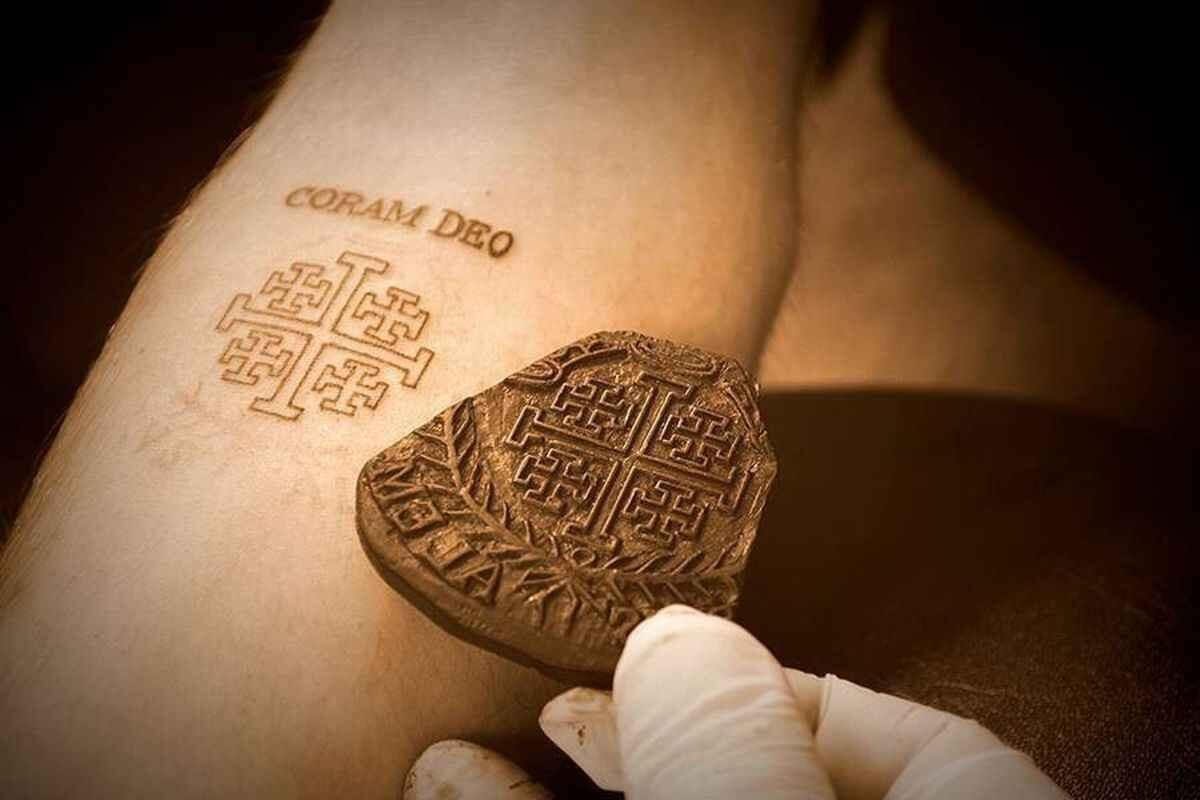
Should Christians get tattoos, and is it Biblical?
Posted by Luke J. Wilson on 31st August 2019 in Tattoos | tattoos,church history,Basil the Great,Leviticus,Old Testament
...ic Church has been marking themselves with tattoos since the sixth or seventh century, even up to present times.
All of this debate stems from one seemingly clear verse in Leviticus:
Leviticus 19:28 (WEB)You shall not make any cuttings in your flesh for the dead, nor tattoo any marks on you. I am Yahweh.
In the manner of how Hebrew works, the clause “for the dead” is applying to both phrases. The cuttings and the marks are not to be “for the dead”. Those Hebrew phrases which seem to repeat a similar thought are generally connected and are saying the same thing in two different ways to emphasise the point (just look at the Psalms for many examples of...
Christians and the Coronavirus (COVID-19)
Posted by Luke J. Wilson on 20th March 2020 in Coronavirus |
...what God has spoken through the prophet Isaiah: “So do not fear, for I am with you; do not be dismayed, for I am your God.” (Isaiah 41:10), and what Paul wrote to Timothy that “God did not give us a spirit of cowardice, but rather a spirit of power” (2 Timothy 1:7).
Christians and Plagues Throughout History
Disease, plagues and pandemics are not new things in this world. History is replete with sickness and death, the only difference now is that since around the 20th century, modern medicine and vaccines have improved to such a degree that we are fairly well protected against anything on a pandemic, or even an epidemic, level. Sickness is often relega...
8 Most Controversial Topics In The Church Today
Posted by HolyArt on 30th November 2021 in Sponsored Post | sponsored post,controversy,controversial topics,alcohol,abortion,gay marriage,politics,spiritual gifts,worship,women
...an Church has changed its attitude on homosexual marriage and gay priests in recent years (and even months), but there is still widespread opposition. Some have urged the church to be more accepting of LGBT people; some have gone so far as to support homosexual clergy and allow them the ability to perform same-sex marriages; while still others are staunchly opposed to the conventional definition of marriage.
2. Abortion
At first glance, one could believe that this topic is not as contentious within the church as it is between those within and those outside the church. According to a recent Pew Research Center research, persons who profess to be religious but d...
Powered by WebBoss.io 3.7.1
Copyright © 2026 The Sacred Faith: Timeless Truths for Modern Minds. All Rights Reserved.
