
Blog Search Results


Did you mean:
scripture
?
76 results for Scripture
found
within the Blog
6 displayed out of 76 (0.09seconds)Page 12 of 13

Who is the New Jerusalem?
Posted by Luke J. Wilson on 6th January 2016 in Second Coming Series | Revelation,New Jerusalem,The Church,Holy City,Early Church,Early Church Fathers,Eusebius,Origen,Barnabas,millennium,millennial reign,1000 years,New Heaven and Earth
This is a sort of ‘addendum’ to the Revelation Fulfilled? article
Yes you read the title correct: WHO (not what) is the New Jerusalem?
To answer this, you must ask yourself: who is the Bride of Christ?
If you answered “the Church” (as in, the body of believers, not buildings) then you’d be correct as they are both one and the same!
Roughly 1500 miles square.
Maybe you’ve always wondered why the Church is called the “bride”? Well, let’s examine some Scriptures and see!
2 Corinthians 11:2I feel a divine jealousy for you, for I promised you in marriage to one husband, to present you as a chaste virgin to Chris...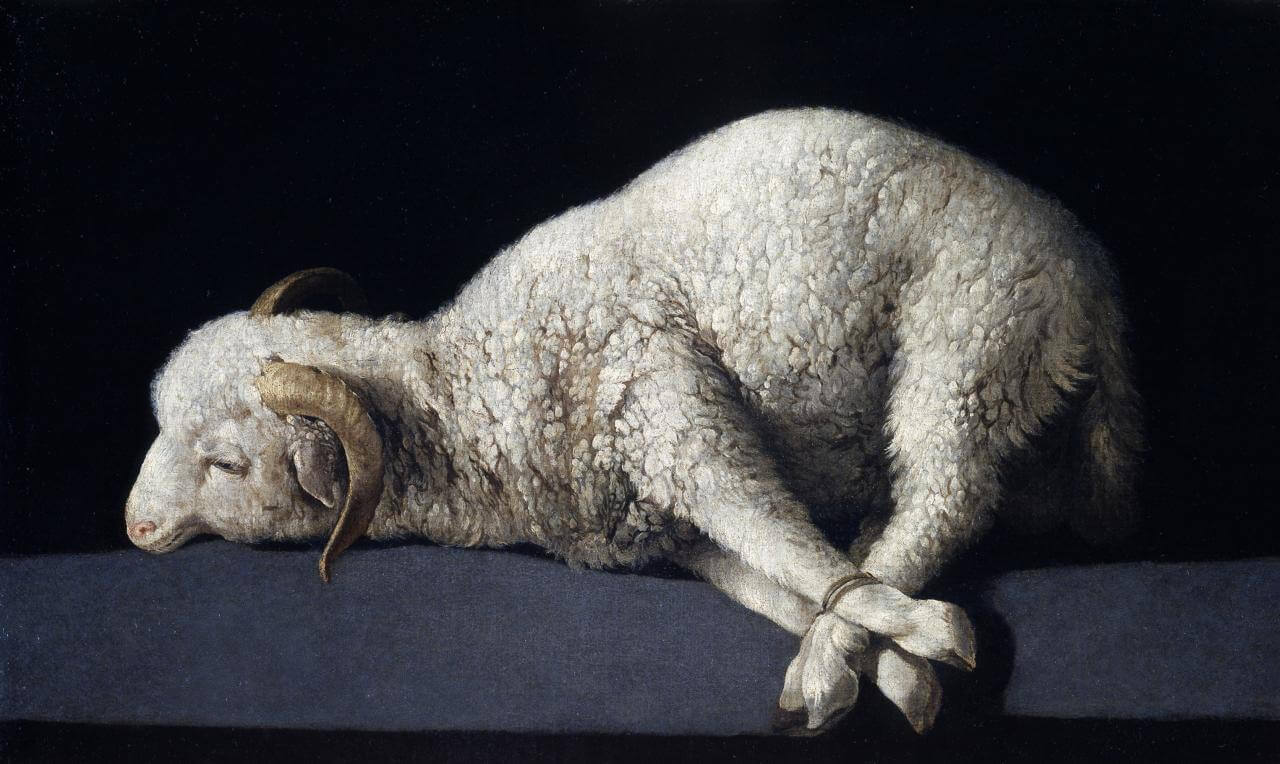
How was Jesus a sacrifice?
Posted by Luke J. Wilson on 25th March 2018 in Lent | sacrifice,sabbath,crucifixion,passover lamb,paschal lamb,sin,death,Palm Sunday
...ecies and Scripture concerning him in these ways, primarily in the Psalms, and specifically John 19:33; Numbers 9:12 and Psalm 34:20 concerning his bones not being broken. But it doesn’t end there — even the day that Jesus was crucified aligned with the Passover sacrifice of the 14th of Nisan (by our calendar, April), and later died that evening. The Jews asked Pilate to let them take the bodies down that same day (which was unusual, but done because of the Sabbath), so that meant that Jesus wasn’t left overnight, thus fulfilling the obligations of the Passover ritual!
The apostles obviously recognised these parallels, as they refer to them in their epist...
Is The Rapture Biblical?
Posted by Luke J. Wilson on 21st September 2020 in Eschatology | rapture,the rapture in the bible,Scriptures on the rapture,N.T. Wright,john chrysostom,church fathers,church history,signs of the rapture,Coming of Christ
...gside the Scripture they were reading, and therefore a seeming authority.
I realise there is somewhat of an irony here in that I’m acting similarly like an authority telling you that this belief is wrong whereas Scofield was writing as though it were accurate, but in an even more ironic twist, just a handful of verses later, the same letter to the Thessalonians says to “test everything; hold fast to what is good” (1 Thess. 5:21). This is what I would invite you to do: don’t just take my word for it, test everything and see if what I say is accurate.
The context of The Rapture
So what is the context of these verses, if not about being whisked away into...
Unveiling the Trinity: Exploring the Nature of Jesus and the Incarnation
Posted by Luke J. Wilson on 4th November 2023 in Trinity | trinity,incarnation,two powers in heaven
...I recently received a question about the nature of Jesus and the incarnation, which delves into the mystery of the Trinity:
"Sorry to trouble you, but I have only one question: Is God the Father and Jesus His Son the same, God Himself in the flesh when He walked the earth? I am still struggling with this concept. When Jesus asked His Father, was He essentially talking to Himself?"
Thanks so much for the question, and it is a good question when asked genuinely. It is obviously a very deep and complex topic that covers a lot of Scripture (and history) to fully make sense of, but I’ll try and keep this brief to cover the key points.
To gain a better unders...
The Early Concept of the Trinity: Tracing the Roots
Posted by Luke J. Wilson on 16th November 2023 in Trinity | trinity,early church,early church fathers,tri-unity,triune God,godhead
...repeating Scripture (Matt 28:19), it demonstrates that the understanding of a 3-fold name of God to baptise in was a common practice in the early Christian communities.
The writings of prominent early Church Fathers further affirm the concept of the Trinity. Clement of Rome, in his First Epistle to the Corinthians, chapter 46, written around AD 96, emphasises the unity in God, Christ, and the Spirit, stating, “Have we not one God and one Christ and one Spirit of grace poured out upon us?”. Clement provides an important link back to the Apostles, too, as Origen of Alexandria (AD 185—284) and Eusebius of Caesarea (AD 260—340) maintained that Clement of Ro...
From Paradise to Presents: The Christian Story Behind the Christmas Tree
Posted by Luke J. Wilson on 23rd December 2024 in Christmas | history,St Boniface,christmas,christmas tree
...demned in Scripture. As Paul writes in 1 Corinthians 10:31, “So, whether you eat or drink, or whatever you do, do everything for the glory of God.” The Christmas tree, when used in a Christ-centred way, serves as a joyful reminder of Christ’s coming and the light He brings into the world.
Conclusion
The Christmas tree stands today as a testament to the enduring legacy of Christian faith and ingenuity. Its rich history — from the Paradise Tree to St. Boniface’s missionary efforts and beyond — reflects the transformative power of Christ’s redemption. As we adorn our trees this Christmas, let us celebrate not only the joy of the season but also the...
Powered by WebBoss.io 3.7.1
Copyright © 2026 The Sacred Faith: Timeless Truths for Modern Minds. All Rights Reserved.
