
Blog Search Results


Did you mean:
old syriac
?
104 results for Old Syriac
found
within the Blog
6 displayed out of 104 (0.64seconds)Page 13 of 18
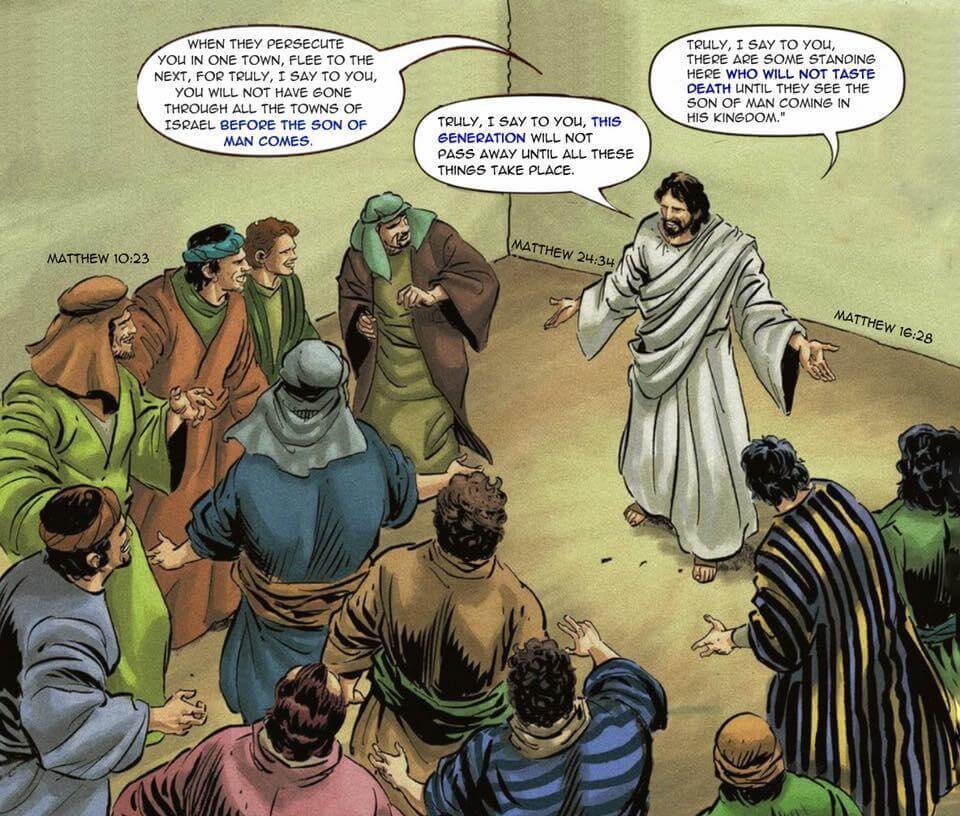
The Coming Kingdom of the Son of Man
Posted by Luke J. Wilson on 20th July 2016 in Eschatology | second coming,preterism,Kingdom of God,Coming kingdom,olivet discourse,Gospels,end times,end of the world,end of the age
The importance of context of what's being said, and to whom, in Scripture.
I came across this image the other day (in the header above; see larger here) that links together three parts of Matthew’s Gospel to highlight the connection which many often miss, or read as separate events. I like the image because it shows that when Jesus spoke these things, he would have been saying them directly to the disciples and others who were listening to his teaching, and not in some cryptic, ambiguous dictation to a prophetic scribe, devoid of all context and meaning to those around him at the time.
Update Feb 2017: I am adding some additional information to this to dis...
Is fasting an expectation for Christians?
Posted by Luke J. Wilson on 29th February 2020 in Fasting | fasting,Lent,Ash Wednesday,self control,self denial
The season of Lent is here once again which of course brings up the topic of fasting, since the tradition of Lent comes from following Jesus’ example of his time in the wilderness (Luke 4:1–2). I wasn’t planning on writing anything specific this year like I have previous in previous years, but I felt inspired today at church from one of Gospel readings:
Matthew 9:14–15
Then the disciples of John came to him, saying, “Why do we and the Pharisees fast often, but your disciples do not fast?” And Jesus said to them, “The wedding guests cannot mourn as long as the bridegroom is with them, can they? The days will come when the bridegroom is t...
Lent: Day 4 - Polycarp to the Philippians
Posted by Luke J. Wilson on 4th March 2017 in Lent | Lent,great lent,fasting,early church fathers,devotional,daily reading,episle of Polycarp to the Philippians
Day Four: Epistle of Polycarp to the Philippians (full text)
Who: Polycarp of Smyrna, who was a direct disciple of the apostle John. We also have some information about Polycarp via Irenaeus (who knew Polycarp) in his book, Adv. Haer., III.3.4: “But Polycarp also was not only instructed by apostles, and conversed with many who had seen Christ, but was also, by apostles in Asia, appointed bishop of the Church in Smyrna”.
What: Lots of exhortations are contained in this letter, and is also referenced by Irenaeus as being for “those who wish to do so, and are anxious about their salvation, can learn the character of his (Polycarp's) faith, and the preachin...
Lent Day 37: Leo the Great: Letter XXVIII (called the "Tome")
Posted by Luke J. Wilson on 12th April 2017 in Lent | Lent,great lent,fasting,early church fathers,devotional,daily reading,Doctor of the Church,lectures,Tome,Leo the Great,St Leo,hypostatic union,deity of christ,heresy,Pope Leo I
Day Thirty-seven: St. Leo the Great: Letter XXVIII (called the "Tome")
Who: Leo the Great, also known as Pope St. Leo I (the Great), was Pope from 440-61 AD. Place and date of birth unknown; died 10 November, 461. Leo's pontificate, next to that of St. Gregory I, is the most significant and important in Christian antiquity, as he tried to combat the heresies which seriously threatened church unity even in the West, such as Pelagianism.
What: A defence of the twofOld nativity and nature of Christ against the false teaching of a priest called Eutyches. It is a doctrinal letter sent by Pope Leo I in the year 449 to Flavian, Patriarch of Constantinople, on the...
Evidence of the Trinity in the Hebrew Scriptures
Posted by ArnOld Fruchtenbaum on 8th November 2017 in Trinity | trinity,monotheism,shema,Jewish,Jews,Messiah,messianic,Jews for Jesus,jewsforjesus.org,tri-unity,creeds
Table of Contents
Jewishness and the Trinity
1. God Is A Plurality
The Name Elohim
Plural Verbs used with Elohim
The Name Eloah
Plural Pronouns
Plural Descriptions of God
The Shema
II. God Is At Least Two
Elohim and YHVH Applied to Two Personalities
III. God Is Three
How Many Persons Are There?
The Three Personalities in the Same Passage
Conclusion
New Testament Light
I was recently in some discussions/debates online about the nature of God and whether the "Trinity" exists, or if God is purely singular and exists in different forms rather than different persons.
This idea that God has different "forms" or "mod...
What did Jesus actually sacrifice?
Posted by Luke J. Wilson on 18th March 2018 in Lent | Jesus,Jesus death,sacrifice,Jesus sacrifice,atheist,meme,flogging,crucifixion,Godhead,eternal consequences
Sometimes the question, or accusation/criticism maybe, is posed by atheists and critics of Christianity that Jesus didn’t really sacrifice anything because he is God and also because he got his life back three days later. So where’s the sacrifice if you know that what you give up will be given back, and given back even better than you previously had it?
It’s an interesting question, and one that should cause us to stop and think about what we, as Christians, say to non-believers in case the question is ever given to us. Most people will say Jesus gave up his life for us – but is that such a big deal if he knew he’d have it back in three days; and th...
Powered by WebBoss.io 3.7.1
Copyright © 2026 The Sacred Faith: Timeless Truths for Modern Minds. All Rights Reserved.
